

Maddy summaryThis bill increases the real estate tax abatement amount for blind persons in Massachusetts. It raises the tax break from $437 to $1,800 for one provision and from $500 to $1,800 for another, directly affecting blind homeowners who qualify for this tax relief. The key change is a significant increase in the dollar amount of the tax abatement under Chapter 59 of the General Laws. This policy adjustment provides greater financial relief to qualifying blind residents by reducing their property tax burden.
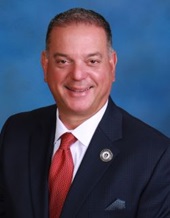
Rep. Angelo Puppolo
Sponsored bills
Maddy summaryThis bill creates the Massachusetts Cannabis Control Commission to regulate the state's legal cannabis industry. The commission, composed of three governor-appointed commissioners with expertise in public health or cannabis regulation, will oversee licensing, enforcement, and policy implementation for cannabis businesses. Commissioners must be state residents, avoid political office, and follow strict ethical rules prohibiting conflicts of interest with licensed businesses. The commission will operate as a state agency with defined procedures for meetings, decision-making, and financial management.
Maddy summaryH 4187 creates a new Massachusetts Cannabis Control Commission to oversee the state's cannabis regulatory framework. The commission will consist of three appointed commissioners (one full-time chair and two part-time members), requiring gubernatorial appointment with background checks, no felony convictions, and expertise in areas like public health or cannabis regulation. Commissioners must be Massachusetts residents, avoid conflicts of interest (e.g., holding elected office), and serve limited terms (max 8 years total). This bill establishes the governance structure for future cannabis rulemaking but does not change current cannabis laws or licensing rules.
By Representative Rogers of Cambridge, a petition (accompanied by bill, House, No. 163) of David M. Rogers relative to the Massachusetts Medical Marijuana Program. Cannabis Policy.
Maddy summaryHD 913 requires the Massachusetts Department of Elementary and Secondary Education to annually request full state funding for regional school district transportation starting in fiscal year 2026. The bill mandates these funding requests comply with the Commonwealth's existing legal obligation under Chapter 71, Section 16C. This ensures regional school districts receive the full state funding they are legally entitled to for transportation services. The bill directly affects regional school districts by securing consistent state financial support for their transportation needs.
Maddy summaryThis bill requires the state to fully reimburse school districts for special education transportation costs that exceed regular program costs. It directly affects cities, towns, regional school districts, and vocational schools serving students with special education needs. Reimbursement covers the regular program's average per-pupil cost plus excess costs (capped at 110% of the statewide average), calculated using specific department-defined methods. Funding increases gradually, reaching 100% reimbursement by fiscal year 2029. The bill ensures districts aren't burdened by costs not covered under existing programs.
By Representative Puppolo of Springfield, a petition (subject to Joint Rule 12) of Angelo J. Puppolo, Jr., for legislation to exempt employees of charitable organizations from certain mortgage loan licensure requirements. Financial Services.
By Ms. Creem, a petition (accompanied by bill, Senate, No. 197) of Cynthia Stone Creem, Rebecca L. Rausch, Michael O. Moore, Joanne M. Comerford and other members of the General Court for legislation to protect reproductive health access, LGBTQ lives, religious liberty, and freedom of movement by banning the sale of cell phone location information. Consumer Protection and Professional Licensure.
By Representative Puppolo of Springfield, a petition (accompanied by bill, House, No. 2640) of Angelo J. Puppolo, Jr., and Brian M. Ashe (with the approval of the town council) that certain positions in the police department of the town of East Longmeadow be exempt from the civil service law. Public Service. [Local Approval Received.]
Maddy summaryThis bill amends the state's health insurance laws to update the names of various regulatory agencies and redefine key terms used in market reviews. It specifically reorganizes the Department of Consumer Affairs and Business Regulation by clarifying which divisions fall under it and renaming the commissioner of insurance to the commissioner of health insurance. The legislation also introduces new definitions for concepts such as "health equity," "private equity companies," and "significant equity investors" to provide clearer guidance for oversight. Additionally, it establishes a new "benchmark cycle" for monitoring projected changes in total healthcare expenditures over a three-year period. These changes aim to modernize the legal framework governing the state's health insurance market and improve transparency in regulatory oversight.