

Maddy summaryThis bill establishes a Trail Access Working Group to improve trail access for people with disabilities across Massachusetts. The working group, required to include at least one-third members who identify as having disabilities and reflect geographic and racial diversity, will review current trail access, study best practices, and issue annual reports with specific recommendations - including cost estimates and funding ideas - to the governor and legislature. It also creates a Trail Access Advisory Council to implement these recommendations and serve as a public resource for accessible trail design. The policy directly affects state agencies managing trails (like the Department of Conservation and Recreation), municipalities with public trails, and people with mobility disabilities seeking equitable outdoor access.
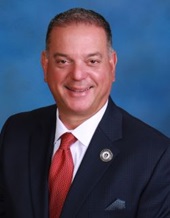
Rep. Angelo Puppolo
Sponsored bills
By Mr. Oliveira, a petition (accompanied by bill, Senate, No. 430) of Jacob R. Oliveira, Joanne M. Comerford, Vanna Howard, Michael D. Brady and other members of the General Court for legislation for a special commission to review and valuate the commonwealth’s current special education financing structure. Education.
By Mr. Moore, a petition (accompanied by bill, Senate, No. 2185) of Michael O. Moore, Michael D. Brady, James K. Hawkins, Angelo J. Puppolo, Jr. and other members of the General Court for legislation to responsibly reducing emissions in the transportation sector. State Administration and Regulatory Oversight.
Maddy summaryThis bill creates a special commission to review Massachusetts' affordable housing efforts. The commission, consisting of three members appointed by the Governor, Senate President, and House Speaker (all with housing expertise), will assess the Massachusetts Housing Finance Agency's performance over the past five years specifically regarding affordable and low-income housing in gateway cities. The commission must complete its review within 30 days of the bill's effective date and submit a report with recommendations to the legislature within one year. This directly affects the Housing Finance Agency's operations and accountability for housing outcomes in designated gateway cities.
Maddy summaryThis bill creates a new Auto Damage Appraiser Licensing Board within Massachusetts' occupational licensure division. The board, consisting of seven members, will directly affect auto damage appraisers, insurance companies, auto body repair shops, and consumers by setting licensing standards. Key provisions include requiring the governor to appoint two industry representatives (auto repair and insurance), the attorney general to appoint a consumer advocate and a neutral office representative, and the licensing commissioner to appoint a chair who cannot represent either industry. The board will handle licensing requirements, with members limited to two consecutive 3-year terms.
Maddy summarySD 1771 establishes a statewide Access to Counsel Program in Massachusetts to provide free legal representation to low-income tenants and owner-occupants facing housing-related legal actions, such as evictions or termination of housing subsidies. Eligible individuals must qualify as indigent (e.g., receiving public assistance, earning ≤80% of area median income, or unable to afford legal fees without hardship). The program, funded by dedicated state appropriations and administered by the Massachusetts Legal Assistance Corporation, requires landlords to provide a standardized form explaining legal aid eligibility to tenants. Designated nonprofit organizations will deliver full legal counsel through partner attorneys, with oversight from an advisory committee and a phased 5-year implementation.
Maddy summarySD 129 requires gas and distribution companies to increase transparency for private utility construction contracts exceeding $100,000 on public ways. Companies must notify all responsible bidders within two business days of their award decision and post the winning bid details (contractor name, amount, project location) on their website. The law defines key terms like "responsible bidder" and "score," and allows companies to withhold information only if disclosure would impede law enforcement, harm public interest, prejudice commercial interests, or interfere with competition. Exceptions include single-bid situations, and the Department of Public Utilities enforces these requirements.
By Mr. O'Connor, a petition (accompanied by bill, Senate, No. 417) of Patrick M. O'Connor, Angelo J. Puppolo, Jr., Joanne M. Comerford, Vanna Howard and other members of the General Court for legislation relative to mandatory recess for elementary and middle school students. Education.
Maddy summaryHD 245 creates a state-wide pancreatic cancer initiative administered by the Department of Public Health. It establishes a 13-member pancreatic cancer advisory council (including patient advocates and representatives from cancer networks) to develop hospital certification standards, identify underserved areas for improved care access, create a multi-provider consortium for best practices, and develop a standard tissue consent form for research. The bill also mandates a comprehensive study on pancreatic cancer prevalence and patient needs, plus a public education program about genetic risks and symptoms. Additionally, it requires the insurance commissioner to survey genetic testing coverage and the health center to update pancreatic cancer screening benefit reviews by 2026. This bill directly affects pancreatic cancer patients, healthcare providers, and the state's public health infrastructure.
Maddy summaryThis bill requires health insurance plans covering commonwealth employees (under group insurance) and Medicaid enrollees to cover biomarker testing - tests analyzing tissue or blood to identify biological markers for guiding treatment - when supported by medical evidence like FDA approvals, clinical guidelines, or CMS determinations. Insurers must approve or deny prior authorization requests within 72 hours (24 hours in emergencies), with automatic approval if no response is given. The bill also mandates coverage without unnecessary disruptions, such as multiple biopsies, to ensure continuous patient care.