

Maddy summaryHD 3756 (Section 3AA) allows religious organizations (including IRS 501(c)(3) groups or state-recognized religious entities) to build multifamily housing on land they've owned for at least three years without needing special zoning permits or facing unreasonable restrictions. The bill sets density rules: up to 50 units per acre if 20-25% of units are affordable to low/middle-income households (at 60-80% of area median income), with height limits matching existing structures or local zoning. It also exempts qualifying projects from off-street parking requirements if near transit, mandates 15-foot setbacks, and requires compliance with environmental regulations. The law directly affects religious landowners seeking to develop housing, aiming to increase affordable housing options on religious property while maintaining local zoning standards.
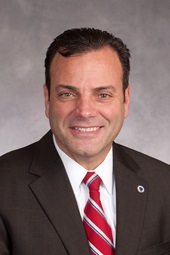
Rep. Paul McMurtry
Sponsored bills
Maddy summaryThis bill bans the retail sale of dogs, cats, and rabbits in pet shops regulated under 330 CMR 12.00, directly affecting most pet shop operators in Massachusetts. It allows exceptions for pet shops partnering with animal rescues (without owning the animals) and permits existing shops meeting specific conditions - like unchanged ownership and prior sales history - to continue selling these animals. Violations carry civil penalties up to $5,000 per offense and possible license suspension. The law takes effect January 1, 2027, and does not override local town/city regulations on animal sales.
Maddy summaryThis bill requires the Massachusetts Department of Elementary and Secondary Education to create guidelines for K-12 neurodiversity education in schools. It also establishes a nine-member commission to study neurodiversity education in early childhood and public schools, with members including government officials, educators, and neurodiverse adults. The commission must submit its findings and recommendations to state leaders within four months of the bill taking effect.
Maddy summaryHD 3456 creates new support for family caregivers in Massachusetts. It establishes an advisory council to develop policy recommendations and reports on caregiving needs, and provides two concrete financial supports: (1) a respite services voucher covering up to $1,500 annually for caregivers with household income under $250,000 (adjusting yearly for inflation), and (2) a refundable tax credit covering up to $1,500 for eligible caregiving expenses like home modifications, equipment, hiring help, or respite care. The bill directly affects Massachusetts residents caring for eligible family members (18+ needing assistance with daily tasks like bathing or dressing) who meet income thresholds. Key provisions include income limits, expense categories, and annual reporting requirements for both programs.
By Representatives Scanlon of North Attleborough and Kushmerek of Fitchburg, a petition (accompanied by bill, House, No. 691) of Adam J. Scanlon, Michael P. Kushmerek and others relative to the special education reimbursement program and for an investigation by a special commission (including members of the General Court) relative to the long-term fiscal health and sustainability of special education funding. Education.
Maddy summaryHD 3529 requires that any large-scale solar energy installation (over 5 acres) on agricultural or recreational land in Massachusetts must be accompanied by the dedication of an equivalent amount of land for agricultural or recreational use. The bill mandates that the state commissioner certifies this replacement land before installation, recording the certification in the registry of deeds at least 30 days in advance. This directly affects solar developers and landowners seeking to install solar projects on designated farmland or recreational areas like parks and trails. The key mechanism is a land-for-land requirement to ensure the loss of agricultural or recreational use is offset by new dedicated land. The bill does not alter existing land use rules but adds this certification step for new large-scale solar projects on specific land types.
Maddy summaryThis bill creates a $300 million Zero Carbon Renovation Fund to support energy upgrades in existing buildings across Massachusetts. It directly affects affordable housing, low/moderate income homes, public schools, municipal buildings, and certified small businesses by funding renovations that must include all-electric systems, on-site renewable energy, and low-carbon materials. The fund covers costs for energy efficiency improvements and necessary pre-renovation repairs like lead paint removal or electrical upgrades. Administered by multiple state agencies, the fund prioritizes environmental justice communities and gateway cities while ensuring unspent funds carry over annually.
Maddy summaryThis bill establishes an undersecretary of environmental justice and equity to ensure clean energy spending benefits are distributed fairly across Massachusetts, prioritizing environmental justice communities (as defined by existing law) and low-income areas. The undersecretary will develop a clear definition of "clean energy benefits" covering pollution reduction, energy cost savings, economic development, and transportation impacts, and create a tracking system to monitor how these benefits reach communities. Starting in 2025, all clean energy program reviews must detail benefit allocation, identify participation barriers (like complex applications), and propose solutions such as multilingual support or low-cost financing. The undersecretary must consult with community groups, local governments, and health experts to update this framework every five years and align it with existing state programs.
Maddy summaryThis bill establishes an advisory council to minimize harm to wildlife - like North Atlantic right whales and coastal habitats - from offshore wind projects, requiring input on monitoring and mitigation plans. It creates a program giving priority access to state grants (such as MassWorks and Housing Choice) for communities hosting offshore wind facilities, aiming to support local economic development. A special commission will study Massachusetts' offshore wind supply chain, manufacturing jobs, and equity impacts, reporting by June 2026. The bill directly affects wildlife protection agencies, coastal communities hosting projects, and the offshore wind industry, with key changes focused on environmental safeguards and community benefits.
Maddy summaryHD 861 requires gas and electric utility contractors performing pipeline repairs on public infrastructure (like roads) to follow specific labor laws. It mandates utilities to obtain current wage rates from the labor department every six months for each municipality they work in. The bill also directs the labor department to create a one-year certification program for contractors and workers repairing pipelines, ensuring standardized training and safety standards across the state. This directly affects pipeline repair contractors and utilities working on public infrastructure projects.