

Maddy summaryThis bill creates a new, independent Office of Elder Advocate in Massachusetts to oversee the care and services provided to older adults and people with disabilities. The office will investigate complaints, examine systemic issues within state agencies and publicly funded private entities, and offer recommendations to improve safety and dignity for these populations. It also establishes a specific advisory council to guide the office and grants it the authority to impose temporary cost-sharing agreements to ensure timely access to services.
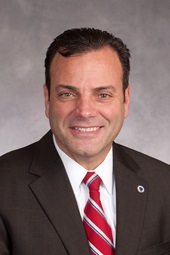
Rep. Paul McMurtry
Sponsored bills
Maddy summaryThis bill directs the Massachusetts Executive Office of Health and Human Services to create a no-interest, forgivable loan program specifically for nursing facilities. The funds are intended to support three main areas: developing specialized care units for conditions like dementia and infectious diseases, covering costs for essential infrastructure upgrades such as HVAC systems and elevators, and financing innovative projects that reduce bed capacity to better match resident needs. By offering these loans, the legislation aims to help facilities modernize their infrastructure and adapt their services to provide more personalized care for older adults.
Maddy summaryThis bill directs the Massachusetts Secretary of Health and Human Services to create rules that increase payment rates for residential care homes and rest homes under specific conditions. It requires these rate adjustments to occur within ninety days when facilities hire licensed nursing staff to meet residents' growing clinical needs. Additionally, the bill mandates faster reimbursement within ninety days for homes that successfully implement required improvements identified during public health surveys. The legislation primarily affects private residential care providers and aims to ensure they receive timely funding for staffing and compliance efforts.
By Representative Vitolo of Brookline, a petition (accompanied by bill, House, No. 3470) of Tommy Vitolo relative to roadway safety. Transportation.
Maddy summaryThis bill amends Massachusetts state law to allow schools to excuse student absences for mental or behavioral health reasons in the same way they do for physical health issues. It requires that documentation rules and requirements be consistent between mental and physical health absences, while also permitting schools to accept notes from licensed mental health professionals. Additionally, the legislation mandates that students returning from such absences be offered, but not required to attend, a meeting with a certified school counselor. The primary impact is on school administrators, educators, and families who need to manage attendance policies related to a student's psychological well-being.
Maddy summaryThis bill amends Massachusetts law to explicitly allow social card games at municipal senior centers. It defines a "social card game" as activities like poker or bridge where individual winnings are capped at $50, player contributions are limited to $5 per session, and all money stays among the participants. The legislation clarifies that no one can profit from organizing or hosting these games, and it provides legal protection for individuals playing or hosting such events in public or private settings, though private venues retain the right to ban them.
By Representative Pignatelli of Lenox, a petition (accompanied by bill, House, No. 2253) of Smitty Pignatelli and others for legislation to expand patient access to oral health care. Public Health.
Maddy summaryThis bill establishes a special commission to study ways to improve pollinator health by expanding native habitats across Massachusetts. The commission will examine opportunities in various settings, including farms, forests, parks, and urban areas, to support a wide range of pollinators such as bees, butterflies, and birds. Composed of 11 members representing government agencies, universities, and advocacy groups, the commission must submit its findings and any proposed laws to state committees by March 1, 2024.
Maddy summaryThis bill establishes Ocean Acidification Awareness Week in August and creates a new Ocean Acidification Council to address coastal and environmental acidification and nutrient pollution in Massachusetts. The legislation defines key terms related to ocean health and expands the state's legal definitions of hazards to include acidification. The newly formed council will consist of state officials and public members tasked with coordinating monitoring efforts, sharing data, and recommending solutions that prioritize nature-based approaches to reduce nutrient pollution.
Maddy summaryThis bill proposes to add a new section to Massachusetts law that restricts the use of animals in product testing. It directly affects companies and organizations that conduct safety tests on chemicals and other agents for products sold in the state. The key mechanism establishes a legal definition for "alternative test methods," which are procedures that do not involve animals, though the provided text cuts off before detailing specific bans or requirements. By defining these non-animal alternatives, the legislation aims to create a framework for shifting away from traditional animal testing practices.