

Maddy summaryThis bill amends Massachusetts law to change how condominium elections are conducted, directly affecting residents of condominium associations in the state. It requires that elections be decided by a simple majority of ballots cast on election day, eliminates the need for a quorum, and bans proxy voting to ensure owners vote in person or via absentee ballot. The legislation also mandates specific notice periods for nominations, restricts candidates to those who are current on fees and taxes, and prohibits write-in votes. Additionally, it allows boards to seek non-owner candidates only if no current owner is willing to run for a trustee position.
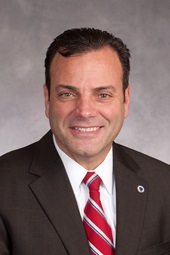
Rep. Paul McMurtry
Sponsored bills
Maddy summaryThis bill improves long-term care in Massachusetts by creating a dedicated fund to support workforce training and capital improvements for skilled nursing facilities. The new fund will finance education and stipends for nurses' aides and home health workers, while also offering interest-free loans to help facilities build specialized care units like dementia or behavioral health wings. Additionally, the law clarifies definitions for assisted living services, specifying which medical tasks qualified staff can perform under a doctor's order. An advisory committee involving health officials and labor union representatives will oversee these programs to ensure they meet the needs of both workers and residents.
Maddy summaryThis bill establishes a new Hospital Workforce Training & Apprenticeship Trust Fund to help hospitals in Massachusetts recruit and keep staff. The fund will be managed by the Secretary of Health and Human Services and can be supported by public and private donations, grants, and interest earnings. Money from the fund will be distributed as grants to eligible hospitals and training organizations to pay for workforce education programs and registered apprenticeships. All acute care hospitals and accountable care organizations in the state are considered eligible to receive these financial supports.
By Representative Nguyen of Andover, a petition (accompanied by bill, House, No. 2245) of Tram T. Nguyen and others for legislation to strengthen the direct care and dementia workforce. Public Health.
By Representative Cutler of Pembroke, a petition (accompanied by bill, House, No. 2758) of Josh S. Cutler and others relative to expanding the senior property tax exemption. Revenue.
Maddy summaryThis bill aims to ensure that the state of Massachusetts retains full control over the licensing and regulation of nurses, preventing outside organizations from having a say in these decisions. It achieves this by amending existing laws to explicitly require independent oversight of nursing practice and by reorganizing the list of duties assigned to the state's health board. The changes clarify that the authority to grant nursing licenses remains solely within the Commonwealth, without adding new powers or altering current funding structures.
Maddy summaryThis bill requires various health insurance plans in Massachusetts to cover dental procedures when they are directly related to or caused by a medical condition already covered by the plan. It directly affects employees of the Commonwealth, members of the Division of Retirement and Benefits, and individuals or groups holding medical insurance policies issued within the state. The law mandates that if a plan pays for a specific medical treatment, it must also pay for any necessary dental work that results from that treatment. By amending multiple chapters of the General Laws, the bill ensures consistent coverage rules across different types of insurance contracts and health maintenance agreements.
Maddy summaryThis bill requires three major Massachusetts insurance programs - the state employee health plan, the state employee dental plan, and private accident and sickness insurance - to cover medically necessary treatments for specific genetic craniofacial conditions. It mandates that these plans pay for procedures designed to improve function or restore appearance for disorders like ectodermal dysplasia, dentinogenesis imperfecta, and amelogenesis imperfecta, while explicitly excluding cosmetic surgery and unrelated dental or orthodontic work. The legislation ensures that these new benefits are treated equally with other covered services by prohibiting higher deductibles, coinsurance, copayments, or out-of-pocket limits.
Maddy summaryThis bill establishes a physical therapy licensure compact in Massachusetts, allowing licensed physical therapists and assistants to practice across multiple member states without needing separate licenses in each location. The law creates a shared data system to track professional credentials and disciplinary actions, ensuring that a therapist's home state can be held accountable for their conduct while they work in other states. By recognizing licenses from other participating states, the measure aims to increase public access to care and support military families who relocate frequently. While the bill preserves each state's authority to protect public health, it simplifies the administrative process for providers working in different jurisdictions.
Maddy summaryThis bill amends Massachusetts law to regulate how pharmacy benefit managers and insurance companies set maximum allowable costs for prescription drugs. It requires these entities to ensure that the reimbursement rates they offer pharmacies are at least equal to the actual cost of acquiring the medication. Additionally, the bill mandates that drugs placed on these cost lists must have generic alternatives available and that the lists be updated and shared with pharmacies at least every three business days. The legislation also establishes a formal process for pharmacies to appeal reimbursement decisions if they believe the set costs are too low.