

By Representative Kushmerek of Fitchburg, a petition (accompanied by bill, House, No. 3361) of Michael P. Kushmerek, Bud L. Williams and Patrick Joseph Kearney for legislation to further regulate the distribution of transportation funds. Transportation.
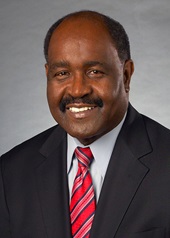
Rep. Bud Williams
Sponsored bills
Maddy summaryThis bill amends the Massachusetts General Laws to expand the legal definition of a "prostituted person" for the purposes of the state's sex trafficking statute. The change directly affects individuals currently involved in sex work by including them under the protections of the law if they are victims of sexual servitude, sex trafficking, or specific forms of prostitution involving fees, necessities, minors, or street solicitation. By broadening this definition, the legislation ensures that a wider range of people engaged in the sex trade can access existing legal remedies and support services designed for trafficking victims. The bill does not alter criminal penalties but rather clarifies who qualifies for the state's victim assistance framework.
Maddy summaryThis bill aims to reduce mass incarceration by expanding parole eligibility for certain prisoners currently serving life sentences in Massachusetts. It removes specific exclusions that previously barred individuals with multiple life sentences or those convicted of first-degree murder as minors from applying for parole. Under the new rules, prisoners serving multiple life sentences would become eligible for parole 25 years after their most recent conviction began, and courts would be required to set a minimum prison term of 25 years for first-degree murder cases. Additionally, the legislation adjusts the minimum parole term for juveniles who commit murder before their 18th birthday, ensuring they are not automatically excluded from future parole consideration.
Maddy summaryThis bill establishes a new independent office dedicated to overseeing structural racism within Massachusetts correctional facilities. The office will collect and analyze detailed data on incarcerated people and staff, breaking down information by race, ethnicity, gender, and other demographics to monitor daily operations. Its primary goal is to track progress in dismantling systemic racial inequalities identified by a previous legislative commission. By creating this independent oversight body, the legislation aims to ensure transparency and accountability in how the justice system treats Black, Indigenous, and People of Color.
Maddy summaryThis bill allows pharmacists in Massachusetts to dispense up to a 30-day supply of insulin without a doctor's immediate authorization during emergency situations where a patient cannot quickly reach their provider. The law defines an emergency as a time when obtaining standard authorization is not readily available and requires pharmacists to use their professional judgment to determine if the medication is essential to prevent harm. To prevent abuse, the bill restricts pharmacists from providing this emergency supply to the same patient more than once within any six-month period. Additionally, the legislation updates several state laws to explicitly include insulin as an item that can be dispensed under these emergency conditions.
By Representative Pignatelli of Lenox, a petition (accompanied by bill, House, No. 2254) of Smitty Pignatelli and others for legislation to further regulate healthcare services to a patient via telehealth. Public Health.
Maddy summaryThis bill proposes establishing a livable wage specifically for human services workers in Massachusetts. It directly affects employees of community-based organizations that receive funding from state agencies such as the Executive Office of Health and Human Services, the Executive Office of Elder Affairs, or the Department of Housing and Community Development. The legislation defines these workers as staff who provide treatment, support, or services to clients and their families, while defining the organizations as those with funded human services programs. By amending Chapter 6A of the General Laws, the bill creates a formal framework to ensure these essential workers are paid a wage deemed sufficient to meet basic living needs.
By Representatives Khan of Newton and Santiago of Boston, a petition (accompanied by bill, House, No. 2859) of Kay Khan, Jon Santiago and others for legislation to impose an excise tax on distributors of certain drinks with added sugar and promoting healthy alternatives to such drinks. Revenue.
By Representative Puppolo of Springfield, a petition (subject to Joint Rule 12) of Angelo J. Puppolo, Jr., and Bud L. Williams relative to real estate tax abatements for certain blind persons. Revenue.
Maddy summaryThis bill allows Massachusetts to join the Nurse Licensure Compact, a national agreement that would let registered and licensed practical nurses obtain a single multistate license to practice in any other state that has also joined the compact. Under this new law, nurses licensed in Massachusetts would be authorized to work across participating states without needing separate licenses for each location, while also requiring background checks for all applicants. The legislation establishes a new chapter in state law to define key terms, set up an interstate commission to oversee the compact, and create a system for sharing information about nurse licenses and disciplinary actions among member states.