

Maddy summaryThis bill establishes a new driver education program specifically for public high school students living in gateway municipalities across Massachusetts. It creates a dedicated trust fund to collect and manage money, primarily by taking a one percent fee from existing driver's license application charges, to finance the initiative. Under the new program, eligible schools can offer driver education courses during the regular school day or as evening electives at no cost to low-income students. The legislation ensures that funds from the trust are used exclusively to reduce or eliminate tuition fees for participants in these courses.
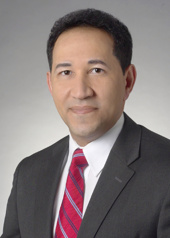
Rep. Carlos González
Sponsored bills
Maddy summaryThis bill establishes a new state fund to provide annual funding of at least $150 million to regional transit authorities across Massachusetts. The money will come from a portion of the surcharges currently collected from transportation network companies, such as ride-sharing services. The funding amount will automatically adjust each year based on inflation and cannot increase by more than three percent compared to the previous year. Additionally, the law limits how much any single transit authority can receive to ensure the money is distributed among multiple organizations.
Maddy summaryThis bill establishes a special legislative commission to study challenges facing public libraries and their digital resource collections. The commission will investigate costs, consumer satisfaction, privacy concerns, and how licensing for digital materials differs from traditional print resources. It will also review actions taken by other states and make recommendations to support diverse collections and protect patron data. Additionally, the bill prohibits library contracts from restricting the sharing of license terms or requiring libraries to violate patron confidentiality, labeling such violations as unfair business practices. The commission is set to submit its findings and recommendations by October 15, 2025.
Maddy summaryThis bill amends Massachusetts education laws to update high school graduation requirements and improve support for struggling schools. It establishes a new competency determination based on mastery of core skills in math, science, technology, and English, allowing districts to include history, social science, and foreign languages. Students who do not meet these standards would receive an educational assistance plan to help them achieve mastery, while parents would have the chance to review these plans. Additionally, the bill changes how schools identified for comprehensive support are selected, requiring that student growth be weighted as heavily as student achievement in the evaluation formula.
Maddy summaryThis bill amends Massachusetts law to allow Certified Nursing Assistant exams to be administered in languages other than English, such as Spanish and Chinese. It directly affects nurses' aides working in long-term care facilities where the resident population predominantly speaks a language other than English. The legislation requires the state department to decide which specific languages will be available for testing and mandates that facilities offering this option must recognize the costs of compliance in their payment rates. The changes are set to take effect on October 1, 2024, aiming to improve access to certification for non-English speaking workers in the healthcare sector.
Maddy summaryThis bill directs the Massachusetts Department of Public Health, in collaboration with the Health Policy Commission and the Center for Health Information Analysis, to conduct a comprehensive study on access to essential health services. The study will analyze current hospital capacity, the impact of recent service discontinuations and closures since 1992, and projected regional needs over the next decade. It will also investigate financial factors that threaten service availability, review successful strategies from other states, and propose policy changes to ensure continued access to care across the Commonwealth.
Maddy summaryThis bill requires home healthcare employers in Massachusetts to provide annual safety training and conduct risk assessments before visits to protect workers from violence. It mandates that agencies assess potential dangers at a patient's home, such as history of violent behavior or the presence of weapons, and equip workers with communication devices and alarms for emergencies. The law also allows workers to refuse service if they believe there is an imminent threat without fear of losing pay or facing discipline. Additionally, employers must create a crisis response team to support staff who have been assaulted or threatened.
By Representatives González of Springfield and Garcia of Chelsea, a petition (accompanied by bill, House, No. 2333) of Carlos González, Judith A. Garcia and others for legislation to establish an incarcerated individual bone marrow and organ donation program within the Department of Correction. Public Safety and Homeland Security.
Maddy summaryThis bill amends Massachusetts law to explicitly authorize libraries to purchase and license electronic books and digital audiobooks. It directly affects a wide range of library types, including public, school, academic, and tribal libraries, by legally defining these digital formats and the companies that provide them. The legislation clarifies that "publishers" include both traditional book sellers and digital aggregators who license collections to libraries. By updating Chapter 78 of the General Laws, the bill removes potential legal barriers that might have prevented libraries from acquiring modern digital reading materials.
By Representatives González of Springfield and Moran of Boston, a petition (accompanied by bill, House, No. 2811) of Carlos González, Michael J. Moran and others for legislation to establish a tax incentive program for micro businesses to hire formerly incarcerated individuals and individuals receiving transitional benefits. Revenue.