

Maddy summaryThis bill aims to stop wage theft and hold employers accountable by strengthening how the state enforces labor laws. It creates a new public enforcement unit within the Attorney General's office to investigate unpaid wages and other violations. The legislation also expands the types of penalties available to punish companies that fail to pay workers correctly. These changes directly affect employees who may have been underpaid and the businesses that employ them.
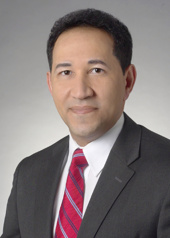
Rep. Carlos González
Sponsored bills
By Representative Decker of Cambridge, a petition (accompanied by bill, House, No. 3012) of Marjorie C. Decker relative to infrastructure projects and public building construction contractors and subcontractors. State Administration and Regulatory Oversight.
The committee of conference on the disagreeing votes of the two branches with reference to the Senate amendment of the House Bill relative to salary range transparency (House, No. 4109), reports, in part, recommending passage of the accompanying bill (House, No. 4890).
By Representatives Higgins of Leominster and Lipper-Garabedian of Melrose, a petition (accompanied by bill, House, No. 3045) of Natalie M. Higgins, Kate Lipper-Garabedian and others relative to the renewal of certain licenses after default on student loans. State Administration and Regulatory Oversight.
Maddy summaryThis bill requires construction contractors and subcontractors in Massachusetts to hire apprentices from state-approved programs on specific building projects. Under the new rules, these companies must have an active apprenticeship program and employ apprentices throughout the duration of the contract, with a new requirement effective in 2025 that the program must have successfully trained at least three apprentices to journey worker status in the past five years. Contractors must also submit proof of compliance and identify their apprenticeship program to the Attorney General within 45 days after a contract is awarded. The law applies to contracts issued more than 90 days after the bill takes effect and covers a wide range of construction, maintenance, and repair work.
Maddy summaryThis bill directs the Massachusetts Department of Public Health to conduct a comprehensive study on access to essential health services provided by acute care and psychiatric hospitals across the state. The study will analyze current hospital capacity, review past service discontinuations and closures since 1992, and assess financial factors like reimbursement rates that might lead to future cuts. It will also project regional needs for the next decade, examine how other states handle similar issues, and offer policy recommendations to ensure continued access to critical care. Ultimately, the legislation aims to gather data and propose solutions to prevent gaps in healthcare availability for Massachusetts residents.
Maddy summaryThis bill requires covered employers in Massachusetts to submit detailed wage data reports alongside their existing annual reports to the state secretary. The state secretary will then compile this information and publish aggregate wage statistics on the executive office of labor and workforce development website, organized by industry and released annually by June 1. While the bill mandates the collection and public release of these aggregate statistics, it explicitly excludes the individual wage data reports from being considered public records, thereby protecting specific employer information from public disclosure.
Maddy summaryThis bill proposes establishing a livable wage specifically for human services workers in Massachusetts. It directly affects employees of community-based organizations that receive funding from state agencies such as the Executive Office of Health and Human Services, the Executive Office of Elder Affairs, or the Department of Housing and Community Development. The legislation defines these workers as staff who provide treatment, support, or services to clients and their families, while defining the organizations as those with funded human services programs. By amending Chapter 6A of the General Laws, the bill creates a formal framework to ensure these essential workers are paid a wage deemed sufficient to meet basic living needs.
Maddy summaryThis bill creates a new grant program to help community health centers in Massachusetts recruit and keep primary care doctors, mental health professionals, and other essential staff. To qualify for financial assistance, eligible workers must have student loans, commit to working at a community health center for at least four years, and not be enrolled in other loan repayment programs. The program prioritizes hiring a diverse workforce and will be managed by the Executive Office of Health and Human Services using existing state funds.
By Representative González of Springfield, a petition (accompanied by bill, House, No. 3041) of Carlos González and others relative to minority participation goals for sub-contractors hired by the exclusive contract to provide services. State Administration and Regulatory Oversight.