

Maddy summarySB 998 requires Maryland gas companies to file detailed plans with the Public Service Commission for safety and reliability infrastructure projects (like pipe replacements to reduce leaks or improve public safety). These plans must include project descriptions, timelines, cost analyses comparing alternatives (such as leak repair or electrification), and 2-year advance customer notifications allowing time to switch to electric options. The bill establishes a capped monthly surcharge ($2 max for residential customers) to recover project costs separately from regular rate increases, ensuring ratepayers aren’t overcharged while protecting them from unexpected bills. It directly affects gas utilities and their natural gas customers across Maryland, with the Commission reviewing all plans for compliance.
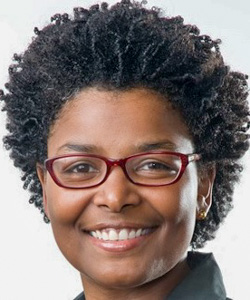
Sen. Mary Washington
Sponsored bills
Maddy summarySB 462 adds a new membership position to Maryland's State Board of Education for an "Early Childhood Development Professional" with extensive experience in child care operations and curriculum development. This position requires the Governor to appoint one member from a list of three candidates recommended by the Office of Child Care Advisory Council. The bill modifies the board's composition to include this specialized role alongside existing teacher, parent, and student members, with the new member attending but not voting on certain matters like appeals. The change takes effect July 1, 2025, and directly affects how the State Board of Education represents early childhood education expertise in policymaking.
Maddy summarySB 461 renames Maryland's Water Quality Revolving Loan Fund to the "Maryland Water Quality Improvement Revolving Loan Fund" and expands its eligibility to prioritize projects in overburdened and underserved communities. Overburdened communities are defined by three or more environmental health indicators (like air pollution or lead exposure) exceeding statewide averages, while underserved communities meet income, racial, or language access thresholds. The bill requires the Maryland Water Infrastructure Financing Administration to use a scoring system that prioritizes these communities when allocating funds for water quality projects. This change directly affects public water systems serving 10,000+ people seeking state loans or grants for infrastructure improvements.
Maddy summarySB 999 amends Baltimore County's alcohol licensing rules to allow the Board of License Commissioners to issue beer, wine, and liquor licenses to establishments within 300 feet of a place of worship under specific conditions. These conditions include the establishment being located in the Towson area, situated in an office building of at least 100,000 square feet with a BM-D.T zoning classification, having the place of worship's written consent, and operating as a restaurant or market (not a Class A license). The bill directly affects businesses seeking alcohol licenses in Baltimore County and the Board that reviews such applications. This change takes effect on July 1, 2025.
Maddy summarySB 565 (Mateo's Law) requires drivers involved in motor vehicle accidents that cause death or life-threatening injury to submit to mandatory breath and blood testing for alcohol or drug impairment. It directly affects drivers in these specific accident scenarios, removing the prior requirement for police to have reasonable suspicion of impairment before ordering testing. The bill mandates breath tests for alcohol concentration and blood tests to detect alcohol or drugs, with options for both tests. Medical personnel performing these tests are protected from civil liability for non-gross-negligent actions. The law takes effect October 1, 2025.
Maddy summarySB 859, the "Fair Share for Maryland Act of 2025," is a comprehensive tax code revision affecting Maryland taxpayers and businesses. It modifies estate tax rules (capping the exemption at $2 million for decedents dying in 2016-2017), adjusts child tax credits by changing income thresholds and phase-out amounts, and imposes new business transportation fees on corporations and pass-through entities. The bill also limits net operating loss deductions, requires certain corporations to file combined tax returns, and adjusts income tax brackets for high earners. These changes directly impact estates, families claiming child credits, and businesses operating in Maryland, with automatic annual inflation adjustments for credit thresholds.
Maddy summarySB 890 establishes a new Division of Just Communities within Maryland’s Department of Housing and Community Development. It transfers the authority to designate "Just Communities" from the Governor to the Department and updates the criteria, including areas with high foreclosure rates (defined as over 10 foreclosure events in a quarter and a concentration ratio above 100). The bill also moves the Community Health and Safety Works Grant Program under this new division. It directly affects historically underserved communities, particularly those impacted by disinvestment and foreclosure patterns, to prioritize state funding for housing equity.
Maddy summarySB 634 redefines "hunt" to include fox chasing, creates a Deer Management Assistance Program in the Department of Natural Resources (requiring an additional full-time employee by July 2026), and mandates a phased transition to nonlead ammunition for all game hunting. It sets specific deadlines: nonlead ammunition required for pen-raised birds by 2026, upland birds by 2027, migratory birds and turkeys by 2028, and all other game (including deer) by 2029. Unarmed fox chasers are exempt from certain licensing rules but must still hold a standard hunting license. The bill directly affects hunters, landowners participating in deer management, and wildlife agencies managing hunting regulations.
Maddy summaryMaryland's SB 346 establishes a refund program for beverage containers to boost recycling and reduce litter. It requires all redeemable containers sold in the state to display refund information, includes the refund value in both wholesale and retail prices, and mandates retailers to show this on customer receipts. Producers must register with the state, pay fees, and join a stewardship organization to manage the program, while counties can create redemption facilities to help meet recycling targets. The law aims to increase container reuse and recycling rates, reduce pollution from discarded containers, and fund public water refill stations through a new grant program. This directly affects beverage producers, retailers, consumers, and local governments managing redemption sites.
Maddy summarySB 631 establishes the Commission on Abandoned and Neglected Maryland Cemeteries within the Office of Cemetery Oversight. The commission, composed of diverse members including cemetery preservation experts, descendant community representatives, and government officials, will identify neglected cemeteries, create a statewide searchable database, and develop guidelines for repair and maintenance. It specifically prioritizes supporting descendants of African American cemeteries and provides educational resources for developers and realtors about burial site protection. The bill directly affects Maryland cemeteries, their descendants, local governments, and entities involved in cemetery preservation.