

Maddy summaryThis bill establishes the Qualified Resident Enrollment Program to help people in Maryland who currently lack access to affordable health insurance enroll in plans through the state health exchange. It defines "qualified residents" as individuals living in the state who are not eligible for existing federal or state assistance programs, regardless of their immigration status, and who are not incarcerated. The legislation allows the Maryland Health Benefit Exchange to hire third-party contractors to manage the program and requires that its implementation wait for approval of a specific federal waiver amendment. Additionally, the bill creates a dedicated fund to finance the program and mandates annual transfers of $15 million to support health equity resource communities.
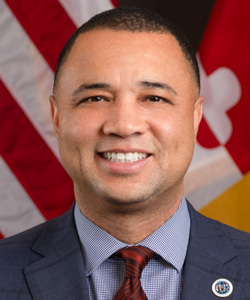
Sen. Antonio Hayes
Sponsored bills
Maddy summaryThis bill transfers the authority to appoint and remove members of Baltimore City's Board of License Commissioners from local city officials to the Governor, requiring Senate approval for these appointments. It also mandates that board members be residents of the city and clarifies that they must follow state ethics rules instead of local ones. Additionally, the law ensures that board members and employees cannot have financial interests in businesses selling alcohol and must resign if they seek other government roles that create a conflict of interest.
Maddy summaryThis Maryland law requires medical assistance programs and private health insurers to cover orthoses and prostheses starting in 2025. It defines orthoses as custom or prefabricated devices used to treat neuromuscular or musculoskeletal conditions and mandates that these devices be considered essential health benefits. The bill also sets specific rules for replacing devices, ensuring they are not subject to higher copayments or separate annual limits, and prohibits denial of coverage based on a patient's disability status. Additionally, it establishes that coverage decisions must align with federal Medicare standards and allows for replacements if repairs would cost more than 60% of a new device.
Maddy summaryThis bill updates Maryland's mental health laws to improve how individuals in crisis are evaluated and treated, specifically affecting peace officers, emergency facilities, and people with severe mental illness. It allows peace officers to transport individuals to nearby emergency facilities rather than strictly the nearest one and expands the ability to evaluate patients for involuntary admission to include psychiatric nurse practitioners. Additionally, the legislation mandates that every county establish an assisted outpatient treatment program, which can legally require individuals with severe mental illness to attend treatment to prevent homelessness and repeated hospitalizations. The law also ensures that public defenders provide legal representation during these assisted outpatient proceedings and permits electronic submission of evaluation petitions.
Maddy summaryThis bill updates Maryland's alcohol licensing laws specifically for Baltimore City to allow new licenses in the 40th district and adjust rules for existing ones. It authorizes a new license for a municipal family fun center at a bowling alley and skating rink on Pennsylvania Avenue, provided the owner agrees to specific community partnership terms and operates within set hours. The legislation also permits a restaurant on West 29th Street to receive a license despite not meeting the usual seating capacity requirement, as long as it signs an agreement with a local community association. Additionally, the bill extends the expiration date for an existing license on East West Biddle Street until July 1, 2025, to allow for its renewal.
Maddy summarySB 59, known as the Safe Sleep Act of 2024, requires Maryland hospitals and birthing centers to educate parents on safe infant sleep practices before discharge and to obtain written confirmation that this education occurred. The law mandates that healthcare facilities provide both oral and written resources explaining how to create a safe sleep environment, which includes using a firm mattress, avoiding soft bedding, and keeping the baby in a smoke-free area. Additionally, the bill establishes the Maryland Safe Sleep Certification Program, which will require all child care centers to be certified to ensure they follow these safety guidelines. To support these efforts, the state health department must launch a public awareness campaign and create a list of local resources that help families purchase necessary items like safe sleep sacks.
Maddy summaryThis bill authorizes the Baltimore City Board of License Commissioners to issue a specific Class B license for restaurants located in Ward 4, Precincts 1 and 2. To qualify, a restaurant must derive at least 51% of its daily revenue from food sales, be classified as a high or moderate priority food service facility by the city health department, and sign a memorandum of understanding with the Downtown Partnership of Baltimore. The license restricts the sale of alcohol for off-premises consumption, prohibits transferring the license to a new location, and requires annual verification of financial data by a certified public accountant. Additionally, the bill sets a sunset date of June 30, 2028, after which no new licenses under these specific terms will be issued, though existing ones may be renewed.