

Maddy summarySB 281, the Transportation Equality for Service Members Act, updates Maryland’s legal definitions to ensure transportation benefits apply consistently to all uniformed services. It expands the definition of "veteran" under state law to include members of the Public Health Service and National Oceanic and Atmospheric Administration (NOAA) who meet federal veteran criteria, directly affecting these service members and veterans in transportation-related programs. The bill amends specific sections of Maryland’s transportation and state government codes (notably Section 1-117) to align definitions of "uniformed services," "service member," and "veteran" with federal standards, ensuring eligibility for transportation benefits like parking and transit access.
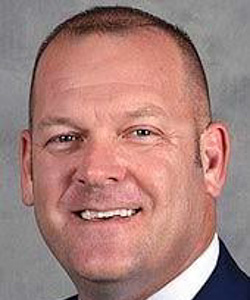
Sen. William Folden
Sponsored bills
Maddy summarySB 280, the *Judicial and Public Safety for Service Members Act*, updates Maryland law to ensure legal protections apply consistently to all uniformed service members (not just veterans) in judicial, criminal, family, and public safety matters. It revises definitions in key laws to replace "veteran" with "uniformed services" and expands the application of court procedures, corrections policies, criminal laws, family law, and public safety regulations to cover active-duty and reserve service members. The bill adds new provisions (e.g., in family law and public safety sections) to address service-related circumstances, such as deployment impacts on custody or safety protocols. This directly affects service members navigating Maryland’s legal system during active duty or in related legal proceedings.
Maddy summarySB 274 modifies Maryland court procedures for child abuse cases by allowing a child victim to testify remotely via closed-circuit television outside the courtroom if a judge determines their presence with the defendant would cause serious emotional distress. It specifies that only certain attorneys (prosecution, defense, child's advocate), court staff, and therapeutic support personnel may be present with the child during remote testimony, while the defendant and judge remain in the courtroom. The bill explicitly prohibits two-way video that would let the child see or hear the defendant during testimony. This directly affects child victims, defendants, and their legal representatives in abuse cases covered under Maryland’s Family Law and Criminal Law Articles.
Maddy summarySB 348 amends Maryland's criminal law to clarify and expand protections against surreptitious filming of people's private areas. It directly affects anyone who secretly films another person's genitals, pubic area, buttocks, or female breast (below the areola) without consent in places where privacy is expected, such as residences, dressing rooms, or hotel rooms. Key changes include explicitly defining "private place" to include homes and adding specific examples like tanning rooms, while clarifying that "visual surveillance" covers camera use, mirrors, or direct observation. Violations are punishable by up to one year in jail, a $2,500 fine, or both, and victims gain a civil right to sue for damages and attorney fees.
Maddy summarySB 334 prohibits intentionally setting fires (malicious or fraudulent burning) that cause death or serious injury to firefighters. It directly affects individuals who commit such acts, making it a felony punishable by up to 10 years in prison. The bill adds specific language to Maryland’s criminal code clarifying that harming firefighters during fire-related crimes carries enhanced penalties. Sentences under this law may run separately from sentences for the original fire offense. The law takes effect October 1, 2025.
Maddy summarySB 333 allows child victims or witnesses under age 13 to have their out-of-court statements to qualified forensic interviewers admitted as evidence in criminal or juvenile court cases involving specific offenses, including child abuse, sexual assault, or crimes of violence. The bill expands existing rules to include statements made to trained forensic interviewers (not law enforcement) employed by child advocacy centers, subject to strict conditions. For admissibility, the statement must be offered by a qualified professional, the child must testify (except in child in need of assistance cases), and the prosecutor must provide advance notice of the statement’s use. This directly affects child victims in cases under Maryland’s Criminal Law Article sections covering abuse, sexual offenses, or violent crimes. The bill does not change the standard of proof but modifies how such statements may be used in court proceedings.
Maddy summarySB 46 makes it a crime to illegally occupy residential property with the intent to defraud the owner, prohibiting possession or claiming rights to property you don’t legally own. Property owners can submit a sworn affidavit to their sheriff, triggering removal of the occupant unless they present evidence of lawful possession. Violations carry fines up to $2,500 or jail time (up to 1 year for repeat offenses within 2 years). The law explicitly states it does not replace existing wrongful detainer lawsuits, which remain an option for property owners.
Maddy summaryThis bill creates an exception to Maryland's armed trespass law for retired law enforcement officials who meet specific conditions. It allows retired officers (from federal, state, or local agencies in good standing) to carry concealed firearms without violating trespass laws if they: (1) display their badge or credential, (2) keep the firearm concealed under clothing, and (3) legally possess a handgun under state or federal law. The exception applies only when entering dwellings or property where permission is required under existing law. It directly affects retired law enforcement personnel seeking to carry concealed firearms in public spaces.
Maddy summarySB 1007 modifies Maryland's evidence rules to allow intercepted communications (like phone calls or texts) as court evidence under specific conditions. It permits such evidence if at least one party was outside Maryland during the communication, the interception wasn’t conducted by Maryland law enforcement, or all parties were co-conspirators in a violent crime. Courts must also determine the evidence is more probative than alternatives and serves justice, and the defense must receive advance notice of its use. The law applies to all Maryland courts and legal proceedings, effective October 1, 2025.
Maddy summarySB 136 modifies Maryland's Safe Schools Fund grant rules to allow unused funds to be reallocated within the same fiscal year to local school systems that have fully spent their initial allocation but still have unmet safety needs. It specifically permits the reallocation of funds to schools demonstrating ongoing requirements, rather than letting unused grants expire. The bill amends existing law to clarify that grant allocations may be redirected to these schools while maintaining the annual $10 million funding level. This change ensures more flexible use of resources for school safety without requiring new budget appropriations.