

Maddy summarySB 806 requires health professionals applying for new licenses in Maryland to undergo a criminal history records check starting July 1, 2027. This applies to professions including nursing, pharmacy, dentistry, and others regulated by specific state boards. Applicants must submit fingerprints and pay fees to a central repository, with results kept confidential and used only for licensing decisions. The bill also mandates a similar check for license renewals for professionals licensed before January 1, 2028, during their first renewal after that date.
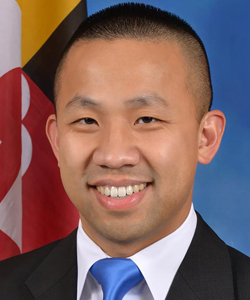
Sen. Clarence Lam
Sponsored bills
Maddy summarySB 606 requires the Maryland Transportation Authority to analyze unused E-ZPass commuter trips from 2023-2025 and submit a report by September 2026. The report must include data on unused trips (numbers, costs, demographics) and recommend solutions like extending usage windows or offering rollovers to reduce forfeited funds. It also mandates a corrective action plan if over 25% of discount plans had unused trips during those years. The bill directly affects E-ZPass commuters, particularly low-income residents and those in communities with limited banking access, by addressing financial losses from unused prepaid trips. The law takes effect July 1, 2026, and expires June 30, 2027.
Maddy summarySB 627 designates January 13 as Korean American Day in Maryland, requiring the Governor to annually issue a proclamation for this date. The bill mandates that the proclamation urge educational and cultural organizations to observe the day through appropriate programs, ceremonies, and activities. This ceremonial legislation takes effect on October 1, 2026, and does not create new funding, regulations, or obligations beyond the annual proclamation. It directly affects the Governor’s office and organizations invited to participate in observances.
Maddy summarySB 53 requires the Maryland Port Administration to provide written notice to Anne Arundel County's state legislative delegation before holding a public hearing on acquiring land or property improvements in the county. This applies specifically to land acquisitions by the Port Administration within Anne Arundel County, directly affecting the Port Administration and county officials. The bill mandates that the county delegation must approve the acquisition after the public hearing, with automatic approval if no written objection is received within 90 days of the request. If enacted, the law would take effect on October 1, 2026.
Maddy summarySB 346, titled "Civil Actions - Violation of Constitutional Rights (No Kings Act)," creates a new legal pathway in Maryland for individuals to sue government officials who violate constitutional rights under "color of law." The bill allows plaintiffs to seek damages, injunctions, and attorney fees for deprivations of rights secured by the U.S. Constitution, Maryland Declaration of Rights, or Maryland Constitution. Key provisions include a 3-year statute of limitations for filing claims, protections for judicial officers (limiting injunctive relief unless a declaratory judgment is violated), and restrictions on awarding fees against judges acting within their authority. This law directly affects government officials and citizens who experience constitutional violations during official actions.
Maddy summarySB 233 allows "Descendant Community Organizations" (groups with cultural ties or ancestors buried in a cemetery) to legally challenge proposals to sell, transfer, or repurpose cemetery land. The bill requires courts to consider the cemetery's role as a permanent sacred space for honoring the dead and preserving community history when reviewing such proposals. It amends Maryland law to clarify who can bring these legal actions and what courts must evaluate. The bill directly affects cemetery owners proposing land changes and descendant groups seeking to protect burial sites. It does not change burial practices or fees but adds a legal safeguard for cemeteries facing potential sale or redevelopment.
Maddy summarySB 388, the DECADE Act, reorganizes Maryland's economic development programs to streamline administration and adjust eligibility for tax incentives. It redesignates the Economic Development Opportunities Program Account as the Strategic Closing Fund within the Department of Commerce, alters how video lottery proceeds are distributed, and modifies rules for several tax credits - including Job Creation, Research and Development, and film production credits - to expand access for businesses and investors. Key changes include allowing pass-through entities to allocate biotechnology tax credits differently, enabling film producers to amend credit applications, and extending the Build Our Future Grant Pilot Program. The bill directly affects businesses seeking economic development tax credits and state agencies managing these programs.
Maddy summarySB 828 authorizes Maryland's Central Collection Unit (CCU) to collect delinquent federal funds owed to the state, including placing liens on federal property within Maryland and directing the Comptroller to withhold state payments to the federal government. It requires the Board of Public Works to determine if the federal government is delinquent in paying funds owed to Maryland, triggering these enforcement actions. The bill amends Maryland law to specify that the CCU may collect up to the full amount of delinquent federal funds, and mandates that the Comptroller withhold state payments when the CCU refers such funds. This establishes a formal process for enforcing federal payment obligations to the state.
Maddy summarySB 792 requires the State Health Services Cost Review Commission to create and publish a model policy for hospitals regarding immigration enforcement actions. It also mandates that certain hospitals in Maryland develop their own policies based on this model. The bill amends specific sections of Maryland's health code to implement these requirements, focusing on standardizing how hospitals address immigration enforcement within their facilities. This directly affects designated hospitals by making written policies on immigration enforcement a formal requirement.
Maddy summarySB 579 requires Maryland counties with volunteer fire companies to provide no-cost preventive cancer screenings to volunteer firefighters, based on guidelines from the International Association of Fire Fighters. Volunteer fire companies must maintain and annually submit updated lists of their members to the county, which must then keep these records. Counties can meet this requirement by offering annual exams including cancer screenings or applying for specific grants to fund innovative screening technologies. The bill directly affects volunteer firefighters and counties, creating a structured process for access to preventive care without cost to the firefighters.