

Maddy summarySB 437 requires health maintenance organizations (HMOs) in Maryland to pay non-contracted healthcare providers (like independent doctors or hospitals) higher reimbursement rates for services to HMO members. Specifically, it mandates that HMOs pay trauma physicians treating trauma patients at designated centers at least 140% of the Medicare rate for similar services, or the 2001 rate (whichever is higher), adjusted for inflation. For all other non-contracted providers, HMOs must pay at least 125% of the average rate paid to contracted providers in 2019, adjusted annually using the Medicare Economic Index. This bill directly affects nonparticipating healthcare providers who treat HMO enrollees but are not under formal contracts with the HMOs.
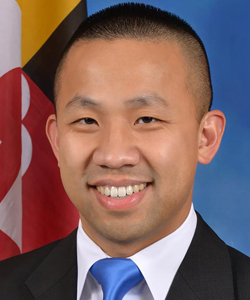
Sen. Clarence Lam
Sponsored bills
Maddy summarySB 448 establishes a pilot program within Maryland's Medicaid system (Maryland Medical Assistance Program) allowing eligible individuals with mental health needs to direct their own care. The bill creates a "self-directed services" model where participants, selected by the Department of Health, control their care budgets and choose providers through a personalized "person-centered plan" focused on independence, community inclusion, and crisis prevention. Key mechanisms include participant decision-making authority over service selection and spending, support from "support brokers," and requirements that services be culturally responsive, community-based, and aligned with the individual's goals. This directly affects Medicaid recipients with mental health needs who qualify for the pilot, shifting care management from agency-directed to participant-directed. The program aims to improve quality of life by prioritizing individual choice within the Medicaid framework.
Maddy summarySB 438 sets minimum reimbursement rates for pharmacies dispensing drugs under Maryland's Medicaid program (Medical Assistance Program). It requires pharmacy benefits managers (PBMs) to pay pharmacies at least the national drug cost average plus a state-determined dispensing fee, applying to both generic and brand-name drugs when prescribed. The bill expands the definition of "purchaser" to include insurers and certain health plans, clarifying which entities must follow PBM regulations. These changes directly affect community pharmacies, PBMs, and managed care organizations that contract with them for prescription drug coverage in Maryland.
Maddy summaryThis bill expands Maryland's legal protections to cover reproductive care, fertility preservation, and contraceptive services - including IVF and related medications - as "legally protected health care." It prevents healthcare providers from facing disciplinary actions, criminal charges, or civil lawsuits in Maryland courts for providing these services. The law also restricts out-of-state courts from compelling testimony, evidence, or enforcement related to these services unless the case meets specific criteria (e.g., brought by the patient or based on Maryland law). These changes apply to Maryland's courts, healthcare providers, and patients receiving covered services.
Maddy summarySB 303 amends Maryland's insurance law to clarify that certain nonprofit health maintenance organizations (HMOs) are excluded from the definition of "purchaser" under pharmacy benefits manager (PBM) regulations. This specifically applies to nonprofit HMOs that operate internal pharmacy services exclusively for their own members, rather than through external PBM contracts. The bill removes regulatory requirements - such as formulary and rebate rules - from applying to these nonprofit HMOs when they manage pharmacy benefits internally. The change affects how existing PBM laws apply to these specific nonprofit health plans, reducing regulatory burden for their internal pharmacy operations.
Maddy summaryMaryland's SB 314 (Birth Certificate Modernization Act) allows individuals to update their sex designation on birth certificates and state-issued ID cards without requiring surgical intervention. It permits changes through a licensed medical professional's certification of gender transition or intersex condition, combined with a written request under penalty of perjury. The bill also updates identification card requirements to align with new sex designation options on licenses and ID cards issued by the Motor Vehicle Administration. This directly affects Maryland residents seeking to reflect their gender identity on official documents.
Maddy summarySB 111 prohibits Maryland's Medicaid program (Maryland Medical Assistance Program) and certain health insurers from requiring prior approval (prior authorization) or step therapy/fail-first protocols for prescription drugs treating five specific serious mental illnesses: bipolar disorder, schizophrenia, major depression, PTSD, and medication-induced movement disorders linked to mental illness treatment. It applies to all Medicaid enrollees and individuals covered under the affected health plans starting July 1, 2025. The bill directly affects patients seeking these mental health medications by removing barriers that previously forced them to try alternative treatments first or get extra approvals. This change ensures coverage for prescribed treatments without unnecessary delays for these specific conditions.
Maddy summaryThis bill establishes the Qualified Resident Enrollment Program to help people in Maryland who currently lack access to affordable health insurance enroll in plans through the state health exchange. It defines "qualified residents" as individuals living in the state who are not eligible for existing federal or state assistance programs, regardless of their immigration status, and who are not incarcerated. The legislation allows the Maryland Health Benefit Exchange to hire third-party contractors to manage the program and requires that its implementation wait for approval of a specific federal waiver amendment. Additionally, the bill creates a dedicated fund to finance the program and mandates annual transfers of $15 million to support health equity resource communities.
Maddy summaryThis bill establishes a pilot program within Maryland's Behavioral Health Administration to help local authorities pay for language assistance services for children and their parents who have limited English proficiency. The program operates through a competitive grant process that funds licensed behavioral health providers to offer interpretation and translation services, ensuring these individuals can access care and make informed health decisions. To receive reimbursement, providers must submit a detailed plan outlining how they identify language needs, train staff, and communicate effectively with non-English speakers. The legislation allocates $120,000 annually for fiscal years 2025 and 2026 to fund at least three grants each year, with strict reporting requirements to track the number of individuals served and the specific languages involved. The program is set to run for four years, ending on June 30, 2028, after which it will expire automatically.
Maddy summaryThis bill requires residential service agencies in Maryland to submit annual reports to the Department of Labor detailing the wage rates paid to personal care aides. These reports must include the average, highest, and lowest wages paid to these workers, starting in 2025. Additionally, the Department of Health must review reimbursement rates for home and community-based services and submit findings to the General Assembly every two years. The state is tasked with developing a plan to adjust these reimbursement rates so that personal care aides earn at least 150% of the state minimum wage. This legislation aims to increase transparency and ensure fair compensation for workers providing personal assistance services through the Maryland Medical Assistance Program.