

Maddy summarySB 656 changes how seven members of the Baltimore County Board of Education are elected, shifting from current council districts to new school board districts starting in the 2034 general election. It establishes a redistricting process requiring the County Board to propose updated school board district boundaries after each U.S. decennial census (beginning after 2030), ensuring districts are substantially equal in population, with the Baltimore County Delegation to the Maryland General Assembly introducing legislation to implement these changes within a year. The bill also sets residency requirements for elected members (living in their district for at least two years) and limits consecutive terms to three, with a four-year cooling-off period after serving three terms. This directly affects Baltimore County voters who will elect school board members from their new districts and reshapes how the school board's geographic representation is determined.
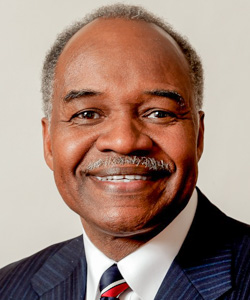
Sen. Ben Brooks
Sponsored bills
Maddy summarySB 379 repeals the examination requirement for obtaining bachelor and master social worker licenses in Maryland, directly affecting new social workers seeking these initial credentials. The bill also increases the State Board of Social Work Examiners from 12 to 14 members and expands consumer representation from 2 to 4 seats. It modifies educational requirements for certified social worker licenses by removing the exam mandate while retaining supervised experience and degree accreditation standards. These changes streamline initial licensure for bachelor/master-level social workers but maintain clinical certification requirements. The bill focuses on regulatory adjustments to social work licensing without altering practice standards or fees.
Maddy summarySB 8 establishes the Maryland Civic Excellence Program, a voluntary initiative for public school systems in Maryland to recognize student civic engagement. Starting in the 2026-2027 school year, participating schools must award a "Seal of Civic Excellence" to students who pass a government assessment, earn A or B grades in U.S. history, modern world history, and American government, and complete 75 hours of community service (including at least 30 hours on a civic project). Schools may also earn a "Center of Civic Excellence" designation if 50% or more of their graduating students receive the seal. Participating school systems must submit annual reports on the program starting in 2027.
Maddy summarySB 715 (2025) requires Maryland county boards of education to allow high school students to count hours from approved financial literacy courses toward their graduation requirement for student service hours, starting in the 2026-2027 school year. An "eligible" course must be offered by a higher education institution or approved organization, and approved by the county board. County boards determine how many hours of such a course fulfill the service requirement. The bill directs the State Board to create implementing regulations and takes effect July 1, 2025. It directly affects high school students and county education systems in Maryland.
Maddy summarySB 88 authorizes Maryland's State Administrator of Elections to form voluntary agreements (memoranda of understanding) with local municipalities. These agreements would enable the state administrator to collaborate directly with cities and towns to support their election administration, such as providing resources or expertise. The bill modifies existing election law to add this new provision (Section 2-103(e)) without changing voting rules or requirements. It directly affects municipalities managing local elections and the State Administrator's office. The change is procedural, creating a formal mechanism for state-local collaboration in election operations.
Maddy summarySB 344 allows Baltimore City, Maryland counties, and municipalities to create a property tax credit for owners who convert a property from a retail service station (such as a gas station) to another use, including retail, residential, or mixed retail-residential space. The credit is intended to help cover costs for removing underground storage tanks and cleaning up contamination from the previous use. Local governments granting the credit will receive 50% of the lost property tax revenue from the state as reimbursement. The law takes effect on June 1, 2025, for taxable years beginning after June 30, 2025.
Maddy summarySB 998 requires Maryland gas companies to file detailed plans with the Public Service Commission for safety and reliability infrastructure projects (like pipe replacements to reduce leaks or improve public safety). These plans must include project descriptions, timelines, cost analyses comparing alternatives (such as leak repair or electrification), and 2-year advance customer notifications allowing time to switch to electric options. The bill establishes a capped monthly surcharge ($2 max for residential customers) to recover project costs separately from regular rate increases, ensuring ratepayers aren’t overcharged while protecting them from unexpected bills. It directly affects gas utilities and their natural gas customers across Maryland, with the Commission reviewing all plans for compliance.
Maddy summarySB 714 requires Maryland's State Department of Education to collect and publish school discipline data in an accessible, disaggregated electronic spreadsheet format. It mandates annual publication of data broken down by race, ethnicity, gender, disability status (including 504/IEP status), socioeconomic status, and English language proficiency at the state, school system, and individual school levels. The bill establishes a threshold for identifying "high-suspending" schools (e.g., elementary schools suspending 10%+ of students in any demographic subgroup) and requires the Department to report disproportionality data for these schools annually starting October 1, 2026. This transparency measure directly affects all Maryland public schools by making disciplinary practices more visible to the public and policymakers.
Maddy summarySB 712 would amend Maryland's State Board of Education membership by adding two new elected positions: an "Educational Support Member" (for noncertificated, nonsupervisory school employees in bargaining units) and an "Administrator Member" (for principals, assistant principals, or similar school administrators). Both members would be appointed by the Governor following elections conducted by their respective professional groups, mirroring the existing teacher member election process. The bill specifies that neither new member may vote on appeals to the State Board under §6-202. This procedural change affects the composition of the 13-member Board, directly involving school support staff and administrators in governance.
Maddy summarySB 528 establishes an annual tax-free day on November 11 (Veterans Day) starting in 2025, exempting sales tax on purchases made by veterans in Maryland. The bill directly affects veterans who shop on Veterans Day, requiring them to present valid identification (like a driver's license or ID card showing veteran status) to qualify for the exemption. Key provisions include defining "veteran" as someone discharged honorably from military service and mandating vendors to verify eligibility through acceptable ID. This policy change removes sales tax from qualifying purchases on Veterans Day but does not alter Maryland's general sales tax rates or apply to other days. The law takes effect July 1, 2025.