

Maddy summaryHB 1254 establishes a state program to provide funding to Maryland public and nonpublic schools participating in the federal child nutrition program's community eligibility provision. The program covers the difference between federal paid and free meal reimbursement rates, helping schools avoid financial shortfalls when serving more students at no cost. The State Department of Education will distribute funds based on poverty concentration and geographic diversity in school districts. The state will appropriate $10 million annually starting in fiscal year 2027 to support this program.
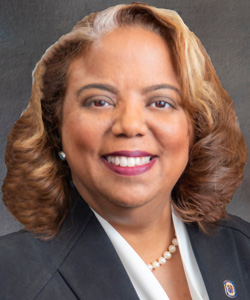
Del. Deni Taveras
Sponsored bills
Maddy summaryHB 1242 requires Maryland's State Department of Education and Department of Health to form a workgroup studying vision support for K-12 students. The workgroup will analyze how many students fail vision screenings, whether they receive follow-up care (like glasses), and barriers like insurance access. It will also evaluate current programs across school districts, identify successful models from other states, and recommend improvements for tracking vision needs and connecting students to services. The bill does not create new programs but mandates a study to inform future policy, directly affecting all primary and secondary students in Maryland.
Maddy summaryHB 912 requires Maryland colleges and universities to train instructors on federal disability laws (the Americans with Disabilities Act and Section 504 of the Rehabilitation Act) and how to provide academic accommodations for students with disabilities. New instructors must complete this training before teaching, and current instructors must do so by October 1, 2026. The Maryland Higher Education Commission will develop a model training program for institutions to adopt. This law applies to all higher education institutions in Maryland, except those already offering training that meets the required standards.
Maddy summaryHB 1496 requires new multifamily housing buildings and certain significant renovations to include electric vehicle (EV) charging infrastructure. Specifically, it mandates that new buildings with separate parking per unit must include either one fully installed EV charging space or one "EV-ready" space (with wiring capacity for future installation). For common parking areas, developers must provide one EVSE-installed space per 25 units, plus increasing percentages of EV-ready spaces (10% by 2025, 20% by 2031, 30% by 2036) for new projects. This applies to multifamily housing subject to the International Residential Code, directly affecting developers and builders of new residential properties in Maryland. The bill defines technical terms like "EV-ready" to ensure consistent implementation.
Maddy summaryThis House Joint Resolution (HJ 4) is a non-binding ceremonial measure affirming Maryland's support for Diversity, Equity, and Inclusion (DEI) as foundational to the American Dream. It does not create new laws or policies but formally encourages state, local, and federal entities to uphold DEI principles. The resolution directs certified copies to federal leaders including the President, Vice President, and congressional leadership, citing DEI's historical role in civil rights advancements. As a procedural resolution, it has no direct policy impact on constituents or funding mechanisms.
Maddy summaryHB 1088 imposes a $13 fee per short ton on coal transporters in Maryland, with revenue funding the new Fossil Fuel Mitigation Fund. The fee applies to the first carrier transporting coal in the state, excluding coal solely for farm use. The permanent fund supports programs reducing greenhouse gas emissions and fossil fuel impacts, administered by the Department or Maryland Clean Energy Center. It directly affects coal transportation companies and targets activities benefiting overburdened communities defined by environmental health indicators.
Maddy summaryThis bill allows terminally ill Maryland residents with decision-making capacity to request medication to end their lives through a structured process. It requires two physician consultations (including a consulting physician confirming the diagnosis), a mental health assessment, and written requests spaced at least 15 days apart. Pharmacists may dispense the medication only to qualifying patients, and the law clarifies that providers acting under these rules won’t violate assisted suicide laws. Death from self-administered medication will be recorded as natural causes for insurance and legal purposes.
Maddy summaryHB 1150 prohibits intentionally sharing personal identifying information or images of individuals under age 25 on public internet sites or forums without their permission and with the intent to intimidate or harm. It directly affects anyone who posts such details online about people under 25, including names, addresses, phone numbers, biometric data, school addresses, or financial information. The bill defines "disseminate" broadly to cover public online sharing and sets misdemeanor penalties of up to one year in jail or a $5,000 fine for violations. It explicitly states the law won't override free speech protections under U.S. or Maryland constitutions.
Maddy summaryThis House Joint Resolution (HJ 6) is a symbolic statement by Maryland's General Assembly expressing support for nuclear disarmament efforts. It formally joins 73 other jurisdictions (including seven states and over 75 counties/municipalities) that have passed similar "Back from the Brink" resolutions. The resolution urges Maryland's U.S. Congressional delegation to cosponsor a federal resolution supporting the Treaty on the Prohibition of Nuclear Weapons and the five key policies of the Back from the Brink initiative (like ending hair-trigger alerts and ending first-use nuclear policies). It also calls on the U.S. President and Senate to endorse the international treaty banning nuclear weapons. As a resolution, it has no legal effect but serves as a formal position statement.
Maddy summaryHB 927 requires that fiscal notes for bills reducing health and community support services funded by the Maryland Department of Health must include three specific elements: an estimate of the number of people who will lose services (by location), an assessment of how the loss affects health and well-being, and an evaluation of the financial impact on state health and social services costs. This applies to any bill that cuts funding for such services, ensuring these impacts are documented in the state's financial analysis. The bill amends existing law to add these requirements to the fiscal note process, which is used by the General Assembly to evaluate budget proposals. The changes will take effect on October 1, 2025.