

Maddy summaryThis bill requires school principals to investigate every student fight or physical struggle by gathering witness statements, video evidence (if available), and input from all students involved. It prohibits school staff from disciplining students who, after investigation, more likely than not used reasonable force necessary to protect themselves or escape an attack. If a student was disciplined but later found to have acted in self-defense, the school must remove all related discipline records from their file. The law directly affects students involved in fights, school administrators, and the handling of disciplinary records in Maryland public schools.
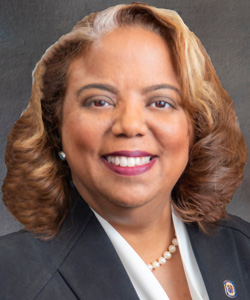
Del. Deni Taveras
Sponsored bills
Maddy summaryThis is a symbolic resolution, not a bill with enforceable policy changes. Maryland's General Assembly formally joins other states (like California and Oregon) and local jurisdictions in endorsing the "Back from the Brink" initiative. It urges Maryland's congressional delegation to cosponsor a federal resolution supporting the UN Treaty on the Prohibition of Nuclear Weapons and asks the U.S. President and Senate to endorse that treaty. The resolution expresses concern about nuclear risks but does not create new laws or directly affect any individuals or entities.
Maddy summaryHB 971 creates a workgroup to study whether Maryland should adopt a fee-for-service model for all Medicaid services, meaning providers would be paid directly per service (instead of through managed care organizations). The workgroup, composed of two legislators, a health care commission representative, and three Governor-appointed members (including a provider and an advocate), will assess the feasibility of this change. The study will examine how a fee-for-service model could work across the entire Medicaid program, including its impact on access and costs. The bill does not change current Medicaid policy but mandates this study to inform future decisions.
Maddy summaryHB 1157 requires health insurance carriers in Maryland to annually report detailed data on mental health and substance use coverage to the Insurance Commissioner using a standardized template. This data includes access to services by facility type (e.g., outpatient, inpatient), provider type (e.g., psychiatrists, psychologists), and demographics (e.g., youth vs. adult, in-person vs. telehealth), along with network accuracy and availability. The Commissioner must make this data publicly accessible via a website with interactive dashboards. The law directly affects all health insurance companies offering plans in Maryland, aiming to improve transparency about coverage gaps in mental health care.
Maddy summaryHB 381 requires Maryland's State Highway Administration to install traffic control devices prohibiting right turns on red at specific intersections on state highways in urban cores and urban centers by July 1, 2029. It directly affects drivers at these intersections by changing the default rule from "turns on red are permitted unless prohibited" to "turns on red are prohibited unless allowed by a sign." The bill amends existing law to mandate these devices while allowing exceptions if installation would significantly impair public safety. The law takes effect October 1, 2026, with full implementation required by 2029.
Maddy summaryHB 881 establishes a 10-member Task Force on Not-for-Profit Funeral Establishments to study the feasibility of allowing not-for-profit funeral homes in Maryland. The Task Force includes legislative appointees, representatives from funeral associations, and faith-based community representatives (African American, Catholic, Jewish, Muslim, Protestant). It will analyze licensing data, review similar laws in other states, and assess potential impacts before reporting findings to the Governor and General Assembly by December 1, 2026. The bill expires automatically on September 30, 2027, with no direct policy changes enacted.
Maddy summaryHB 1564 prohibits businesses in Maryland from knowingly manufacturing, selling, distributing, dispensing, or supplying drugs or medical devices if they know or should know the order was prompted by someone intending to use them for a death sentence. The law directly affects pharmacies, manufacturers, and distributors operating in Maryland by banning transactions where the purpose is execution. Key provisions require businesses to verify the intended use of drugs/devices and prohibit supply when execution is the purpose. The bill takes effect October 1, 2026, with no exceptions for state execution protocols.
Maddy summaryHB 818 requires Maryland public colleges to cover tuition, room, board, required books, course materials, supplies, and equipment for foster care recipients and homeless youth who qualify. It defines "foster care recipient" as individuals in out-of-home placements (with specific age or guardianship criteria) and "homeless youth" as those verified under federal McKinney-Vento guidelines. To qualify, students must enroll before age 25 for a vocational certificate, associate’s, or bachelor’s degree, file for federal/state financial aid, and cannot use scholarships/grants toward covered costs. The exemption lasts until the student earns their degree or 10 years after starting their program, whichever comes first.
Maddy summaryHB 1488 proposes amending the Maryland Constitution to replace gendered terms like "man," "his," and "him" with gender-neutral language such as "person" and "their." It specifically targets multiple articles and sections across the Constitution (including the Declaration of Rights, Executive Department, and Judiciary Department) to update outdated terminology. The bill does not change substantive rights or policies but modernizes the language to be inclusive. This is a procedural constitutional amendment focused solely on terminology, not on altering legal obligations or government functions.
Maddy summaryHB 1460 (Landlord and Tenant - Investor-Owned Single-Family Rental Property - Landlord Requirements) limits rent for investor-owned single-family rentals (defined as properties owned by individuals with two or more rental properties in Maryland). It sets a maximum rent at 120% of either the federal fair market rent for the area or the home’s last sale price divided by 12, and prohibits landlords from charging more than documented utility costs or $100/month in mandatory fees. Landlords must disclose the fair market rent, last sale price, and maximum allowable rent to tenants before lease agreements, and the state must maintain a public registry of these landlords. Violations can result in fines up to $10,000, license suspension, or tenant lawsuits seeking triple damages. The bill takes effect January 1, 2027.