

Maddy summaryHB 588 designates May 5 as an annual "Missing and Murdered American Indian and Alaskan Native Women and Girls Awareness Day" for the Governor to proclaim. It requires the Department of State Police to submit a report to the Maryland General Assembly by December 1, 2026, on whether law enforcement agencies collect sufficient data about violence against these communities. The report must include policy recommendations to improve data collection methods, coordinate with federal agencies during investigations, and raise public awareness. This bill directly affects state agencies and aims to address gaps in tracking violence against American Indian and Alaskan Native women and girls, who face disproportionately high rates of violence.
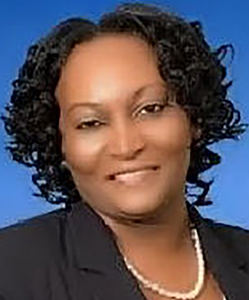
Del. Diana Fennell
Sponsored bills
Maddy summaryThis bill requires Maryland's Governor to annually proclaim May as Water Safety Month. It directs the Governor to urge educational and civic organizations to host events focused on drowning prevention and safe water practices. The law modifies Maryland's code to establish this annual designation, taking effect October 1, 2026. It directly affects the Governor's office and organizations coordinating public safety awareness.
Maddy summaryHB 1295 establishes new rules for fully autonomous vehicles (Level 4/5 systems) operating on Maryland highways without human drivers. It requires these vehicles to achieve a "minimal risk condition" (like safely stopping) if their automated system fails, and mandates compliance with Maryland's vehicle laws unless exempted by regulations. The bill also explicitly states that data collected by these vehicles (e.g., location, sensor data) falls under the state's Online Data Privacy Act, requiring protection similar to other personal information. This directly affects manufacturers, operators, and passengers of fully autonomous vehicles operating in Maryland.
Maddy summaryHB 1522 removes a legal exemption that previously protected vehicle rental companies from liability for traffic violations captured by traffic control signal or speed monitoring systems. The bill repeals specific sections of Maryland law (21-202.1 and 21-809) that excluded rental companies and special plate holders from receiving citations for red-light running or speeding violations recorded by these systems. As a result, rental companies will now be directly liable for such violations, facing the same civil penalties as individual vehicle owners. This change affects all vehicle rental companies operating in Maryland, requiring them to address violations recorded by municipal or state monitoring systems. The bill takes effect October 1, 2026.
Maddy summaryHB 1477 establishes Maryland's Ibogaine Clinical Research Grant Program to fund clinical trials on ibogaine - a naturally occurring compound from the iboga plant - for treating opioid use disorder and other neurological conditions. The program, administered by the Maryland Department of Health in consultation with the Department of Veterans and Military Families, awards up to three annual grants to eligible research institutions in Maryland that meet specific criteria (including expertise in neurological disorders and substance use treatment) and require matching funds equal to the grant amount. Funding comes from $500,000 annually (fiscal years 2028-2030) in the Opioid Restitution Fund, with recipients required to conduct FDA-overseen trials and submit quarterly progress and financial reports. The bill aligns with the "Veterans Mental Health Innovations Act" title but does not restrict trials to veterans, focusing instead on broader neurological and opioid use disorder research.
Maddy summaryHB 1027 requires Maryland's State Board of Elections to establish a telephone voting system for absentee ballots, specifically for voters who certify having a print disability (a condition preventing reading standard printed materials). The bill mandates the State Board to select, certify, and acquire a system meeting strict security and accessibility standards - including ballot secrecy, accuracy, paper trail requirements, and toll-free access - after independent testing by a federally approved lab. Eligible voters must submit a form certifying their disability to be added to a list, and the State Board must send them detailed instructions, a toll-free number, and voting dates 75 days before absentee ballots are mailed. The bill also requires the State Board to implement a public education campaign about the system and report progress to legislative committees by December 1, 2028.
Maddy summaryHB 897 (the "Lower Bills and Local Power Act of 2026") requires electric companies operating high-voltage transmission lines (>69,000 volts) in Maryland to join regional transmission organizations. It mandates new application details for certain utility projects, creates a Solar and Energy Storage Market Stabilization Program within the Maryland Energy Administration, and redirects funds from the Maryland Strategic Energy Investment Fund to provide refunds or credits to residential electricity customers. The bill also requires studies on siting transmission lines and battery storage systems within existing rights-of-way and sets deadlines for the Public Service Commission to review project certificates. These provisions directly affect electric utilities, the Public Service Commission, and residential electricity customers through cost adjustments.
Maddy summaryHB 935 requires Maryland to establish a dedicated prerelease facility for female incarcerated individuals, directly affecting women eligible for prerelease programs at the Maryland Correctional Institution for Women. The bill mandates a separate facility meeting specific criteria: at least 3 acres, not within 1 mile of other prisons, and designed to house 1.25 times the 2024 prerelease-eligible population. It requires the Department of Public Safety and Correctional Services to provide comprehensive rehabilitative services (including gender-responsive programming) and report progress to legislative committees by a specified deadline. The facility must operate by June 1, 2023, with the Department of General Services directing procurement for its construction.
Maddy summaryHB 488 establishes the geographic boundaries for Maryland's eight congressional districts for the 2026 elections. It specifies exact county and election district portions, using census tract data to define district lines where precincts are split, based on boundaries as they existed on January 13, 2026. This bill directly affects voters in Maryland's congressional districts by determining which communities are grouped together for electing U.S. Representatives. It replaces previous election law sections (8-702 through 8-709) and clarifies that certain districting rules apply only to state legislative districts, not congressional ones.
Maddy summaryThis bill creates a rule that a minor's statement during a custodial interrogation is presumed involuntary and inadmissible in court if law enforcement intentionally used false information to obtain it. It directly affects minors facing juvenile or criminal charges, as their statements could be excluded from proceedings under this presumption. The presumption can be overcome only with clear and convincing evidence proving the statement was voluntary despite the false information. The law applies to all custodial interrogations of minors in Maryland, modifying admissibility standards under Maryland's judicial code.