

Maddy summaryHB 624 (Safe Staffing Act of 2026) requires most Maryland hospitals to establish clinical staffing committees with equal management and employee representation, including specific frontline staff like nursing assistants and dietary aides. These committees must develop annual staffing plans considering patient acuity, staffing gaps, and evidence-based standards, then post the plans publicly and update them yearly. Hospitals must implement these plans starting in 2028, allow staff to file complaints about violations, and report annually to the Maryland Health Care Commission beginning in 2030. The law directly affects licensed hospitals and frontline healthcare workers by mandating structured, transparent staffing processes to address patient care needs.
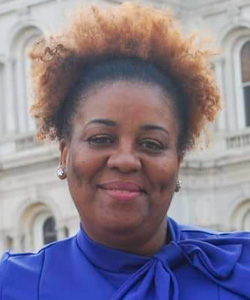
Rep. Jackie Addison
Sponsored bills
Maddy summaryHB 1389 updates Maryland law to explicitly include female genital mutilation (FGM) under the legal definition of "abuse" for child protection purposes. This requires healthcare workers, educators, and others to report suspected FGM cases - just like other forms of child abuse - and increases penalties for violations. The bill also allows victims to file civil lawsuits and mandates the Maryland Department of Health to create educational materials about FGM. These changes directly affect mandated reporters, medical professionals, and individuals at risk of FGM.
Maddy summaryHB 478 modifies Maryland's income tax by expanding the existing $250 deduction for unreimbursed classroom supply expenses to include prekindergarten teachers. Previously, only K-12 classroom teachers qualified; this bill explicitly adds prekindergarten teachers employed full-time in state programs. The deduction remains limited to $250 per year for supplies used by students or for teaching preparation, excluding expenses already deducted federally. This change affects prekindergarten teachers statewide who purchase classroom supplies without reimbursement, effective for taxable years starting after December 31, 2025.
Maddy summaryHB 1574 modifies Maryland's child care licensing rules to require the State Department of Education to issue warnings for first-time violations of new regulations instead of immediate penalties, with potential fines for repeat offenses. It creates a dedicated unit to process and manage criminal background checks for child care staff, ensuring applicants receive timely updates on their check status. The bill also mandates that the State Superintendent list individuals prohibited from child care employment due to supervision failures and establishes a workgroup to study illegal child care operations. These changes directly affect licensed child care centers, registered family child care homes, and all applicants seeking positions involving direct child contact.
Maddy summaryHB 918 authorizes Baltimore City to create and enforce local laws that are stricter than state rules for regulating the sale and distribution of cigarettes, other tobacco products, and electronic smoking devices. It allows the Baltimore City Council and Mayor to implement these stricter local rules, while still requiring compliance with state licensing and tax laws under Title 12 of Maryland’s Tax-General Article. The bill takes effect October 1, 2026, and directly affects Baltimore City’s ability to tailor tobacco and e-cigarette regulations to local needs.
Maddy summaryHB 1105 sets a 3-year statute of limitations for prosecuting or enforcing local consumer protection codes in Maryland. It requires that legal actions for fines, penalties, or equitable relief must be filed within 3 years after local authorities knew or reasonably should have known about a violation. This applies directly to municipalities with their own consumer protection codes and affects businesses or entities violating those local rules. The bill modifies Maryland's judicial code to establish this timeframe for enforcement actions.
Maddy summaryHB 139 establishes an annual tax-free day on November 11 (Veterans Day) starting in 2026, allowing veterans to purchase items under $2,000 without paying Maryland's sales tax. To qualify, veterans must show a driver's license or ID card noting veteran status at the point of sale. The Comptroller can suspend the tax-free day at their discretion. This law directly affects veterans shopping for qualifying items on Veterans Day, creating a temporary sales tax exemption with specific verification requirements.
Maddy summaryHB 336 amends Maryland law to restrict District Court commissioners from issuing arrest warrants based on applications from anyone other than police officers or State’s Attorneys. It also adds specific circumstances under which warrants may be issued (e.g., if a defendant skipped a summons, is unknown to authorities, or is in custody for another offense). Additionally, the bill increases the penalty for knowingly making false statements about crimes or public safety dangers to officials, raising the maximum jail term from six months to three years. These changes directly affect law enforcement, prosecutors, and individuals who file complaints or reports with authorities.
Maddy summaryHB 687 (the PACE Act) protects criminal defendants and juvenile respondents in Maryland from having their creative works (like music, poetry, visual art, or film) used as evidence against them in court. It blocks such evidence unless a court finds, by a preponderance of evidence, that the creator intended the work to be literal (not fictional), it directly references the specific facts of the alleged crime, and it's relevant to a disputed fact. The bill explicitly excludes this protection for juvenile cases where creative expression is used to evaluate mental health or diversion programs. This law directly affects artists facing criminal or juvenile charges in Maryland, changing how their original creative expression can be considered as evidence. The law takes effect October 1, 2026.
Maddy summaryHB 1034 requires all child care providers in Maryland to complete mandatory training on identifying, preventing, and reporting child abuse within six months of starting employment and every two years thereafter. Child care entities (licensed facilities) must annually certify to the State Department of Education by July 1 that all providers meet these training requirements. Violations by providers may lead to corrective actions, employment suspension/termination, or license revocation, while entities failing to certify may face license suspension or revocation. This bill directly affects licensed child care providers and their employers, amending existing child abuse reporting laws to strengthen training and compliance mechanisms.