

Maddy summaryHB 552 establishes an independent investigation into the historical House of Reformation and Instruction for Colored Children, a former state detention facility in Prince George’s County that housed Black youth for over a century. The investigation will use ground-penetrating radar to locate unmarked graves, review historical records to identify deceased children, and determine causes of death and institutional conditions. It requires the appointed investigators - selected for expertise in civil rights, historical inquiry, and juvenile justice - to produce a public report with recommendations for a memorial, dignified reburial of remains, and policy changes for future deaths in state custody. This bill directly affects descendants of the children buried there and the public seeking accountability for this neglected chapter of Maryland’s history.
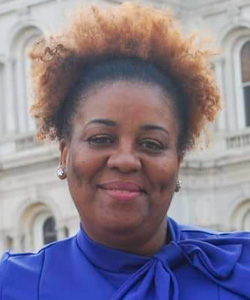
Rep. Jackie Addison
Sponsored bills
Maddy summaryHB 340 would allow Maryland to join the School Psychologist Interstate Licensure Compact, enabling licensed school psychologists from member states to practice in Maryland without reapplying for separate state licenses. This directly affects school psychologists seeking to work across state lines, particularly in areas facing staffing shortages. The compact establishes standardized requirements for multistate licensure and creates a commission to manage the agreement, while ensuring states maintain authority to protect public safety through their own scope-of-practice laws. The goal is to improve access to school psychological services by streamlining licensing for qualified professionals.
Maddy summaryHB 548, the Maryland Housing Certainty Act, requires local governments to approve housing development projects based solely on land-use laws and regulations in effect when a developer submits a "substantially complete" application. It grants developers "vested rights" to build under those original rules for a set period, protecting projects from future regulatory changes. The bill also prohibits localities from collecting development excise taxes or impact fees until a project is fully completed. This directly affects housing developers and local planning authorities across Maryland, streamlining approvals for new housing while limiting fee collection during construction.
Maddy summaryHB 680 renames Maryland's "Children's Cabinet Fund" to the "Children's Cabinet Interagency Fund" and mandates specific annual funding increases for grants to local management boards. Starting in fiscal year 2028, the Governor must appropriate $3 million above the 2027 level, with $2 million increases each subsequent year through 2031. These funds support local boards in implementing coordinated services for children and families, including youth development, prevention, crisis intervention, and reducing out-of-home placements. The bill directly affects local management boards that coordinate child welfare services, requiring them to align with state and local plans when applying for these grants.
Maddy summaryHB 864 (Maryland Workforce Apprenticeship Utilization Act) requires contractors and subcontractors on Maryland public works projects to employ a minimum percentage of qualified apprentices or journeyworkers instead of paying fees to apprenticeship programs. The bill expands this requirement to cover construction projects for the University System of Maryland and Baltimore City Community College. It repeals current provisions allowing contractors to pay fees in lieu of hiring apprentices and directs the Secretary of Labor to set an annual apprenticeship hiring percentage for each project. This policy change directly affects contractors bidding on public construction projects valued above specific thresholds, aiming to increase on-the-job training opportunities in skilled trades.
Maddy summaryHB 635 requires all individuals seeking positions involving direct contact with children in Maryland child care facilities - including staff and volunteers - to undergo a criminal history background check. It creates a centralized unit within the State Department of Education to process these checks, with strict timelines (10 days for initial status, 45 days for final eligibility) and strict confidentiality rules prohibiting unauthorized sharing of results. The bill directly affects child care facilities, their employees, and volunteers by mandating these checks and establishing a standardized process for handling them. It also updates existing licensing rules to align with this new requirement, effective October 1, 2026.
Maddy summaryHB 681 increases Baltimore City's maximum civil and criminal fine for ordinance violations from $1,000 to $5,000. This directly affects residents and businesses in Baltimore City who may face penalties for breaking local ordinances, rules, or regulations. The bill amends the city charter to raise the cap on fines while maintaining a maximum 12-month jail term for violations. It does not change the types of ordinances covered but allows the city to impose higher penalties for enforcement. The change takes effect October 1, 2026.
Maddy summaryHB 1279 modifies Maryland's Catalytic Revitalization Project Tax Credit program to expand eligibility and adjust credit calculations. It updates definitions to include properties formerly owned by the federal government or state, or those formerly used as schools/hospitals, and clarifies income thresholds for "workforce housing" (e.g., 60-150% area median income in designated areas). The bill changes how tax credits are claimed: for workforce housing projects, 50% of the credit applies to workforce units in the first year, with 33% of non-workforce costs spread over three subsequent years. This directly affects developers and property owners rehabilitating qualifying properties seeking state tax credits. The changes aim to simplify claiming while expanding opportunities for projects in targeted communities.
Maddy summaryHB 980 (Kanaiyah's Law) creates the Office of the Child Welfare Ombudsman within the Attorney General's office to handle complaints about Maryland's child welfare system. It requires juvenile courts to include specific information-sharing requirements in guardianship orders and expands criminal background checks to cover all adults living in a child's guardian's home. The bill also prohibits unlicensed placements for certain children, protects complainants from retaliation, and exempts certain complaint records from public disclosure. These changes directly affect child welfare agencies, guardians, and families navigating the system, aiming to improve transparency and accountability.
Maddy summaryHB 595 modifies Maryland's income tax credit for physicians mentoring medical students in underserved areas. It removes a requirement that students must be enrolled in a Maryland medical school or training program and reduces the required hours per preceptor rotation from 100 to 90 for community-based clinical training. Licensed physicians serving as preceptors in designated healthcare shortage areas may claim a $1,000 tax credit per qualifying student rotation, capped at $10,000 annually per physician and $100,000 statewide. The bill aims to expand access to physician mentorship by broadening eligibility for the credit, directly benefiting doctors and medical training programs in regions facing healthcare workforce shortages.