

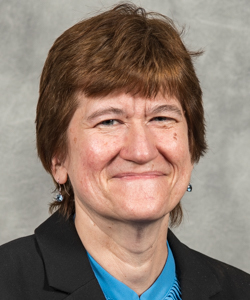
Photo of Sheila Ruth
D Maryland House · District 44B On the 2026 ballot

Rep. Sheila Ruth

Compare
Total votes
6,880
all sessions
Attendance
99%
97 missed
Near the chamber average
With party
99%
of cast votes
Near the chamber average
Bipartisan score
0%
crosses aisle rarely
Near the chamber average
Sponsored
635
bills & resolutions
Higher than 83% of chamber peers
Committees
1
assignment
635 bills and resolutions

Sponsored bills

Total
635
Primary
635
Co-sponsor
0
This page
635
matching current filters
Primary HB 1263
Passed · Maryland House · Lead sponsor
Public Health - Workgroup on Postoperative Cosmetic Care

Maddy summaryHB 1263 establishes a workgroup to study the regulation of postoperative cosmetic care provided by non-physician practitioners (such as estheticians or massage therapists), focusing on patient safety, consumer protection, and access to qualified providers. The workgroup, composed of health officials, patient advocates, and care providers, will examine current rules, identify gaps in care access, review risks from unregulated services, and evaluate best practices from other states. It must submit interim and final reports by December 2026 and 2027, respectively, and cannot recommend new licensing without legislative approval. The workgroup expires on June 30, 2028, unless extended.

Passed Mar 18, 2026 0 co-sponsors
Primary HB 543
Passed · Maryland House · Lead sponsor
Real Property - Landlord and Tenant - Family Child Care Homes

Maddy summaryHB 543 allows landlords to charge up to two months' rent as a security deposit if a tenant operates a family child care home (defined as caring for up to eight children in a residence). It prohibits landlords from unreasonably restricting or banning such homes on single-family rental properties and shields landlords from civil liability related to the child care operation. Tenants must provide written notice 60 days before starting, share their child care registration, and supply insurance naming the landlord and property owners as additional insureds. The bill also requires tenants to notify landlords immediately if they stop operating the home and permits landlords to mandate $1 million liability insurance coverage.

Passed Mar 17, 2026 0 co-sponsors
Primary HB 1268
In committee · Maryland House · Lead sponsor
Environmental Permits - Requirements for Burden Analysis, Issuance and Renewal, and Public Participation (Cumulative Harms for Environmental Restoration for Improving Shared Health - CHERISH Our Communities Act)

Maddy summaryHB 1268 requires new or renewed environmental permits for facilities in Maryland neighborhoods identified as "at-risk" (based on high pollution levels or proximity to pollution sources like power plants or landfills) to include a "burden report" detailing existing environmental health issues. The state Department of the Environment must deny permits if approval would worsen pollution stressors in these areas, using Maryland’s Environmental Justice Tool to define "at-risk" census tracts. It applies specifically to air quality permits for construction and water discharge permits for facilities like power plants, waste sites, or mining operations. The bill mandates public participation in permit reviews for these facilities and requires the Department to document its assessment for judicial review.

In committee Mar 13, 2026 0 co-sponsors
Primary HB 164
Passed · Maryland House · Lead sponsor
State Buildings and State Highways - Collection and Disposal of Yard Waste

Maddy summaryHB 164 establishes new rules for handling yard waste collected on state-owned buildings and highways in Maryland. It requires workers to collect waste in reusable containers or compostable paper bags (not single-use plastic) and mandates disposal at specific facilities like organics recycling centers, natural wood recycling facilities, or state sites that create mulch. The bill applies to anyone employed to manage yard waste on state properties, excluding noxious weeds or invasive species. These requirements take effect October 1, 2026, aiming to improve waste management practices for state grounds.

Passed Mar 13, 2026 0 co-sponsors
Primary HB 156
Passed · Maryland House · Lead sponsor
Election Law - Affiliating With a Party and Voting - Unaffiliated Voters

Maddy summaryHB 156 allows unaffiliated voters in Maryland to affiliate with a political party during early voting for primary elections. Specifically, unaffiliated voters can request to change their party affiliation at an early voting center and receive a provisional ballot for their chosen party. The bill amends election law to permit this change during early voting periods, requiring election judges to verify the voter's county residency before issuing the provisional ballot. This change applies only to primary elections and does not alter standard voter registration rules or deadlines for affiliation. The bill does not affect voting eligibility for other elections or nonpartisan contests.

Passed Mar 12, 2026 0 co-sponsors
Primary HB 832
In committee · Maryland House · Lead sponsor
Public Safety - State Law Enforcement Agencies - Hiring Restriction (ICE Breaker Act)

Maddy summaryHB 832, the "ICE Breaker Act," prohibits Maryland state law enforcement agencies from hiring individuals who were hired as sworn officers by U.S. Immigration and Customs Enforcement (ICE) on or after January 20, 2025. It applies specifically to agencies defined in the bill, including the Maryland State Police, Maryland Transportation Authority Police, and others listed in Section 3-535 of the Maryland Annotated Code. The law only affects new hires after its effective date (October 1, 2026), with no retroactive application to current employees hired before that date. The bill creates a clear hiring restriction for these state agencies regarding individuals with recent ICE employment.

In committee Mar 11, 2026 0 co-sponsors
Primary HB 1306
In committee · Maryland House · Lead sponsor
Assisted Outpatient Treatment - Surrender or Seizure of Firearms

Maddy summaryHB 1306 requires courts to order individuals under court-ordered assisted outpatient treatment (AOT) to surrender firearms to law enforcement and prohibits firearm possession during the AOT period, if the court determines the person poses a risk of causing physical harm with a firearm. This applies specifically to people already subject to AOT orders under Maryland law, not the general public. Key provisions include mandating court risk assessments, requiring surrender to police (with receipts and storage details), allowing limited transportation of firearms under court orders, and permitting firearm return upon AOT order expiration - unless the person is otherwise barred from firearm ownership. The bill amends Maryland’s health code to integrate these firearm restrictions into existing AOT proceedings.

In committee Mar 11, 2026 0 co-sponsors
Primary HB 1492
In committee · Maryland House · Lead sponsor
Collective Bargaining - Public Employees - Revocation of Certification and School and Library Employees' Right to Strike

Maddy summaryHB 1492 establishes the right to strike for specific public school and library employees in Maryland, including certificated and noncertificated staff like substitute teachers, nurses, and JROTC instructors in certain counties. The bill prohibits public school and library employers from taking disciplinary action against employees who participate in or support strikes. It repeals the Public Employee Relations Board’s authority to deny or revoke a union’s certification as an exclusive bargaining representative under certain circumstances. These changes apply to defined groups of employees under Maryland’s Education Article, ensuring their collective bargaining rights are protected from employer retaliation.

In committee Mar 11, 2026 0 co-sponsors
Primary HJ 3
In committee · Maryland House · Lead sponsor
Elementary and Secondary Education - Curriculum - Importance of Diversity

Maddy summaryThis House Joint Resolution (HJ 3) is a policy statement, not a binding law, acknowledging Maryland's commitment to inclusive education. It resolves that elementary and secondary school curricula should include the history of communities that have experienced discrimination (based on disability, ethnicity, gender, race, religion, indigenous affiliation, or sexual orientation) to ensure all students feel represented. The resolution directs education officials to adopt this inclusive approach but does not mandate specific curriculum changes or allocate funding. It primarily affects state education leaders, school boards, and curriculum developers by setting a policy direction for curriculum content.

In committee Mar 11, 2026 0 co-sponsors
Primary HJ 7
In committee · Maryland House · Lead sponsor
Anti-Nuclear Proliferation Resolution (Back from the Brink Act)

Maddy summaryThis is a symbolic resolution, not a bill with enforceable policy changes. Maryland's General Assembly formally joins other states (like California and Oregon) and local jurisdictions in endorsing the "Back from the Brink" initiative. It urges Maryland's congressional delegation to cosponsor a federal resolution supporting the UN Treaty on the Prohibition of Nuclear Weapons and asks the U.S. President and Senate to endorse that treaty. The resolution expresses concern about nuclear risks but does not create new laws or directly affect any individuals or entities.

In committee Mar 4, 2026 0 co-sponsors
Showing 51 to 60 of 635 bills
Previous 1 5 6 7 64 Next