

Maddy summaryHB 417 establishes the Commission on Universal Health Care to study the feasibility of creating a state-run health care program covering all Maryland residents through a single-payer system. The commission, composed of appointed members from government, labor unions, healthcare organizations, and community groups, will examine how to provide comprehensive, equitable coverage - including preventive, mental, reproductive, and hospital care - regardless of income, immigration status, or health needs. It will analyze cost containment strategies, health equity gaps, and models from other states, but does not create the program itself. The commission must report its findings and recommendations to the Maryland General Assembly by 2026.
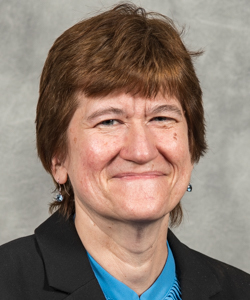
Del. Sheila Ruth
Sponsored bills
Maddy summaryHB 342 adjusts Maryland's property transfer tax rates based on sale price and property type. It increases rates for residential properties (e.g., 0.25% for under $300,000 up to 1.5% for over $3 million) and non-residential properties (e.g., 0.5% for under $5 million up to 1.5% for over $40 million). The bill creates a special 0.25% tax rate for first-time homebuyers who will occupy the property as their primary residence, with the seller required to pay the entire tax. This directly affects home sellers, buyers, and real estate transactions involving properties over $300,000.
Maddy summaryHB 341 allows Baltimore City or Maryland counties/municipalities to grant property tax credits to property owners who convert retail service stations (like gas stations) to other retail, residential, or mixed uses. The credit specifically helps cover costs for removing underground storage tanks and cleaning contamination. Local governments can set credit terms, and the state will reimburse them 50% of the lost property tax revenue from the credit. This bill directly affects property owners and local governments managing such conversions, focusing on practical cleanup costs rather than new development.
Maddy summaryHB 247 modifies Maryland's driver's license requirements for unaccompanied homeless youths under 19 who hold a learner's permit. It reduces the waiting period before they can take driver skills examinations from 9 months to 3 months, while maintaining other requirements like completing a 30-hour driver education course and 60 hours of supervised driving (including 10 nighttime hours). The bill specifically applies to youths determined homeless by a Maryland school liaison, Runaway and Homeless Youth Act program, or McKinney-Vento program. This change aims to provide greater access to driver's licenses for a vulnerable population without altering the core training and supervision standards.
Maddy summaryHB 167 increases Maryland's vehicle excise tax rate from 6% to 6.75% of a vehicle's fair market value, effective July 1, 2025. It maintains a $100 minimum tax for all vehicles and applies to new title registrations and vehicles registered interstate without a title. The bill amends sections 13-809(b) and (c) of Maryland's Transportation Article. This change affects all Maryland residents who register vehicles, including those transferring from other states.
Maddy summaryHB 215 authorizes Maryland's State Board of Elections to use ranked-choice voting in the 2028 statewide primary election for selecting a political party's candidate for President of the United States. If implemented, the State Board must develop and fund a voter education campaign about ranked-choice voting and submit a report on its use by January 1, 2029. The bill also requires the State Board to adopt regulations for reviewing and certifying election-supporting technology, such as electronic pollbooks and risk-limiting audit tools. These changes will affect how presidential nomination contests are conducted and how election technology is managed in Maryland.
Maddy summaryHB 51 requires local news organizations meeting specific criteria to provide written notice at least 120 days before a sale. This applies to entities publishing regular local news (print, digital, or both) with full-time journalists covering their community, disclosing ownership, and not primarily funded by political groups. The notice must be sent to affected employees, the county governing body, and nonprofit buyers of local news. The sale cannot be completed without this notice being provided, effective October 1, 2025.
Maddy summaryThis Maryland law updates rules on how contraceptives are sold and allows registered nurses to provide certain nonprescription medications without a doctor's order. The bill removes criminal penalties for selling contraceptives through vending machines in schools and clarifies that only natural membrane condoms, not all nonlatex condoms, are banned from such machines. It also authorizes a committee to create a list of over-the-counter drugs and devices that registered nurses can dispense at local health departments. Additionally, the legislation defines key terms like "dispense" and "authorized prescriber" to guide how nurses handle these medications. These changes aim to improve access to reproductive health products and expand the role of nurses in public health settings.
Maddy summaryThis bill, known as the Melanie Nicholle Diaz Fire Safety Act, establishes new fire safety requirements for residential rental high-rise buildings in Maryland to improve occupant protection. It mandates the installation of specific smoke detectors in public corridors of these buildings starting July 1, 2024, and requires owners to post notices if their buildings lack complete automatic sprinkler systems. The legislation also ensures that tenants who are deaf, deafblind, or hard of hearing receive appropriate notification appliances without having to pay for them or provide documentation. Additionally, the bill creates a workgroup to develop best practices for pre-1974 high-rise apartments and allows local governments to offer property tax credits for buildings that make qualifying fire safety improvements.
Maddy summaryHB 575 reformulates Maryland's Criminal Injuries Compensation Board by expanding it from five to seven members and mandating that the new composition reflect the state's racial, ethnic, geographic, and gender diversity. The bill specifically requires at least one board member to be a survivor of violence from a community facing high rates of violence and incarceration, while another must represent an organization assisting victims with compensation applications. It also updates the definition of "victim" to include individuals who suffer physical or psychological injury while trying to prevent a crime, apprehend an offender, or assist law enforcement or emergency services. Additionally, the legislation clarifies which crimes are eligible for compensation and outlines the qualifications for third-party professionals who can assist in claims. Finally, the act grants the Governor the authority to include funding for the Criminal Injuries Compensation Fund in the annual state budget.