

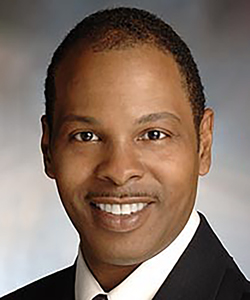
Photo of Frank Conaway
D Maryland House of Delegates · District 40

Del. Frank Conaway

Compare
Total votes
13,141
all sessions
Attendance
89%
1,449 missed
Higher than 89% of chamber peers
With party
99%
of cast votes
Near the chamber average
Bipartisan score
0%
crosses aisle rarely
Near the chamber average
Sponsored
690
bills & resolutions
Near the chamber average
Committees
2
assignments
690 bills and resolutions

Sponsored bills

Total
690
Primary
438
Co-sponsor
252
This page
690
matching current filters
Primary HB 786
In committee · Maryland House of Delegates · Lead sponsor
Criminal Law - Theft - Mail and Packages (Porch Piracy Act of 2026)

Maddy summaryHB 786 (Porch Piracy Act of 2026) prohibits stealing mail or packages delivered by the U.S. Postal Service or delivery companies as a felony, directly affecting individuals who commit such thefts. It requires courts to order convicted offenders to either return the stolen items or pay restitution for their value, and mandates the Central Collection Unit to report overdue restitution to consumer reporting agencies. The bill also creates new enforcement mechanisms, including automatic referral of overdue restitution over $30 to tax and lottery intercept programs. This law takes effect October 1, 2026, and amends Maryland’s Criminal Law (Section 7-106.1) and Criminal Procedure (Section 11-616) codes.

In committee Feb 5, 2026 0 co-sponsors
Primary HB 767
In committee · Maryland House of Delegates · Lead sponsor
Criminal Law - Theft and Opening of Mail and Packages

Maddy summaryHB 767 updates Maryland's criminal law to specifically address theft and unauthorized opening of mail and packages. It prohibits taking or opening mail/package not addressed to you without permission (Section 3-905) and makes stealing mail/package delivered by USPS or a delivery company a felony (Section 7-106.1), punishable by up to 5 years in prison. The bill requires courts to notify the U.S. Postmaster General of convictions involving USPS-delivered mail or packages. It directly affects individuals who steal or tamper with mail or packages intended for others, particularly those handled by USPS or commercial delivery services.

In committee Feb 5, 2026 0 co-sponsors
Primary HB 760
In committee · Maryland House of Delegates · Lead sponsor
Criminal Law - Misdemeanor Theft - Statute of Limitations

Maddy summaryHB 760 changes Maryland's statute of limitations for prosecuting misdemeanor theft cases. It extends the time limit from 2 years to 3 years for thefts involving property or services valued between $100 and $1,500, while keeping the 2-year limit for thefts under $100. This affects prosecutors and defendants in these specific misdemeanor theft cases, giving authorities more time to file charges for the higher-value offenses. The bill takes effect October 1, 2026, and does not alter the penalties for these crimes.

In committee Feb 5, 2026 0 co-sponsors
Primary HB 763
In committee · Maryland House of Delegates · Lead sponsor
Speed Monitoring Systems - Citations - Failure to Pay

Maddy summaryHB 763 repeals a requirement that speed monitoring system citations must include a statement advising recipients that failure to pay or contest is an admission of liability. The bill modifies Maryland's transportation code (Section 21-809(d)(1)(xi)) to remove this specific language while retaining all other citation details and consequences, such as registration refusal or suspension for non-payment. This change directly affects drivers who receive automated speed violation notices via mail. The policy shift simplifies the citation notice by eliminating the "admission of liability" warning, though penalties and contest procedures remain unchanged.

In committee Feb 5, 2026 0 co-sponsors
Primary HB 762
In committee · Maryland House of Delegates · Lead sponsor
Law Enforcement – Use of Facial Recognition Technology – Images Captured by Camera Affixed to Dwelling Exterior

Maddy summaryHB 762 permits Maryland law enforcement to use facial recognition technology on images captured by cameras mounted on the exterior of a dwelling (like a home) to investigate nine specific property crimes, including first- and second-degree burglary, arson, and trespassing. It directly affects law enforcement agencies and homeowners or tenants who have such exterior cameras. The bill modifies existing law to allow this exception only when the image was recorded by the dwelling’s owner or tenant, and restricts its use to the listed property crimes - excluding most other criminal investigations. The law does not change how facial recognition may be used for other types of evidence or in non-dwelling settings.

In committee Feb 5, 2026 0 co-sponsors
Primary HB 756
In committee · Maryland House of Delegates · Lead sponsor
Law Enforcement - Use of Facial Recognition Technology - Images Captured in Dwelling Interior

Maddy summaryHB 756 allows Maryland law enforcement to use facial recognition technology to investigate specific crimes when the image was captured inside a dwelling (a structure adapted for overnight accommodation). It permits this use only for investigating first-degree arson, second-degree arson, and certain burglary or trespass offenses (first/third/fourth-degree burglary, trespass on posted property, or wanton trespass on private property). The bill does not expand general use of facial recognition but creates a narrow exception for images obtained inside homes during these specific investigations. This change modifies existing law to permit the technology in these limited circumstances, while maintaining broader restrictions on its use for other crimes or contexts.

In committee Feb 5, 2026 0 co-sponsors
Primary HB 935
In committee · Maryland House of Delegates · Lead sponsor
Correctional Services - Comprehensive Rehabilitative Prerelease Services - Female Incarcerated Individuals

Maddy summaryHB 935 requires Maryland to establish a dedicated prerelease facility for female incarcerated individuals, directly affecting women eligible for prerelease programs at the Maryland Correctional Institution for Women. The bill mandates a separate facility meeting specific criteria: at least 3 acres, not within 1 mile of other prisons, and designed to house 1.25 times the 2024 prerelease-eligible population. It requires the Department of Public Safety and Correctional Services to provide comprehensive rehabilitative services (including gender-responsive programming) and report progress to legislative committees by a specified deadline. The facility must operate by June 1, 2023, with the Department of General Services directing procurement for its construction.

In committee Feb 5, 2026 0 co-sponsors
Primary HB 858
In committee · Maryland House of Delegates · Lead sponsor
Real Property - Wrongful Detainer Actions - Time of Hearing

Maddy summaryHB 858 changes the timeline for holding hearings in eviction cases (wrongful detainer actions) in Maryland. It increases the deadline for scheduling a hearing after a complaint is filed from 10 business days to 14 calendar days. This affects landlords and tenants involved in eviction proceedings, as well as county courts handling these cases. The key change ensures hearings must occur within 14 days of filing, including weekends, rather than strictly business days. The bill directly alters the procedural timeline for resolving possession disputes over residential property.

In committee Feb 5, 2026 0 co-sponsors
Primary HB 673
In committee · Maryland House of Delegates · Lead sponsor
Consumer Goods - Restrictions Based on Energy Source - Prohibition (Energy Equality Act of 2026)

Maddy summaryHB 673 prohibits local or state governments from restricting the sale, purchase, or use of consumer goods (such as vehicles, appliances, or other products) solely based on their energy source - like gasoline, electricity, natural gas, or propane. It repeals existing Maryland laws requiring low-emission vehicle programs and sales rules for zero-emission medium/heavy-duty trucks, ending those specific regulatory requirements. The law applies retroactively to all current restrictions and directly affects consumers, dealers, and manufacturers of energy-source-dependent goods. It does not alter federal emissions standards but removes state-level barriers to using diverse energy sources for everyday products.

In committee Feb 4, 2026 0 co-sponsors
Primary HB 559
In committee · Maryland House of Delegates · Lead sponsor
Transportation - Highway User Revenues Capital Grants - Calculation

Maddy summaryHB 559 revises how Maryland distributes highway user revenue funds for capital grants to Baltimore City, counties, and municipalities. It changes the percentage allocations from the Gasoline and Motor Vehicle Revenue Account across specific fiscal years: Baltimore City’s share increases to 12.2% for 2026-2027 (down to 9.5% after 2028), counties’ share rises to 4.8% for 2026-2027 (then 3.7%), and municipalities’ share grows to 3.0% for 2026-2027 (then 2.4%). These adjustments apply to funds calculated annually based on highway user revenues like fuel taxes and vehicle registration fees. The bill directly affects local governments receiving these state-funded transportation grants.

In committee Feb 3, 2026 0 co-sponsors
Showing 71 to 80 of 690 bills
Previous 1 … 7 8 9 … 69 Next