

Maddy summaryHB 844 increases annual salaries for specific Somerset County officials by raising their pay rates: the Sheriff from $85,000 to $105,000, County Commissioners from $10,000 to $12,000, the President of Commissioners from $11,000 to $13,000, County Roads Board members from $10,000 to $12,000, and the President of the Roads Board from $11,000 to $13,000. These changes apply only to terms beginning after October 1, 2025, and do not affect current officeholders serving terms starting before that date. The bill amends existing Maryland law sections governing county salaries and explicitly states it does not apply retroactively to current terms. The adjustments take effect at the start of the next elected term following the October 2025 effective date.
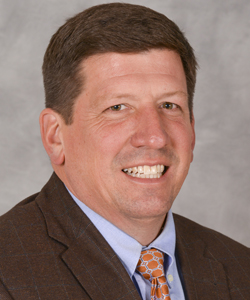
Rep. Wayne Hartman
Sponsored bills
Maddy summaryHB 910 increases Maryland's property tax exemption for blind individuals from $15,000 to $40,000 on their primary residence. It directly affects blind homeowners and their surviving spouses (who haven't remarried) who own a dwelling house meeting specific occupancy and visual impairment criteria. The bill amends existing law to raise the exemption amount, which applies to the assessed value of the home, and continues the exemption to surviving spouses after the blind individual's death. The change takes effect June 1, 2025, for all taxable years beginning after June 30, 2025.
Maddy summaryHB 1475 (Mixed Delivery Model Viability Act) requires Maryland's Office of Child Care Advisory Council to study the state's publicly funded prekindergarten system, which serves children through a mix of public and private providers. The analysis will assess policy differences between public/private providers, reimbursement methods, administrative processes, language accessibility, quality rating procedures, and opportunities for resource-sharing among private providers. The Council must submit an interim report by June 1, 2026, and a final report by December 31, 2027, to the State Board of Education and General Assembly. This bill does not change current law but directs a review to identify potential improvements in program efficiency and equity for providers and families.
Maddy summaryHB 446 creates a new commercial fishing license specifically for harvesting blue and flathead catfish using trotlines in the Chesapeake Bay. It directly affects licensed commercial fishers by allowing them to fish in the main stem of the Chesapeake Bay south of the Chesapeake Bay Bridge, a location previously restricted by Department regulations. The bill prohibits the Department of Natural Resources from banning this activity within that area while requiring license holders to pay a $15 annual fee for a one-year license. This establishes a permanent regulatory framework for targeted commercial fishing of these species, rather than implementing a temporary pilot program.
Maddy summaryHB 1200 expands Maryland's existing property tax credit program to include judicial officers, who were previously excluded. The bill modifies the tax code to allow counties or municipalities to grant a property tax credit on a dwelling owned by a judicial officer who is disabled, a surviving spouse of a judicial officer who died in the line of duty, or a qualifying cohabitant. It defines "judicial officer" and "public safety officer" to explicitly include judicial roles, requires local governments to define these terms in their laws, and applies the credit retroactively to past years. This change directly affects judicial officers, their families, and cohabitants who meet the eligibility criteria for the tax credit.
Maddy summaryHB 179, the "Organized Retail Theft Act of 2025," defines and prohibits a series of retail thefts from multiple merchants over 90 days with a total value exceeding $1,500, intended to permanently deprive merchants, return for gain, or resell the merchandise. It classifies violations as felonies with penalties increasing based on total value: up to 5 years in prison or $10,000 fine for $1,500-$25,000, up to 10 years or $15,000 for $25,000-$100,000, and up to 20 years or $25,000 for $100,000+. The bill requires courts to determine if a theft qualifies as "organized" for sentencing purposes and mandates restitution to victims. This directly affects retailers, repeat offenders, and courts handling theft cases.
Maddy summaryHB 791 authorizes Somerset County Commissioners to impose a property tax specifically to fund emergency services (fire, rescue, and emergency medical services) for all properties subject to the county's property tax. It requires the county to hold a public hearing during the annual budget process before initially imposing or increasing the tax, and mandates advance public notice of this hearing. The tax would be collected like other county property taxes, with unpaid amounts becoming a lien on property and accruing interest/penalties at the same rate as unpaid property taxes. This bill takes effect June 1, 2025, applying to taxable years beginning after June 30, 2025.
Maddy summaryHB 320 prohibits individuals from standing in roadways, median dividers, or intersections in Wicomico County to ask drivers for money or donations. It amends Maryland’s transportation code (Section 21-507(c)) to explicitly include Wicomico County among counties where such solicitation is banned, extending an existing restriction that previously applied to other counties. The law directly affects people attempting to solicit funds from vehicle occupants in these specific public spaces within Wicomico County. The bill takes effect on October 1, 2025.
Maddy summaryHB 1558 restricts fundraising activities for Maryland state elected officials during legislative sessions. It prohibits the Governor, Lieutenant Governor, Attorney General, Comptroller, Treasurer, and state legislators (or their staff acting on their behalf) from receiving contributions, hosting events, soliciting funds, or depositing money raised during the session - except for specific cases. Exceptions include activities solely for their own federal or local election campaigns, contributions made electronically before the session began, and gubernatorial campaign financing under the Public Financing Act. Violations result in civil penalties paid into the Fair Campaign Financing Fund.
Maddy summaryHB 1325 establishes a 5-year pilot program (2026-2030) to create regional pools of substitute child care providers for Maryland child care facilities. The program, administered by a state-selected nonprofit, will recruit and support qualified providers to fill temporary staffing gaps in licensed centers, family homes, or large family child care homes. Key mechanisms include organizing pools across rural, suburban, and urban regions; helping providers meet background checks, training, and credential requirements; and developing a digital matching platform to connect providers with facilities. The program requires annual $350,000 grants to the nonprofit and $375,000 in annual state budget appropriations, with final reporting due to the legislature in 2029.