

Maddy summaryHB 1500 requires Maryland state agencies to finalize regulations implementing a program before collecting any fees under that program. It directly affects state agencies that collect fees for programs authorized by law, such as licensing or permitting services. The bill's key provision states agencies cannot collect fees until they have completed the regulatory adoption process. This change takes effect October 1, 2026, ensuring fees are only collected once rules are formally established. The law applies to all state programs requiring regulatory implementation under Maryland law.
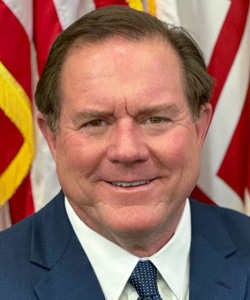
Del. Tom Hutchinson
Sponsored bills
Maddy summaryHB 976 changes how Maryland calculates state education funding for public schools by altering the definition of "full-time equivalent enrollment." It replaces the previous method with an average of enrollment on September 30 and May 31 of the prior school year, directly affecting all public schools receiving state aid based on this metric. The bill also requires the State Department of Education to publish annual reports online and submit detailed data to legislative committees, showing enrollment counts, student categories (including "whereabouts unknown"), and funding allocations by county. These changes aim to standardize enrollment data used for funding calculations starting in fiscal year 2028.
Maddy summaryHB 1495 changes Maryland's vehicle registration plate requirements by requiring the Motor Vehicle Administration to issue only one registration plate for all vehicle classes, replacing the previous rule that required two plates for most vehicles. It specifically prohibits owners of historic vehicle plates (Class L) from violating their plate's issuance terms. The bill also adds a new option allowing vehicle owners to display a county sticker on their plate (showing their residence county), with specific rules about placement, fees, and restrictions on special plates. This affects all Maryland vehicle owners who register their vehicles, directly changing plate issuance and optional county display rules.
Maddy summaryHB 1515 prohibits noncompete and conflict of interest clauses in employment contracts for certain healthcare workers if their employer relocates most operations outside Maryland after the employee leaves. It specifically applies to: - Employees earning ≤ $350,000 annually in licensed, direct patient care roles (or veterinary professionals), - *or* employees of employers who previously had >30 in-state employees but later move most operations out of state. For higher-earning healthcare workers ($350,000+), the bill limits noncompete terms to 1 year and a 10-mile geographic radius. The law takes effect October 1, 2026, and does not apply to client/patient list restrictions.
Maddy summaryThis House Simple Resolution (HS 1) creates a legislative investigating committee to examine allegations of misconduct by state agencies involving federal funding. The committee will specifically investigate the Department of Transportation (for improperly charging $360 million in federal funds) and the Maryland Department of Health (for alleged SNAP payment errors), and may expand to other agencies with credible complaints. The committee, composed of eight House members (four Democrats appointed by the Speaker, four Republicans by the Minority Leader), has authority to hold hearings, issue subpoenas, and gather evidence under existing law. It must submit a final report to the House of Delegates with findings and recommendations.
Maddy summaryHB 1349 requires Maryland's Public Service Commission to develop a plan converting formerly operational fossil fuel power plants to natural gas facilities. The plan must include feasibility studies, cost assessments, solutions for legal/engineering barriers, a conversion timeline balancing costs and reliability, and draft legislation needed for implementation. The Commission must gather input from energy agencies, utilities, local governments, and advocacy groups through a public stakeholder process. The final plan must be submitted to the Governor and relevant legislative committees by January 1, 2027. This bill directly affects the Public Service Commission and indirectly impacts utility companies, ratepayers, and communities hosting former fossil fuel plants.
Maddy summaryHB 988 repeals Maryland's existing building energy performance standards for commercial and multifamily buildings over 35,000 square feet. It removes requirements for these buildings to achieve a 20% reduction in greenhouse gas emissions by 2030 and net-zero emissions by 2040, as well as annual reporting of emissions data. The bill specifically repeals Sections 2-1601 and 2-1602 of the Environment Article and amends Section 4-211(d)(1) and (2) of the Housing and Community Development Article. This eliminates the state's regulatory framework for building energy efficiency, directly affecting owners of covered commercial and multifamily properties.
Maddy summaryHB 967 prohibits Maryland electric companies from collecting certain environmental surcharges or fees during the year following any year when residential electricity bills rise faster than the Consumer Price Index (CPI) for urban consumers. It directly affects residential electricity customers by preventing additional charges if their bills outpace general inflation. The bill requires the Public Service Commission to annually calculate the annual growth in both the CPI and average residential electricity bills (using data ending June 30) and to block environmental fees if bill growth exceeds CPI growth. This applies to most environmental fees but excludes three specific fee types listed in the bill.
Maddy summaryThis bill directs the Maryland Department of Health to create regulations ensuring that drug and alcohol treatment programs discharge patients only when it is appropriate for their mental health or substance use disorder diagnosis. It specifically prohibits discharging patients who would become homeless or need residential care, while requiring programs to refer such individuals to halfway houses or recovery residences if they agree to that level of care. The legislation also mandates that treatment programs establish referral agreements for medical, mental health, legal, and social services within three working days after creating an individualized treatment plan, and ensures these agreements remain valid even if a patient is discharged. These standards apply to medium-intensity and high-intensity residential treatment programs in Maryland.
Maddy summaryHB 948 prohibits Maryland public schools from using grading rubrics where 50 is the lowest possible score for most students. It allows schools to use such rubrics only for students requiring special education services. The bill amends Maryland law to set this specific grading standard, effective July 1, 2026. This directly affects all public school students and staff implementing grading systems. The law aims to standardize minimum grading thresholds while maintaining flexibility for special education needs.