

Maddy summaryHB 922 requires the Behavioral Health Administration to update regulations to simplify the relocation process for existing behavioral health programs seeking to move to new locations. The bill adds specific provisions including an expedited approval process separate from new program applications, allowing programs to reuse unchanged prior documentation, and permitting temporary practice at a new site once life safety standards are met. It also mandates the Administration to consider a program’s past regulatory compliance to streamline reviews and establish clear timelines for relocation approvals. This change directly affects behavioral health programs needing to relocate and the Behavioral Health Administration, which must implement these rules by October 1, 2026.
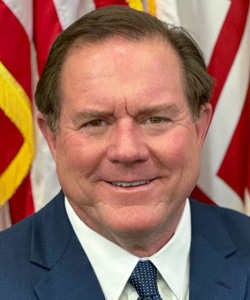
Del. Tom Hutchinson
Sponsored bills
Maddy summaryHB 986 requires nursing license applicants (both new and those seeking endorsement) to provide evidence that their nursing education meets Maryland's standards, including official transcripts. It directly affects registered nurses and licensed practical nurses applying for or renewing licenses in Maryland. The bill adds a new provision (§ 8-316(a)(37)) allowing the State Board of Nursing to take disciplinary action - such as reprimands, probation, suspension, or revocation - against licensees who fail to complete required educational standards. This clarifies the Board’s authority to enforce education requirements, including investigating applicants' qualifications and taking disciplinary steps for non-compliance. The bill amends existing sections of Maryland’s Health Occupations law and takes effect October 1, 2026.
Maddy summaryHB 1004 prohibits the manufacture, sale, delivery, holding, or offering for sale in Maryland of food containing specific ingredients, including brominated vegetable oil, potassium bromate, propylparaben, and Red 3 dye. It also bans any food ingredient prohibited by federal law under the U.S. Food and Drug Administration regulations. The law applies directly to food manufacturers, retailers, and distributors operating in Maryland. Violations carry misdemeanor penalties of up to $10,000 or one year in jail for first offenses, with higher penalties for repeat violations. The bill takes effect on July 1, 2027.
Maddy summaryHB 931 requires nursing homes in Maryland to designate physicians as medical directors who either hold a specific certification (CMD from PALTMED) or are actively working toward it. The bill directly affects nursing homes (which must comply with the certification requirement) and physicians serving in medical director roles (who must meet the certification standard). Key provisions include mandating the Maryland Department of Health to create a public online directory listing all nursing home medical directors with their credentials and certification status, and setting a deadline of September 30, 2028, for current medical directors to obtain certification. The law takes effect October 1, 2026.
Maddy summaryHB 1068 requires health insurance carriers in Maryland to provide a 60-day special enrollment period for individuals who become newly hired by small businesses that do not offer employer-sponsored health plans. This applies to people purchasing coverage through the state’s health insurance marketplace (Individual Exchange) or outside it. The special enrollment period begins on the first day of employment and allows new hires to enroll in health insurance without waiting for the standard open enrollment period. The law takes effect January 1, 2027, directly benefiting newly employed workers at small businesses without health benefits.
Maddy summaryHB 1375 requires Maryland health insurers, nonprofit health plans, and health maintenance organizations to cover the full duration of long-term antibiotic treatment for Lyme disease and related tick-borne illnesses (like babesiosis or ehrlichiosis) when ordered by a licensed physician for therapeutic purposes. It prohibits these entities from imposing caps or time limits on such treatment or denying coverage solely because the treatment is labeled "unproven," "experimental," or "investigational." The law applies to all health insurance policies issued, delivered, or renewed in Maryland after January 1, 2027. This directly affects patients with chronic Lyme disease or related conditions who rely on extended antibiotic therapy and their insurers.
Maddy summaryHB 1565 requires Maryland’s State Employee and Retiree Health and Welfare Benefits Program to include an obesity treatment and management program for state employees. It also mandates that private health insurers, nonprofit health plans, and health maintenance organizations cover evidence-based obesity treatment - including FDA-approved medications, metabolic/bariatric surgery, and CDC-approved behavioral programs - for individuals diagnosed with obesity, diabetes, or related conditions. The program must be developed with the Secretary of Health and follow the same coverage rules applied to other chronic diseases, avoiding stricter requirements. This bill directly affects state employees and covered individuals with qualifying health conditions by expanding access to medically necessary obesity care.
Maddy summaryHB 1459 requires owners or operators of large battery energy storage systems (like grid-scale batteries) to pay for specialized fire response training and equipment for local fire departments serving those locations. The training must follow the NFPA 855 safety standard for battery fire suppression. The State Fire Marshal will administer and enforce these requirements, which take effect October 1, 2026. This directly affects battery storage facility owners and the fire departments responsible for responding to incidents at these sites.
Maddy summaryHB 1499 increases the maximum deposit a home improvement contractor can require before signing a contract from one-third to one-half (50%) of the total contract price. This change directly affects home improvement contractors and consumers who enter into such contracts in Maryland. The bill amends Maryland's Business Regulation law (Section 8-617) to allow contractors to collect larger upfront payments. The new limit takes effect on October 1, 2026. The bill does not change other requirements for home improvement contracts.
Maddy summaryHB 1079 creates Maryland's Office of Regulatory Management to streamline state government processes. It requires all executive branch agencies to report on their regulatory permits, licenses, and certifications by December 2026, including processing times, fees, and online capabilities. Agencies must also develop strategies by December 2026 to reduce regulatory requirements by 25% and simplify application processes, aiming to cut approval times for permits and licenses. The bill directly affects state government agencies, not the public, and mandates annual reports starting July 2027 on upcoming regulatory changes.