

Maddy summaryHB 1496 amends Maryland's vehicle laws by removing motorcycle riders from the legal definition of "vulnerable individual" under Section 21-901.3. This change specifically affects motorcycle riders, excluding them from the category protected under penalties for causing serious injury or death through traffic violations. The bill deletes motorcycle riders (previously listed in subsection (a)(iii)(v)) from the definition, meaning drivers who hit motorcycle riders while violating traffic rules will no longer face the enhanced penalties tied to "causing injury or death to a vulnerable individual." The law retains protections for pedestrians, cyclists, and other vulnerable road users as defined in the amended section. The change takes effect July 1, 2026.
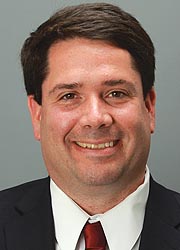
Del. Chris Adams
Sponsored bills
Maddy summaryHB 1350 changes how child abuse and neglect reports are handled in Maryland. It requires mandatory reporters (like teachers, healthcare workers, and social service staff) to submit reports directly to the State Department of Human Services (DHS) instead of local social services or police. The bill creates a centralized DHS intake system to record, assess report validity, and assign cases to local departments for investigation. It specifically updates reporting procedures for substance-exposed newborns and cases involving individuals registered for child-related offenses. This reform aims to streamline reporting while maintaining direct oversight by local agencies for investigations.
Maddy summaryHB 1023 prohibits the sale, distribution, manufacturing, or offering for sale of lab-grown meat (defined as meat cultured from animal cells outside the animal) for human consumption within Maryland. It directly affects businesses producing or selling lab-grown meat products in the state. The bill imposes civil penalties of up to $5,000 per violation and authorizes the Secretary to seize or condemn prohibited products. The law would take effect on October 1, 2026.
Maddy summaryHB 1212 creates a workgroup to examine challenges and opportunities in Maryland's seafood marketing sector. The workgroup, convened by the Secretaries of Agriculture and Natural Resources, will include two Senate members, two House members, agency representatives, seafood industry stakeholders, and other necessary stakeholders. The workgroup must submit findings and recommendations to the Governor and relevant legislative committees by December 1, 2026. The bill expires automatically on June 30, 2027, after a one-year, one-month term.
Maddy summaryHB 1244 allows residential property owners within 300 feet of where overhead transmission lines are constructed to sue for diminished property value caused by the project. It modifies Maryland law to let these owners recover damages and seek reasonable attorney fees if they win their case. The bill also requires courts to award defendant attorney fees and costs to the property owner if the final court decision finds the property's assessed value exceeded the appraised value in transmission line condemnation cases. This applies specifically to cases involving overhead transmission lines under Maryland's Public Utilities Article. The law would take effect October 1, 2026.
Maddy summaryHB 964, the Secure the Vote Act of 2026, repeals existing requirements for ballot drop boxes (including those at Baltimore City's centralized booking facility) and modifies election rules. It adds new requirements: voters must provide proof of U.S. citizenship to register (per Section 3-201.1), obtain photo ID for in-person voting (Section 2-111), and restricts absentee voting to those unable to vote in person due to specific circumstances. The bill also mandates signature verification for absentee ballots, establishes new audit procedures for voter registration lists, and prohibits non-citizens from registering to vote in municipal elections. These changes apply to all Maryland voters and election officials statewide.
Maddy summaryHB 970 renames Maryland's "Renewable Energy Portfolio Standard" to the "Clean Energy Portfolio Standard" and changes related terms like "renewable energy credits" to "clean energy credits." The bill explicitly adds electricity generated from certain nuclear power plants as an eligible Tier 2 source for meeting the standard, expanding the types of energy that can count toward compliance. This change directly affects utilities and energy providers required to meet the state's clean energy targets, applying retroactively to prior compliance periods. The bill focuses on updating terminology and eligibility criteria within existing energy policy frameworks.
Maddy summaryHB 433 exempts property managers from needing a state license to collect rent, utilities, or fees from residential tenants under specific conditions. It directly affects property managers who collect these payments during lease terms and whose primary business is property management - not debt collection. The bill amends Maryland law to clarify that property managers collecting residential rent/utilities during leases are not considered "collection agencies" if this activity isn't their main business. This removes a licensing requirement for qualifying property managers without changing broader collection agency rules. The exemption takes effect October 1, 2026.
Maddy summaryHB 454, the "SAVE Our Elections Act of 2026," requires Maryland to join the federal SAVE Program (Systematic Alien Verification of Entitlement) to verify U.S. citizenship for voter registration applicants. It directly affects individuals applying to register to vote in Maryland, mandating that the State Board of Elections use the federal SAVE system to confirm citizenship during the registration process. Key provisions include requiring the State Administrator to enroll in SAVE, establishing a verification process for applicants, and creating an appeal mechanism for voters who dispute citizenship determinations. The bill replaces current self-declaration requirements with federal verification, amending election law sections governing voter registration eligibility and processing.
Maddy summaryThis bill updates Maryland election laws to require voters presenting their names at the polls to prove their identity before receiving a regular ballot. To do this, voters must show a valid government-issued photo ID or, if they lack one, provide a non-government photo ID along with a document like a utility bill or bank statement that shows their name and address. If a voter cannot provide the required identification, the election judge must refer them to vote using a provisional ballot instead. The legislation also clarifies rules for assistance, allowing voters to bring written materials into the polling place and specifying who may help those with disabilities or language barriers.