

Maddy summaryThis bill prohibits placing children in unlicensed settings (such as hotels, motels, or nonresidential offices) under Maryland's out-of-home placement program for foster care, with limited exceptions for kinship caregivers or parental placements. It creates a new Child and Youth Placement Review Panel within the Governor’s Office to oversee placements and requires the Placement Manager to convene a Rapid Response Team for urgent cases. The bill also establishes an Advisory Council to improve Maryland’s system of care for children and families and modifies hospital overstay protocols for pediatric patients. These changes directly affect children in foster care, hospitals, and the agencies managing their care, aiming to ensure safer, licensed placements.
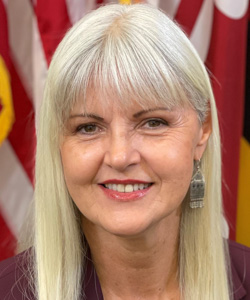
Del. Teresa Reilly
Sponsored bills
Maddy summaryHB 939 extends the deadline for filing birth certificates in Maryland from 5 to 12 calendar days after a birth. It directly affects hospitals, clinics, attending medical professionals, and parents (in cases without an attending clinician), requiring them to complete and submit the certificate within the new timeframe. The bill amends Maryland health code sections to update these filing deadlines for births occurring in institutions, outside institutions, and on common carriers (like planes or ships). The key change is the specific increase in the filing period, with no other policy alterations described in the text.
Maddy summaryHB 1015 (Ralph's Act) ensures continuity of developmental disability services for individuals who recently moved to Maryland after losing their primary caregiver in another state. It directly affects people who received home- and community-based waiver services in another state for the past 10 years and relocated to live with immediate family following the death or incapacitation of their former caretaker. The bill requires the Maryland Department of Health to create an expedited 30-day process to determine eligibility, allows pre-residency eligibility assessments, and ensures those approved receive services through priority categories matching their prior state's support. This policy change prevents service disruptions during relocation transitions.
Maddy summaryHB 771 requires Maryland health occupations boards to allow license renewal credits for free, 1-hour human trafficking awareness training. The training must cover definitions of trafficking, trauma-informed care, health indicators, screening protocols, reporting requirements, and survivor resources. It directly affects health practitioners (like nurses and therapists) needing license renewals, with boards mandated to adopt regulations by October 2026. The Maryland Department of Health must approve the training program by July 2026 in collaboration with universities and anti-trafficking organizations. The bill takes effect June 1, 2026.
Maddy summaryHB 972 establishes the Maryland Fair and Agricultural Education Promise Fund, a permanent fund to provide annual grants supporting agricultural fairs and education. The fund will receive lottery proceeds (before allocation to the general fund) and replace previous requirements for horse racing fund allocations. It directs specific annual grants: $825,000 to the Maryland Agricultural Fair Board, $75,000 to the Maryland Agricultural Education Foundation, $550,000 to the Maryland State Fair Society (for youth programs like 4-H and FFA), and $50,000 to the Maryland FFA Association. These grants aim to advance agricultural fairs, education, and youth programs across Maryland.
Maddy summaryHB 1483 repeals Maryland's requirement for out-of-state clinical counselors to obtain a temporary telehealth license. It allows licensed counselors from other states to provide telehealth counseling to clients who relocated to Maryland (or returned after relocating), for up to six months, if they already had an established client-counselor relationship before the move. This exempts these counselors from Maryland's standard licensure rules during the six-month continuity period, but only for existing clients who relocated - not for new clients. The bill does not change regular licensing requirements for ongoing practice in Maryland.
Maddy summaryHB 980 (Kanaiyah's Law) creates the Office of the Child Welfare Ombudsman within the Attorney General's office to handle complaints about Maryland's child welfare system. It requires juvenile courts to include specific information-sharing requirements in guardianship orders and expands criminal background checks to cover all adults living in a child's guardian's home. The bill also prohibits unlicensed placements for certain children, protects complainants from retaliation, and exempts certain complaint records from public disclosure. These changes directly affect child welfare agencies, guardians, and families navigating the system, aiming to improve transparency and accountability.
Maddy summaryHB 535 increases the maximum annual revenue limit for cottage food businesses in Maryland from $50,000 to $100,000. This change directly affects home-based food producers who sell nonhazardous, packaged foods (like baked goods or jams) from their residences or through approved channels such as farmers markets, retail stores, or direct delivery. The bill revises existing law to allow these small-scale businesses to generate higher sales while still qualifying as cottage food operations under state regulations. It does not alter the types of foods permitted or the sales channels, only the revenue threshold for eligibility. The change takes effect October 1, 2026.
Maddy summaryHB 374 revises Maryland's acupuncture licensing rules to clarify that "manual therapies" (like acupressure) are included under licensed acupuncture practice. It requires the State Acupuncture Board to provide proof of license renewal instead of issuing physical renewal certificates. The bill also explicitly prohibits employers from hiring unlicensed practitioners and bans aiding or abetting unauthorized acupuncture practice. These changes directly affect licensed acupuncturists, their employers, and individuals seeking acupuncture services in Maryland. The revisions aim to modernize licensing procedures while strengthening enforcement against unlicensed activity.
Maddy summaryHB 395 repeals a requirement that new Concentrated Animal Feeding Operations (CAFOs) must obtain a general discharge permit from Maryland's Department of the Environment before beginning construction. This directly affects developers and operators planning new CAFO facilities by removing a pre-construction permitting step. The bill modifies Maryland's Environment Article by deleting Section 9-323(a)(2), which previously mandated this permit for new CAFO construction. The change only applies to the construction phase, not to operating permits or existing CAFOs.