

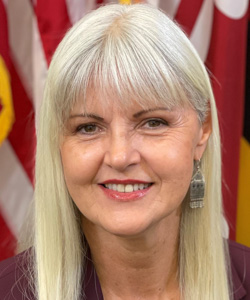
Photo of Teresa Reilly
R Maryland House of Delegates · District 35A On the 2026 ballot

Del. Teresa Reilly

Compare
Total votes
13,141
all sessions
Attendance
98%
244 missed
Near the chamber average
With party
97%
of cast votes
Lower than 81% of chamber peers
Bipartisan score
2%
crosses aisle rarely
Higher than 80% of chamber peers
Sponsored
428
bills & resolutions
Higher than 93% of chamber peers
Committees
3
assignments
428 bills and resolutions

Sponsored bills

Total
428
Primary
428
Co-sponsor
0
This page
428
matching current filters
Primary HB 776
Signed into law · Maryland House of Delegates · Lead sponsor
Maryland Medical Practice Act and Maryland Physician Assistants Act - Revisions

Maddy summaryHB 776 updates Maryland's laws regulating physicians, physician assistants, and allied health professionals by revising outdated or inconsistent language in the Medical Practice Act and Physician Assistants Act. The bill clarifies licensure requirements, disciplinary procedures, and reporting rules for these healthcare professionals, while also modifying grounds for discipline and administrative penalties. It affects licensed medical practitioners, the State Board of Physicians, and allied health advisory committees by streamlining regulatory processes. The bill focuses on administrative modernization rather than creating new policy, removing redundant provisions and aligning existing rules across the statutes.

Signed into law May 20, 2025 0 co-sponsors
Primary HB 820
Signed into law · Maryland House of Delegates · Lead sponsor
Health Insurance - Utilization Review - Use of Artificial Intelligence

Maddy summaryHB 820 requires health insurance companies, pharmacy benefits managers, and private review agents to follow specific rules when using artificial intelligence (AI) for medical coverage decisions (utilization review). It mandates that AI tools base decisions on individual patient medical records - not just group data - and cannot replace healthcare providers in review processes. The bill also prohibits AI from causing prohibited discrimination and requires insurers to report whether AI was used in denied claims. This directly affects insurers and review entities that use AI to approve or deny treatments, hospital stays, or medications.

Signed into law May 20, 2025 0 co-sponsors
Primary HB 757
Signed into law · Maryland House of Delegates · Lead sponsor
Professional and Volunteer Firefighter Innovative Cancer Screening Technologies Program - Funding

Maddy summaryHB 757 redirects funds from oil transfer license fees to establish a dedicated program for professional and volunteer firefighters' cancer screening. Starting in fiscal year 2026, $4 of the $9 per barrel oil transfer fee (collected under Maryland's Environment Article) will be transferred annually to the Professional and Volunteer Firefighter Innovative Cancer Screening Technologies Program. The Secretary of Health must use these funds exclusively for this program, including supporting academic medical centers for screening purposes. This bill directly affects Maryland firefighters by creating a new, ongoing funding source for innovative cancer screening technologies.

Signed into law May 20, 2025 0 co-sponsors
Primary HB 406
Signed into law · Maryland House of Delegates · Lead sponsor
State Board of Examiners for Audiologists, Hearing Aid Dispensers, Speech-Language Pathologists, and Music Therapists - Appointment of Hearing Aid Dispenser Members

Maddy summaryHB 406 changes how hearing aid dispensers are appointed to Maryland's State Board of Examiners. The bill requires the Board to notify all licensed hearing aid dispensers in the state when a vacancy occurs, instead of relying solely on a pre-submitted list. It also mandates that the list of candidates provided to the Governor must include at least three times the number of available positions. This applies specifically to the three hearing aid dispenser members on the 15-member board, directly affecting licensed hearing aid dispensers seeking board appointments. The bill takes effect July 1, 2025.

Signed into law May 20, 2025 0 co-sponsors
Primary HB 813
Signed into law · Maryland House of Delegates · Lead sponsor
Maryland Insurance Administration and Maryland Department of Health - Workgroup to Study Pharmacy Benefits Managers

Maddy summaryHB 813 requires pharmacy benefits managers (PBMs) to reimburse pharmacies at least the national average drug cost plus a professional dispensing fee for drugs covered under Maryland's Medicaid program (Maryland Medical Assistance Program). It directly affects pharmacies, PBMs, and managed care organizations that contract with PBMs for prescription drug coverage. Key provisions include expanding the definition of "purchaser" to include certain insurers and health plans, while excluding pharmacy-owned operations and mail-order pharmacies from the reimbursement rules. The bill aims to standardize payment rates for pharmacies serving Medicaid patients by tying reimbursements to nationally recognized cost benchmarks.

Signed into law May 20, 2025 0 co-sponsors
Primary HB 384
Vetoed · Maryland House of Delegates · Lead sponsor
Maryland Disability Service Animal Program - Established

Maddy summaryHB 384 establishes the Maryland Disability Service Animal Program within the Department of Disabilities. The program requires the Department to select a nonprofit organization to train service animals and creates a dedicated fund to support eligible individuals with disabilities (as defined by the Americans with Disabilities Act). Key provisions include referring individuals to the nonprofit trainer, providing funding assistance for service animal training, and encouraging successful participants to help with outreach to others. This directly affects Maryland residents with disabilities who need service animals trained to perform specific tasks for daily living.

Vetoed May 16, 2025 0 co-sponsors
Primary HB 333
Vetoed · Maryland House of Delegates · Lead sponsor
Healthcare Ecosystem Stakeholder Cybersecurity Workgroup

Maddy summaryHB 333 requires Maryland's healthcare ecosystem entities - including hospitals, medical facilities, data exchanges, and other defined providers - to adopt cybersecurity standards, implement a "zero-trust" security approach, undergo third-party audits, and report incidents to the State Security Operations Center. It mandates the Maryland Health Care Commission to hire a cybersecurity expert to advise on oversight and collaborate with security offices. The bill also directs the Department of Emergency Management to convene a workgroup to study and improve healthcare cybersecurity practices. These requirements directly affect healthcare providers and data handlers but exclude insurers and pharmacy benefits managers.

Vetoed May 16, 2025 0 co-sponsors
Primary HB 869
Signed into law · Maryland House of Delegates · Lead sponsor
Preserve Telehealth Access Act of 2025

Maddy summaryHB 869, the Preserve Telehealth Access Act of 2025, removes the June 30, 2025, expiration date from Maryland's law allowing audio-only telephone conversations to count as telehealth for reimbursement and coverage. The bill requires Maryland's Medicaid program and participating insurers to continue covering and reimbursing audio-only telehealth visits at the same rate as in-person services without time restrictions. This change directly affects Medicaid beneficiaries, health care providers, and private insurers operating in Maryland. The bill does not alter existing requirements that telehealth services must be medically necessary and appropriately delivered.

Signed into law May 13, 2025 0 co-sponsors
Primary HB 962
Signed into law · Maryland House of Delegates · Lead sponsor
Public Health - Pediatric Hospital Overstay Patients and Workgroup on Children in Unlicensed Settings and Pediatric Overstays

Maddy summaryHB 962 addresses pediatric hospital overstay cases where children under 22 remain hospitalized after being medically cleared for discharge. It requires hospitals to place these patients in the least restrictive setting possible, allowing concurrent exploration of both in-state and out-of-state placement options. The bill establishes a Pediatric Hospital Overstay Coordinator within the Governor’s Office for Children to oversee this process and mandates a state study on residential treatment center and respite facility rates. This law directly affects hospitals, pediatric patients, and state agencies like the Department of Health and Human Services.

Signed into law May 13, 2025 0 co-sponsors
Primary HB 809
Signed into law · Maryland House of Delegates · Lead sponsor
Out-of-Home Placement Providers - Individuals Enrolled in Higher Education and Vocational Training Programs

Maddy summaryHB 809 creates a temporary exception to standard child placement limits for foster care providers when a child enrolled in college must leave campus due to academic breaks, temporary closures, or approved leave. The exemption applies only if the child, foster care provider, and agency agree to the living arrangement. This directly affects youth in foster care attending college and their foster care providers. The law requires the state to update placement regulations by July 2025.

Signed into law May 13, 2025 0 co-sponsors
Showing 151 to 160 of 428 bills
Previous 1 … 15 16 17 … 43 Next