

Maddy summaryHB 982, the "Gun Theft Felony Act of 2025," reclassifies the theft of any firearm as a felony regardless of the firearm's value. Currently, firearm theft could be charged as a misdemeanor if the value was below $1,500, but this bill makes all firearm thefts automatically felonies. The bill amends Maryland’s Criminal Law to require that anyone convicted of stealing a firearm must restore the firearm to the owner or pay its value, with penalties including up to 20 years in prison or fines up to $25,000 based on the firearm’s value. This change directly affects individuals who steal firearms, increasing penalties for this specific offense.
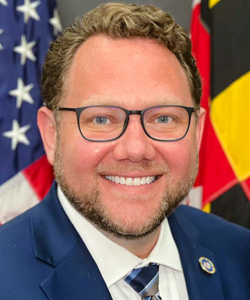
Del. Nic Kipke
Sponsored bills
Maddy summaryHB 653 mandates that Maryland correctional facilities must transfer undocumented immigrants serving sentences for specific offenses to U.S. Homeland Security. It directly affects undocumented immigrants incarcerated in Maryland who are convicted of terrorism/espionage threats, gang-related crimes (under federal definitions), aggravated felonies, or certain sexual offenses requiring registration. The bill requires transfer if an individual meets any of five specified conditions, including active gang participation or conviction for an aggravated felony. The law takes effect October 1, 2025, and adds these requirements to Maryland's Correctional Services code.
Maddy summaryHB 1451, the Climate Solutions Affordability Act of 2025, modifies Maryland's Climate Solutions Now Act to require certain climate measures "to the extent economically practicable." It directs building owners to annually measure and report direct emissions data to the Department of the Environment starting in 2025, and sets goals for covered buildings to achieve a 20% greenhouse gas emissions reduction by 2030 (compared to 2025 levels) and net-zero emissions by 2040. The bill also updates statewide targets to reduce emissions 60% below 2006 levels by 2031 and reach net-zero statewide emissions by 2045, while adding provisions for zero-emission state vehicle fleets and school buses. These changes apply to building owners, utility contractors, and state agencies implementing climate programs.
Maddy summaryHB 1258, the Energy Equality Act of 2025, prohibits local or state governments from restricting the sale, purchase, or use of consumer goods (including vehicles and appliances) solely based on their energy source, such as electricity, gasoline, or natural gas. It repeals existing Maryland laws requiring the Department of the Environment to maintain a low emissions vehicle program and to establish sales requirements for zero-emission medium- and heavy-duty vehicles. The bill also defines "consumer good" broadly to cover personal, household, and agricultural items powered by any authorized energy source. This legislation removes current restrictions on energy source choices for these goods, applying retroactively to existing regulations.
Maddy summaryHB 1307 requires Maryland law enforcement agencies, agents, and local detention facilities to notify federal immigration authorities when they hold individuals with outstanding criminal warrants and to retain custody for up to 48 hours to facilitate transfer. It mandates cooperation with federal authorities to determine if such individuals are priorities for removal under federal enforcement guidelines. The bill prohibits state, local, or county entities from adopting policies that limit this cooperation. It directly affects law enforcement agencies and detention facilities in Maryland, altering how they handle individuals with active criminal warrants in coordination with federal immigration enforcement.
Maddy summaryHB 734, the Real Time for Violent Crime Act, prohibits incarcerated individuals convicted of first- or second-degree murder from earning sentence reduction credits (diminution credits) that shorten their prison time. It also limits sentence reductions for violent crimes to no more than 10% of the total sentence for those convicted of crimes of violence (as defined in Maryland law), and restricts judges from granting pretrial release to defendants charged with violent crimes if they have pending charges or recent convictions for specific violent offenses. The bill directly affects people serving sentences for murder or violent crimes in Maryland correctional facilities and changes how courts handle sentence reductions and pretrial releases for these cases.
Maddy summaryHB 732 increases the required classroom teaching time for Maryland public school teachers on career ladder levels one, two, or three from 60% to 80% of their working time. This change directly affects teachers who are certified but not yet at the highest career levels (such as those pursuing a master’s degree or National Board Certification). The bill specifies that the remaining 20% of their time must be spent on activities like improving instruction, tutoring students, or participating in professional development. The policy takes effect July 1, 2025.
Maddy summaryHB 622 (Juvenile Justice Restoration Act of 2025) requires law enforcement officers to consult with an attorney before questioning a child in custody. Specifically, officers must ensure the child has spoken with an attorney (either retained by parents or provided by the Public Defender) and make reasonable efforts to notify the child’s parent, guardian, or custodian before interrogation. Exceptions exist only for immediate public safety threats (with limited questions) or if the parent/guardian consents to skip the attorney consultation. Violating these rules creates a rebuttable presumption that any statement made by the child is inadmissible in court, though the state can overcome this with clear evidence the statement was voluntary. The bill directly affects children under 18 during police questioning and all Maryland law enforcement agencies.
Maddy summaryHB 652 prohibits Maryland's Department of Juvenile Services from hiring or retaining employees convicted of specific serious crimes, directly affecting individuals seeking or holding jobs in juvenile services. The bill bans hiring for 14 offenses including abduction, kidnapping, murder, rape, child abuse, sexual offenses against minors, and certain violent assaults. An exception allows hiring if the conviction was reversed or vacated. The law takes effect October 1, 2025.
Maddy summaryThis bill, known as the Ratepayer Protection Act of 2025, prevents Maryland state and local governments from suing businesses for financial or economic damages caused by global warming or climate change. It achieves this by adding a new legal provision that explicitly bars government agencies from filing such lawsuits, while clarifying that the law does not stop governments from enforcing existing environmental, health, or zoning regulations. The legislation defines "business" broadly to include various entities and financial institutions, and it takes effect on October 1, 2025.