

Maddy summaryHB 32 establishes a Forensic Review Board within the Maryland Department of Health to review eligibility for release for people found not criminally responsible (NCR) at state facilities. The bill requires each facility to create a board of licensed healthcare providers that must annually assess NCR individuals and recommend to courts whether they should be discharged or released conditionally. It also creates a Community Forensic Aftercare Program to monitor people on conditional release. These changes replace current procedures under Maryland’s Criminal Procedure and Health laws, adding specific annual review requirements and written record-keeping for release decisions. The bill directly affects NCR patients in state facilities and their release pathways.
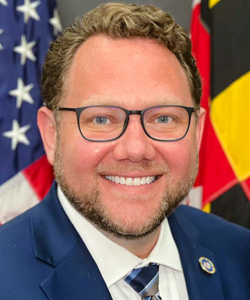
Del. Nic Kipke
Sponsored bills
Maddy summaryHB 438 (Buddy's Law) increases the maximum compensatory damages for pet owners when someone negligently causes injury or death to their domesticated pet. It raises the cap from $10,000 to $25,000, covering costs like veterinary care and the pet’s fair market value before death. The law specifically applies to domesticated pets (excluding livestock) and affects owners in Maryland whose pets are harmed by negligence. The bill amends Maryland’s tort law and takes effect October 1, 2025.
Maddy summaryHB 514 revises Maryland’s chiropractic licensing rules to update the State Board of Chiropractic Examiners’ structure and oversight. It changes board membership (requiring 5 licensed chiropractors and 2 consumer members), adds authority for unannounced office inspections when complaints allege violations of CDC infection control guidelines, and mandates health provider exams for licensees or applicants under specific circumstances. The bill directly affects chiropractors seeking licensure or renewal, chiropractic offices, and the Board itself. Key changes include streamlined board appointments, enhanced compliance inspections, and new requirements for health assessments to ensure public safety.
Maddy summaryHB 573 updates Maryland's requirements for expanded function dental assistants (EFDA). It requires the State Board of Dental Examiners to approve specific types of training programs (like accredited college courses or programs from the Dental Assisting National Board) for EFDA certification, and mandates that initial certification courses offer online options when appropriate. The bill also sets clear rules for reinstating expired EFDA certifications, requiring completion of continuing education (which must include online options), timely renewal applications, and payment of fees. These changes directly affect dental assistants seeking or renewing their EFDA certification in Maryland.
Maddy summaryHB 1027 creates a workgroup to study implementing a statewide 3-1-1 nonemergency telephone system in Maryland. The workgroup, composed of 12 members including state agency representatives, county officials, and industry stakeholders, will review existing 3-1-1 services, best practices from other states, and potential solutions for a statewide system. It will develop recommendations on oversight, feasibility, and a virtual portal, reporting findings to the Governor and legislature by November 1, 2025. This bill does not establish the 3-1-1 system itself but directs a study to inform future policy. The workgroup expires June 30, 2026.
Maddy summaryHB 1246 requires Maryland health insurers, nonprofit health plans, and health maintenance organizations to include certain patient discounts, financial assistance, product vouchers, or out-of-pocket expenses paid for prescription drugs when calculating cost-sharing (like copays or deductibles). This applies to covered drugs without a preferred generic equivalent or where prior authorization was needed, but excludes high-deductible health plans. The bill also mandates that providers notifying insureds about the maximum value and expiration date of these discounts. It takes effect January 1, 2026, for all health plans issued or renewed in Maryland after that date. The law directly affects Maryland residents using prescription drug coverage under these health plans.
Maddy summaryThis bill requires boaters involved in accidents causing injury or death to stop near the scene, return to remain there until assisting others, and provide their name, address, and vessel ID to injured persons. It defines "serious bodily injury" (e.g., risk of death, permanent disfigurement) and sets penalties: up to 1 year/$3,000 for injury, 5 years/$5,000 for death, or 10 years/$10,000 if the operator knew injury/death was likely. Boaters must also report serious accidents (death, disappearance, injury requiring medical care beyond first aid) within 48 hours to Maryland’s Department of Natural Resources. The law applies to all vessel operators in Maryland waters who cause accidents meeting these injury/death thresholds.
Maddy summaryHB 429 allows counties in Maryland to request the Department of Health to delegate authority for inspecting nursing homes (including site visits and full surveys) to county staff. If a county makes such a request, the Department and the county must equally share the costs of these inspections. This bill directly affects nursing homes (which may be inspected by county staff instead of state staff) and counties that choose to assume this responsibility. It does not change existing inspection frequency requirements but adds a new option for conducting inspections.
Maddy summaryHB 1558 restricts fundraising activities for Maryland state elected officials during legislative sessions. It prohibits the Governor, Lieutenant Governor, Attorney General, Comptroller, Treasurer, and state legislators (or their staff acting on their behalf) from receiving contributions, hosting events, soliciting funds, or depositing money raised during the session - except for specific cases. Exceptions include activities solely for their own federal or local election campaigns, contributions made electronically before the session began, and gubernatorial campaign financing under the Public Financing Act. Violations result in civil penalties paid into the Fair Campaign Financing Fund.
Maddy summaryHB 1544 establishes the Maryland Law Enforcement Public Service Medal, the state's highest honor for officers demonstrating extraordinary bravery, sacrifice, or impact on public safety during critical incidents. It requires a law enforcement agency to grant a one-grade promotion to medal recipients and creates a review committee to evaluate nominations from agencies, officials, or community groups. The bill also mandates an annual state ceremony honoring six specific workers who died in the 2024 Francis Scott Key Bridge collapse, listing them on a permanent honor roll at the State House. This affects current and future law enforcement officers eligible for the medal and directly memorializes the Key Bridge victims.