

Maddy summaryHB 1066 restructures Maryland's Commission on Behavioral Health Care Treatment and Access by expanding its membership from 19 to 48 members. It adds 29 new appointed members representing specific stakeholders, including consumers of behavioral health services, substance use treatment providers, housing specialists, and experts in areas like drug policy reform. The bill also requires the Commission to establish a dedicated workgroup focused on improving health, social, and economic outcomes related to substance use. This change directly affects the Commission's composition and operational structure, aiming to enhance diverse representation in behavioral health policy development.
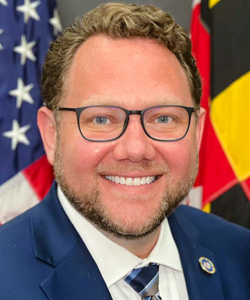
Del. Nic Kipke
Sponsored bills
Maddy summaryHB 820 requires health insurance companies, pharmacy benefits managers, and private review agents to follow specific rules when using artificial intelligence (AI) for medical coverage decisions (utilization review). It mandates that AI tools base decisions on individual patient medical records - not just group data - and cannot replace healthcare providers in review processes. The bill also prohibits AI from causing prohibited discrimination and requires insurers to report whether AI was used in denied claims. This directly affects insurers and review entities that use AI to approve or deny treatments, hospital stays, or medications.
Maddy summaryHB 757 redirects funds from oil transfer license fees to establish a dedicated program for professional and volunteer firefighters' cancer screening. Starting in fiscal year 2026, $4 of the $9 per barrel oil transfer fee (collected under Maryland's Environment Article) will be transferred annually to the Professional and Volunteer Firefighter Innovative Cancer Screening Technologies Program. The Secretary of Health must use these funds exclusively for this program, including supporting academic medical centers for screening purposes. This bill directly affects Maryland firefighters by creating a new, ongoing funding source for innovative cancer screening technologies.
Maddy summaryHB 406 changes how hearing aid dispensers are appointed to Maryland's State Board of Examiners. The bill requires the Board to notify all licensed hearing aid dispensers in the state when a vacancy occurs, instead of relying solely on a pre-submitted list. It also mandates that the list of candidates provided to the Governor must include at least three times the number of available positions. This applies specifically to the three hearing aid dispenser members on the 15-member board, directly affecting licensed hearing aid dispensers seeking board appointments. The bill takes effect July 1, 2025.
Maddy summaryHB 813 requires pharmacy benefits managers (PBMs) to reimburse pharmacies at least the national average drug cost plus a professional dispensing fee for drugs covered under Maryland's Medicaid program (Maryland Medical Assistance Program). It directly affects pharmacies, PBMs, and managed care organizations that contract with PBMs for prescription drug coverage. Key provisions include expanding the definition of "purchaser" to include certain insurers and health plans, while excluding pharmacy-owned operations and mail-order pharmacies from the reimbursement rules. The bill aims to standardize payment rates for pharmacies serving Medicaid patients by tying reimbursements to nationally recognized cost benchmarks.
Maddy summaryHB 384 establishes the Maryland Disability Service Animal Program within the Department of Disabilities. The program requires the Department to select a nonprofit organization to train service animals and creates a dedicated fund to support eligible individuals with disabilities (as defined by the Americans with Disabilities Act). Key provisions include referring individuals to the nonprofit trainer, providing funding assistance for service animal training, and encouraging successful participants to help with outreach to others. This directly affects Maryland residents with disabilities who need service animals trained to perform specific tasks for daily living.
Maddy summaryHB 56 allows the Maryland State Department of Education to directly manage master contracts for purchasing local food for schools, including food grown within 200 miles of schools, from certified local farms, and certified Chesapeake invasive species. This change removes the need for the Department to seek approval from other state procurement units for these specific purchases. The bill also requires the Department to coordinate with the Maryland Department of Agriculture and report annually to the legislature on the value and number of these contracts. The policy directly affects school meal programs, local farmers, and Chesapeake invasive species providers in Maryland.
Maddy summaryHB 333 requires Maryland's healthcare ecosystem entities - including hospitals, medical facilities, data exchanges, and other defined providers - to adopt cybersecurity standards, implement a "zero-trust" security approach, undergo third-party audits, and report incidents to the State Security Operations Center. It mandates the Maryland Health Care Commission to hire a cybersecurity expert to advise on oversight and collaborate with security offices. The bill also directs the Department of Emergency Management to convene a workgroup to study and improve healthcare cybersecurity practices. These requirements directly affect healthcare providers and data handlers but exclude insurers and pharmacy benefits managers.
Maddy summaryHB 869, the Preserve Telehealth Access Act of 2025, removes the June 30, 2025, expiration date from Maryland's law allowing audio-only telephone conversations to count as telehealth for reimbursement and coverage. The bill requires Maryland's Medicaid program and participating insurers to continue covering and reimbursing audio-only telehealth visits at the same rate as in-person services without time restrictions. This change directly affects Medicaid beneficiaries, health care providers, and private insurers operating in Maryland. The bill does not alter existing requirements that telehealth services must be medically necessary and appropriately delivered.
Maddy summaryHB 466, the "Health Equality for Service Members Act," expands eligibility for Maryland's health, housing, and occupation programs to include members of the Public Health Service and National Oceanic and Atmospheric Administration (NOAA) as "veterans" under state law. The bill revises definitions to clarify that "uniformed services" encompasses all such branches - not just the armed forces - and requires health, housing, and licensing laws to apply uniformly to all covered service members. This directly affects Public Health Service and NOAA personnel who previously lacked access to state programs designed for veterans. The law modifies specific sections of Maryland’s health, housing, and occupation codes to ensure consistent coverage across all uniformed services.