

Maddy summaryHB 596 updates Maryland's law to align with the Uniform Simultaneous Death Act. It establishes that if a person cannot prove they survived another individual by at least 120 hours (5 days) in cases of simultaneous death, they are legally deemed to have predeceased that person. This affects estate distributions, inheritance claims, and insurance payouts where the order of death is unclear. The law applies to property held as joint tenancy, life insurance proceeds, and other assets governed by instruments like wills or trusts. It provides clear rules for dividing assets when simultaneous deaths create uncertainty, avoiding prolonged legal disputes.
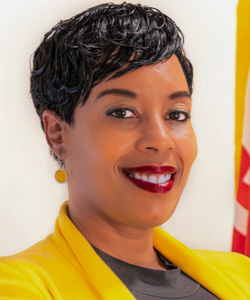
Del. LaToya Nkongolo
Sponsored bills
Maddy summaryHB 972 establishes the Maryland Fair and Agricultural Education Promise Fund, a permanent fund to provide annual grants supporting agricultural fairs and education. The fund will receive lottery proceeds (before allocation to the general fund) and replace previous requirements for horse racing fund allocations. It directs specific annual grants: $825,000 to the Maryland Agricultural Fair Board, $75,000 to the Maryland Agricultural Education Foundation, $550,000 to the Maryland State Fair Society (for youth programs like 4-H and FFA), and $50,000 to the Maryland FFA Association. These grants aim to advance agricultural fairs, education, and youth programs across Maryland.
Maddy summaryHB 980 (Kanaiyah's Law) creates the Office of the Child Welfare Ombudsman within the Attorney General's office to handle complaints about Maryland's child welfare system. It requires juvenile courts to include specific information-sharing requirements in guardianship orders and expands criminal background checks to cover all adults living in a child's guardian's home. The bill also prohibits unlicensed placements for certain children, protects complainants from retaliation, and exempts certain complaint records from public disclosure. These changes directly affect child welfare agencies, guardians, and families navigating the system, aiming to improve transparency and accountability.
Maddy summaryHB 338 expands the jurisdiction of the Maryland Capitol Police (a unit within the Department of General Services) to cover all state-owned or leased buildings and the surrounding area up to 2,000 feet (previously 1,000 feet). It grants the Capitol Police statewide authority to enforce criminal laws and traffic regulations, with a requirement to notify specific local law enforcement agencies after enforcement actions. This change directly affects the Capitol Police by broadening their operational scope and impacts local police departments that must receive notifications. The bill does not alter the Capitol Police's structure or staffing but clarifies their jurisdictional boundaries under state law.
Maddy summaryHB 393 requires health insurers, nonprofit health plans, HMOs, and managed care organizations in Maryland to cover scalp cooling systems when they provide coverage for chemotherapy treatments for cancer. This applies directly to cancer patients undergoing chemotherapy who use scalp cooling to prevent hair loss, and to the insurers that must now include this coverage. The bill defines scalp cooling systems as medical devices designed for repeated use to preserve hair during cancer treatment. Coverage must be provided for these systems as part of chemotherapy treatment plans, effective January 1, 2027. The law amends Maryland’s Insurance Article (Section 15-864) to mandate this coverage for qualifying health plans.
Maddy summaryHB 420, the Modernizing Civil Relief for Service Members Act, allows active-duty service members and their spouses in Maryland to practice in their profession under an out-of-state license during certain circumstances, without needing full Maryland licensure. It also updates the definition of "eligible veteran" to include former service members discharged over a specific period before applying for a license. The bill creates a new licensing framework (Subtitle 14A) across multiple Maryland law sections to streamline these processes. This directly affects military personnel, spouses, and veterans seeking to work in licensed professions like healthcare, education, or trades within Maryland.
Maddy summaryHB 1463 requires Anne Arundel County to hire a constituent services liaison for its school board by the start of the 2026-2027 school year. The position must have special education experience and will connect community members to school services, help access education resources, and partner with local organizations to support school goals. The county board president negotiates the liaison’s employment terms, salary (set by the board), and removal process. This directly affects Anne Arundel County Public Schools’ operations and community engagement efforts.
Maddy summaryHB 1056 designates October 1 as "Purple Lights Night" in Maryland, requiring the Governor to annually proclaim this day. The bill honors individuals in the state who are victims or survivors of domestic violence and expresses support for eliminating domestic violence. It adds this commemorative day to Maryland law through a procedural change in the Annotated Code (Section 7-417), without creating new programs or funding. The bill is purely ceremonial, focusing on symbolic recognition rather than policy implementation. It takes effect July 1, 2026.
Maddy summaryHB 765 amends Maryland's criminal code to explicitly prohibit counterfeiting or possessing counterfeit leases and rental agreements with intent to defraud. It adds "lease" (subsection a(7)) and "rental agreement" (a(13)) to the list of items protected under counterfeiting laws, which previously covered items like bonds and checks. Creating or aiding in creating such counterfeits becomes a felony punishable by up to 10 years in prison or a $1,000 fine, while knowingly possessing them is a misdemeanor punishable by up to 3 years in prison or a $1,000 fine. The bill directly affects individuals who fraudulently create or use fake rental documents, such as those attempting to evade rent or commit property fraud.
Maddy summaryHB 1325 authorizes licensed clinical social workers to evaluate permanent impairments involving behavioral or mental disorders in Maryland workers' compensation claims. It requires these social workers to meet specific qualifications, including training in mental/behavioral conditions, rehabilitation counseling registration, two years of post-licensure experience, and COMAR authorization. The bill directly affects workers seeking compensation for mental/behavioral impairments and licensed clinical social workers who wish to provide these evaluations. It amends Maryland’s workers’ compensation law (Article 9, Section 9-721) to expand evaluation eligibility beyond psychologists and physicians. The changes take effect October 1, 2026.