

Maddy summaryHB 1475 (Mixed Delivery Model Viability Act) requires Maryland's Office of Child Care Advisory Council to study the state's publicly funded prekindergarten system, which serves children through a mix of public and private providers. The analysis will assess policy differences between public/private providers, reimbursement methods, administrative processes, language accessibility, quality rating procedures, and opportunities for resource-sharing among private providers. The Council must submit an interim report by June 1, 2026, and a final report by December 31, 2027, to the State Board of Education and General Assembly. This bill does not change current law but directs a review to identify potential improvements in program efficiency and equity for providers and families.
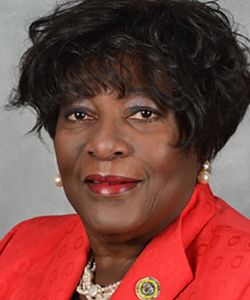
Del. Edith Patterson
Sponsored bills
Maddy summaryHB 853 (Maryland Second Look Act) allows individuals serving prison sentences of 20+ years to petition courts for sentence reduction under specific conditions. To qualify, petitioners must have served at least 20 years and wait 5 years after any prior petition, with a maximum of three petitions total. Courts must hold hearings considering factors like rehabilitation, victim input, the individual’s age at the offense, and safety risks, and must publicly state their reasons for granting or denying relief. The law applies retroactively to eligible individuals already serving long sentences.
Maddy summaryHB 513 limits rooster ownership in Maryland to no more than 5 roosters per acre or 25 total on a single property, starting January 1, 2027, unless authorized by the Department of Agriculture. It directly affects property owners keeping roosters, excluding commercial poultry farms, schools, animal shelters, and 4-H members who provide written authorization with specific details (like breed and location). Violations may result in misdemeanor fines up to $1,000, with enforcement handled by the Department of Agriculture in cooperation with local animal control. The bill aims to address concerns linked to cockfighting and Avian Flu spread, as noted in its preamble.
Maddy summaryHB 601 amends Maryland's Small Business Guaranty Fund program (Section 5-540 of the Economic Development Article) to expand how loan guarantees can be supported. It now allows guarantees to be backed by the State’s full faith and credit *or* by alternative financial instruments like irrevocable letters of credit, treasurer’s checks, escrow accounts, or other instruments promising reimbursement for lender losses. The bill also adds a requirement that the Authority must determine a loan will have "substantial economic impact" before approving a guarantee, considering factors like job creation and loan terms. This directly affects small businesses seeking loans (applicants) and financial institutions providing those loans by making guarantee options more flexible and adding a new review step. The changes take effect October 1, 2025.
Maddy summaryHB 505 renames Maryland's "renewable energy portfolio standard" to the "clean energy portfolio standard" and increases the required percentage of energy from clean sources (like wind, solar, and nuclear) for utilities over time. It revises definitions for offshore wind projects, modifies application requirements for these projects, and establishes a new process for the Public Service Commission to review proposed nuclear energy projects. The bill also requires nuclear project applicants to comply with minority business programs and mandates how energy sales proceeds from certain nuclear projects must be distributed. Additionally, it renames related funds and committees (like the "Maryland Offshore Wind Business Development Fund" to "Clean Energy Business Development Fund") and applies these changes retroactively.
Maddy summaryHB 147 requires Maryland county school boards to create policies banning elementary and middle school students from using cell phones or personal devices (like tablets or laptops) during school hours, unless specific exceptions apply. The policy must allow device use for students with documented special education needs (IEP/504 plans), health monitoring, or when teachers direct it for educational purposes. It does not apply to counties already having such policies in place. The law takes effect July 1, 2025, directly affecting all public elementary and middle schools in Maryland not covered by existing rules.
Maddy summaryHB 1199 creates a new 3-year limited license for internationally trained physicians to practice medicine in Maryland, effective October 1, 2027. It directly affects foreign-trained doctors who meet strict criteria, including holding a WHO-recognized medical degree, completing 2+ years of equivalent postgraduate training, practicing for 5+ years in their home country, passing U.S. medical exams (USMLE Steps 1-3), and residing in Maryland for at least one year. The license cannot be renewed but may lead to full licensure through conditions set by the State Board of Physicians. This provision does not change existing full licensure pathways but adds a temporary option for eligible international physicians.
Maddy summaryHB 525 prohibits using AI-generated deepfakes (synthetic media) to influence voters in Maryland elections. The bill defines "fraud" to include deepfakes - AI-created videos, audio, or images that falsely depict candidates or alter their appearance/speech - to prevent deceptive influence. It bans anyone from intentionally using such deepfakes to sway voting decisions, whether through force, threats, or other means. Violations are misdemeanor offenses punishable by fines up to $5,000 or up to 5 years in prison. This directly affects individuals or groups distributing deepfakes during elections in Maryland.
Maddy summaryHB 1127 requires all Maryland county school districts to develop age-appropriate water safety and swimming instructional content for public school students, integrating it into health and physical education by July 2026. It also mandates each county board to create a plan by December 2025 outlining strategies to increase student access to swimming pools and facilities through community partnerships, cost-effective transportation, and resource coordination. The plan must identify public/private partners and recommend policy changes if needed. Implementation of the curriculum begins in the 2026-2027 school year, while the access plan requirement expires June 30, 2026. This bill directly affects all public school students in Maryland counties and their local school districts.
Maddy summaryHB 1352 prohibits Maryland institutions of higher education from denying students access to facilities or services due to sickle cell disease diagnosis and requires them to provide reasonable accommodations. The bill mandates the Maryland Department of Health to develop an education campaign for campuses about sickle cell disease challenges, create uniform procedures with the Maryland Higher Education Commission for supporting affected students, and compile training materials for faculty and staff. Institutions must also establish clear reporting procedures for violations and publicly share accommodation policies. These requirements take effect October 1, 2025, directly impacting all Maryland colleges and universities and students with sickle cell disease.