

Maddy summaryHB 1055 establishes the Commission on Nondiscrimination in Maryland to study and monitor the state's nondiscrimination laws and their enforcement. The commission, composed of 14 members including legislative appointees, civil rights leaders, and representatives from local commissions and legal advocacy groups, will examine gaps in protections for individuals based on race, gender, disability, sexual orientation, and other categories. It must monitor federal government impacts on civil rights enforcement, identify inconsistencies or deficiencies in current laws, and recommend legislative solutions. The commission will submit annual reports with findings and proposals to the Governor and General Assembly, with the commission itself terminating on June 30, 2029.
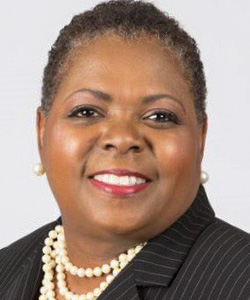
Del. Jamila Woods
Sponsored bills
Maddy summaryHB 1306 requires Maryland’s Department of Health to establish three specialized clinics for sickle cell disease treatment in Montgomery County, Harford County, and an Eastern Shore county by 2027. These clinics must operate under a hub-and-spoke model, providing comprehensive care including pain management, mental health services, genetic counseling, and telehealth access to specialists, while addressing social barriers like transportation and housing. The bill also creates a scholarship program for medical residents specializing in hematology with a sickle cell focus, requiring them to practice in Maryland after training. Funding of $6 million for fiscal year 2027 must cover clinic operations, staffing, social support services, and prioritizes hiring specialists and addressing health disparities. The Department must annually report on clinic outcomes, patient access, and efforts to reduce health disparities.
Maddy summaryHB 609 modifies Maryland's legislative scholarship programs to exempt students planning to complete the Real Property Appraiser Qualification Criteria program from standard exam requirements. It specifically allows senatorial and delegate scholarships to cover costs for the Practical Applications of Real Estate Appraisal Program (administered by the Appraisal Foundation). This change directly affects students pursuing real estate appraisal licensure who would otherwise need to meet typical scholarship exam rules. The bill amends Sections 18-402(4) and 18-405(b)(3) of the Maryland Annotated Code to include this program under eligible scholarship uses.
Maddy summaryHB 1254 establishes a state program to provide funding to Maryland public and nonpublic schools participating in the federal child nutrition program's community eligibility provision. The program covers the difference between federal paid and free meal reimbursement rates, helping schools avoid financial shortfalls when serving more students at no cost. The State Department of Education will distribute funds based on poverty concentration and geographic diversity in school districts. The state will appropriate $10 million annually starting in fiscal year 2027 to support this program.
Maddy summaryHB 1242 requires Maryland's State Department of Education and Department of Health to form a workgroup studying vision support for K-12 students. The workgroup will analyze how many students fail vision screenings, whether they receive follow-up care (like glasses), and barriers like insurance access. It will also evaluate current programs across school districts, identify successful models from other states, and recommend improvements for tracking vision needs and connecting students to services. The bill does not create new programs but mandates a study to inform future policy, directly affecting all primary and secondary students in Maryland.
Maddy summaryHB 1287 prohibits manufacturing, selling, purchasing, receiving, or transferring "convertible pistols" in Maryland. A convertible pistol is defined as any semiautomatic pistol that can be converted into a machine gun solely by attaching a switch or auto-sear. The bill amends Maryland's Criminal Law to specifically target these firearms, directly affecting anyone handling such weapons or their conversion components. It does not ban all semiautomatic pistols, only those that meet this specific conversion definition. The law aims to prevent the use of devices that enable rapid-fire capabilities through simple attachment.
Maddy summaryThis House Joint Resolution (HJ 4) is a non-binding ceremonial measure affirming Maryland's support for Diversity, Equity, and Inclusion (DEI) as foundational to the American Dream. It does not create new laws or policies but formally encourages state, local, and federal entities to uphold DEI principles. The resolution directs certified copies to federal leaders including the President, Vice President, and congressional leadership, citing DEI's historical role in civil rights advancements. As a procedural resolution, it has no direct policy impact on constituents or funding mechanisms.
Maddy summaryThis bill prohibits violent acts in medical facilities and places of worship by adding a felony penalty for such offenses. It defines "medical facilities" broadly to include hospitals, clinics, and health agencies, and "places of worship" as nonresidential religious gathering spaces. Violating this law subjects offenders to up to 10 additional years in prison, with penalties running consecutively to sentences for the underlying violent crime. The law directly affects anyone committing violence in these locations, enhancing penalties for crimes committed in these specific settings.
Maddy summaryThis House Joint Resolution (HJ 6) is a symbolic statement by Maryland's General Assembly expressing support for nuclear disarmament efforts. It formally joins 73 other jurisdictions (including seven states and over 75 counties/municipalities) that have passed similar "Back from the Brink" resolutions. The resolution urges Maryland's U.S. Congressional delegation to cosponsor a federal resolution supporting the Treaty on the Prohibition of Nuclear Weapons and the five key policies of the Back from the Brink initiative (like ending hair-trigger alerts and ending first-use nuclear policies). It also calls on the U.S. President and Senate to endorse the international treaty banning nuclear weapons. As a resolution, it has no legal effect but serves as a formal position statement.
Maddy summaryHB 1059 creates the HEALTH Fund to provide supplemental financial assistance for Maryland Medicaid recipients and privately insured residents facing healthcare costs impacted by federal funding restrictions. It establishes an optional income tax checkoff on state tax returns, allowing residents to make voluntary contributions to the fund. The Comptroller would collect these donations, deduct administrative costs, and deposit the remaining funds into the HEALTH Fund. The fund can only be used for direct healthcare assistance (not administrative expenses) and must supplement, not replace, existing state healthcare funding for eligible individuals.