

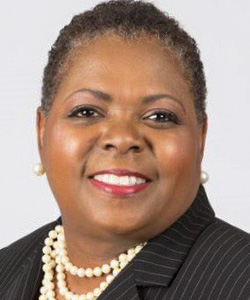
Photo of Jamila Woods
D Maryland House of Delegates · District 26 On the 2026 ballot

Del. Jamila Woods

Compare
Total votes
5,510
all sessions
Attendance
88%
636 missed
Lower than 81% of chamber peers
With party
99%
of cast votes
Near the chamber average
Bipartisan score
0%
crosses aisle rarely
Near the chamber average
Sponsored
446
bills & resolutions
Higher than 89% of chamber peers
Committees
2
assignments
446 bills and resolutions

Sponsored bills

Total
446
Primary
446
Co-sponsor
0
This page
446
matching current filters
Primary HB 646
Signed into law · Maryland House of Delegates · Lead sponsor
Task Force on the Creation of a Division of Returning Citizens and Expanded Reentry Services - Extension of Report Deadline and Task Force

Maddy summaryHB 646 extends the deadline for a task force studying the creation of a Division of Returning Citizens and expanded reentry services. The bill delays the task force's report submission date from December 31, 2025, to October 31, 2026, and extends the task force's termination date from 2026 to 2027. This procedural bill amends previous legislation (Chapters 936 and 937 of the 2024 Acts) without changing the task force's purpose or creating new services. It directly affects the existing task force by providing additional time to complete its work.

Signed into law Apr 22, 2025 0 co-sponsors
Primary HB 514
Signed into law · Maryland House of Delegates · Lead sponsor
Health Occupations - State Board of Chiropractic Examiners - Revisions

Maddy summaryHB 514 revises Maryland’s chiropractic licensing rules to update the State Board of Chiropractic Examiners’ structure and oversight. It changes board membership (requiring 5 licensed chiropractors and 2 consumer members), adds authority for unannounced office inspections when complaints allege violations of CDC infection control guidelines, and mandates health provider exams for licensees or applicants under specific circumstances. The bill directly affects chiropractors seeking licensure or renewal, chiropractic offices, and the Board itself. Key changes include streamlined board appointments, enhanced compliance inspections, and new requirements for health assessments to ensure public safety.

Signed into law Apr 8, 2025 0 co-sponsors
Primary HB 573
Signed into law · Maryland House of Delegates · Lead sponsor
State Board of Dental Examiners - Expanded Function Dental Assistants - Education and Reinstatement

Maddy summaryHB 573 updates Maryland's requirements for expanded function dental assistants (EFDA). It requires the State Board of Dental Examiners to approve specific types of training programs (like accredited college courses or programs from the Dental Assisting National Board) for EFDA certification, and mandates that initial certification courses offer online options when appropriate. The bill also sets clear rules for reinstating expired EFDA certifications, requiring completion of continuing education (which must include online options), timely renewal applications, and payment of fees. These changes directly affect dental assistants seeking or renewing their EFDA certification in Maryland.

Signed into law Apr 8, 2025 0 co-sponsors
Primary HB 502
Signed into law · Maryland House of Delegates · Lead sponsor
Office of Disability Employment Advancement and Policy and Maryland as a Model Employer Initiative - Established

Maddy summaryHB 502 establishes the Office of Disability Employment Advancement and Policy within Maryland's Department of Disabilities and creates the "Maryland as a Model Employer Initiative." The bill directly affects state government agencies and employees with disabilities by requiring them to improve hiring, retention, and career advancement opportunities for people with disabilities. Key provisions include collecting employment data from state agencies, providing training on disability-inclusive hiring practices, and reporting annual progress to the Governor and General Assembly starting December 1, 2026. The initiative aims to reduce barriers in state employment through outreach, assistive technology access, and evaluating agency policies. The Office will begin operations on July 1, 2026, with mandatory reporting on outcomes and recommendations for improvement.

Signed into law Apr 8, 2025 0 co-sponsors
Primary HB 1027
Signed into law · Maryland House of Delegates · Lead sponsor
Workgroup to Study Implementation of an Expanded 3-1-1 Nonemergency System

Maddy summaryHB 1027 creates a workgroup to study implementing a statewide 3-1-1 nonemergency telephone system in Maryland. The workgroup, composed of 12 members including state agency representatives, county officials, and industry stakeholders, will review existing 3-1-1 services, best practices from other states, and potential solutions for a statewide system. It will develop recommendations on oversight, feasibility, and a virtual portal, reporting findings to the Governor and legislature by November 1, 2025. This bill does not establish the 3-1-1 system itself but directs a study to inform future policy. The workgroup expires June 30, 2026.

Signed into law Apr 8, 2025 0 co-sponsors
Primary HB 601
Signed into law · Maryland House of Delegates · Lead sponsor
Economic Development - Small Business Guaranty Fund - Alterations

Maddy summaryHB 601 amends Maryland's Small Business Guaranty Fund program (Section 5-540 of the Economic Development Article) to expand how loan guarantees can be supported. It now allows guarantees to be backed by the State’s full faith and credit *or* by alternative financial instruments like irrevocable letters of credit, treasurer’s checks, escrow accounts, or other instruments promising reimbursement for lender losses. The bill also adds a requirement that the Authority must determine a loan will have "substantial economic impact" before approving a guarantee, considering factors like job creation and loan terms. This directly affects small businesses seeking loans (applicants) and financial institutions providing those loans by making guarantee options more flexible and adding a new review step. The changes take effect October 1, 2025.

Signed into law Apr 8, 2025 0 co-sponsors
Primary HB 345
Signed into law · Maryland House of Delegates · Lead sponsor
Interstate Social Work Licensure Compact

Maddy summaryHB 345 would allow social workers licensed in Maryland to practice in other states that join the Social Work Licensure Compact without needing separate licenses. The bill establishes a Compact Commission to manage mutual recognition of licenses, reduce duplicate requirements, and ensure accountability for social workers practicing across state lines. This directly affects licensed social workers, military families (who benefit from easier mobility), and clients seeking services in multiple states. The key mechanism is creating a standardized system for license portability while requiring social workers to follow the laws of the state where the client is located during service.

Signed into law Apr 8, 2025 0 co-sponsors
Primary HB 902
Passed · Maryland House of Delegates · Lead sponsor
Environment - Coal Combustion By-Products - Fees, Coordinating Committee, and Regulations

Maddy summaryThis Maryland bill establishes a minimum annual fee of $2.30 per ton for generators of coal combustion by-products, while exempting those that beneficially reuse the material or use it for coal mine reclamation. It creates a new Statewide Coal Combustion By-Products Coordinating Committee composed of state officials, technical experts, community representatives, and local government members to monitor sites and share information. The Department of the Environment must adopt regulations by a specified date to align with federal guidelines and must reduce fees in future years if collected revenue exceeds program operating costs.

Passed Apr 7, 2025 0 co-sponsors
Primary HB 1468
Passed · Maryland House of Delegates · Lead sponsor
Cyber Maryland Program – Revisions

Maddy summaryHB 1468 transfers Maryland's Cyber Maryland Program from the Maryland Technology Development Corporation to the Maryland Department of Labor, restructuring its governance and operations. The bill requires the Program to award competitive grants for IT/OT workforces starting in fiscal year 2026, alters how the Cyber Maryland Fund can be used (including rolling over unused balances), and updates the Program's purpose to focus on creating a cybersecurity talent pipeline to reduce workforce vacancies by July 2026. It also mandates the Program to coordinate with cybersecurity industry groups, develop a statewide workforce plan, and ensure diversity in outcomes. These changes directly affect Maryland employers seeking cybersecurity talent and state workforce development programs.

Passed Apr 7, 2025 0 co-sponsors
Primary HB 957
Passed · Maryland House of Delegates · Lead sponsor
State Procurement - Worker Residency Requirements

Maddy summaryHB 957 requires state contractors to ensure a specified percentage of workers on certain projects are Maryland residents and that a certain percentage of work hours are performed by residents. It directs the Maryland Department of Labor to enforce these residency requirements for state procurement contracts. Contractors who violate these rules may be debarred from future state contracts, with debarment triggered by specific violations like criminal convictions related to contracting or failure to meet residency standards. The bill amends existing procurement law and adds new sections (17-6B-01 to 17-6B-05) to establish these requirements.

Passed Apr 7, 2025 0 co-sponsors
Showing 211 to 220 of 446 bills
Previous 1 … 21 22 23 … 45 Next