

Maddy summaryHB 1291 requires the Maryland Department of Health to create procedures ensuring seniors aged 65+ who received in-home services within the past six months can temporarily continue care during service lapses caused by departmental errors. The bill mandates that temporary service continuation (up to 52 days or 1,248 hours) begin immediately upon service interruption and cover only previously approved services. It prohibits the department from altering existing appeal rights or billing recipients for services provided during this temporary period. The law applies specifically to seniors facing administrative or technical errors in their Medicaid coverage, ensuring uninterrupted care without financial burden. The bill takes effect October 1, 2026.
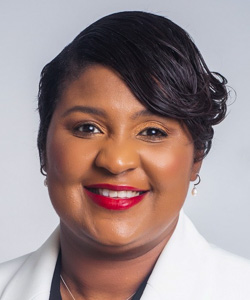
Del. Tiffany Alston
Sponsored bills
Maddy summaryHB 1162 requires Maryland correctional facilities in specific counties (starting with Howard, Montgomery, Prince George’s, and St. Mary’s) to provide medication-assisted treatment (MAT) for incarcerated individuals with opioid use disorder. It mandates facilities to conduct assessments, offer FDA-approved MAT options, and provide behavioral health counseling, with special provisions for pregnant individuals. The bill establishes funding mechanisms: the Special Secretary of Overdose Response must annually reimburse counties for MAT costs, and the Opioid Restitution Fund’s authorized uses expand to support this. This applies to local detention centers and the Baltimore Pre-trial Complex by 2023, with implementation schedules for additional counties.
Maddy summaryHB 1414 requires Maryland nursing homes to spend at least 75% of their nursing and residential care revenue on direct care staff wages and benefits, including nurses, dietary workers, and therapists. It also mandates that nursing homes submit detailed annual cost reports by September 1 (starting in 2027) to the Maryland Department of Health, including proof of wage payments and other required data. Failure to comply could lead to enforcement actions such as corrective plans or suspension from the Maryland Medicaid program. The bill directly affects all nursing homes operating in Maryland and takes effect October 1, 2026.
Maddy summaryHB 965 establishes the Office of Health Care Quality Stakeholder Advisory Council to improve oversight of health care facilities in Maryland. The council, composed of 15 members including legislative appointees, frontline workers, facility residents, advocacy groups, and industry representatives, provides feedback to the Office of Health Care Quality and notifies the Secretary of Health if oversight is deemed negligent. Key mechanisms include biannual public meetings (with live streaming and public comment), annual data reporting on facility inspections and complaints, and a requirement for the council to compile feedback and recommendations into an annual report to the Governor and General Assembly starting in 2027. This bill directly affects the Office of Health Care Quality, health care facilities, and stakeholders by adding structured accountability to oversight processes.
Maddy summaryHB 636 modifies Maryland's ethics rules to allow members of the General Assembly, candidates for the Assembly, and newly elected members to earn income from state or local government jobs under specific exemptions. It creates four categories of allowable income: educational instruction, merit-system positions, human services roles, or logical career transitions from prior employment. The Joint Ethics Committee must approve these exemptions, while certain existing relationships or post-term employment meeting education/licensure requirements remain excluded. This bill directly affects legislators' ability to hold outside public-sector jobs without violating current ethics prohibitions.
Maddy summaryHB 935 requires Maryland to establish a dedicated prerelease facility for female incarcerated individuals, directly affecting women eligible for prerelease programs at the Maryland Correctional Institution for Women. The bill mandates a separate facility meeting specific criteria: at least 3 acres, not within 1 mile of other prisons, and designed to house 1.25 times the 2024 prerelease-eligible population. It requires the Department of Public Safety and Correctional Services to provide comprehensive rehabilitative services (including gender-responsive programming) and report progress to legislative committees by a specified deadline. The facility must operate by June 1, 2023, with the Department of General Services directing procurement for its construction.
Maddy summaryHB 835 repeals Maryland’s authority to issue no-knock search warrants and establishes new procedures for all search warrants. It requires law enforcement to provide written justification for any warrant request, including evidence supporting the need for no notice, details on why less invasive methods weren’t used, and specific information about occupants (including disabilities or pets). Warrants must now be executed between 8 a.m. and 7 p.m. unless exigent circumstances exist, and officers must have completed specialized breach-entry training. This bill directly affects law enforcement agencies when obtaining warrants and impacts residents whose properties may be searched. The changes aim to increase transparency and safety during warrant executions.
Maddy summaryHB 924, the "Safe Kids Act," creates a new civil legal remedy allowing parents or legal guardians of minors depicted in or exposed to child exploitation material to sue online platforms directly. It prohibits platforms from knowingly distributing such material - including AI-generated images defined as "computer-generated" under the law - and requires them to remove it. The bill updates definitions to explicitly include AI-created images in child pornography laws and increases the age threshold for victims in certain criminal cases. This allows civil lawsuits for damages (including attorney fees) without needing prior criminal convictions, targeting platforms that facilitate distribution rather than just criminalizing possession.
Maddy summaryHB 632 removes psychiatry and all subcategories of psychiatric services from the definition of "medical service" requiring a Certificate of Need (CON) in Maryland. This exempts psychiatric health care facilities and providers of psychiatric or mental health services from needing state approval before establishing or operating these services. The bill amends Maryland law by deleting "psychiatry" from the list of medical services subject to CON requirements, which currently includes services like surgery, pediatrics, and rehabilitation. This change directly affects psychiatric hospitals, clinics, and mental health programs seeking to expand or open without prior state review. The policy shift simplifies regulatory requirements for mental health service providers.
Maddy summaryHB 686, "Zoey's Law," increases penalties for drivers who flee police and cause death during the chase. It reclassifies causing death while attempting to elude police as a felony, raising the maximum penalty to 5 years for a first offense and 10 years for repeat offenses, with fines up to $5,000. The bill directly affects drivers who evade law enforcement and result in a fatality, replacing prior misdemeanor penalties. This change applies to all drivers who fail to stop for police signals (e.g., lights, sirens) and cause death, regardless of whether the driver was fleeing for a "crime of violence."