

Maddy summaryHB 1455 requires Maryland's State Retirement and Pension System Board of Trustees to review all investment holdings and divest from specific "Israel-restricted investments," defined as holdings in the Government of Israel, its agencies, or associated entities like the Development Corporation for Israel. The bill prohibits the Board from making new investments in these restricted assets using net new funds and mandates annual reports to legislative committees detailing divestment actions and ineligible investments. It includes provisions requiring the Board to act in good faith while complying with fiduciary duties and applicable human rights law, with limited exceptions for investments that cannot be sold at fair market value. The bill directly affects Maryland's public employee pension funds, which hold billions in assets managed by the Board. It takes effect July 1, 2026.
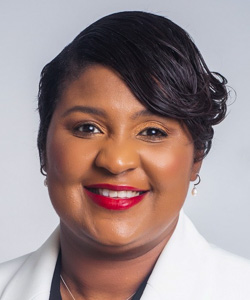
Del. Tiffany Alston
Sponsored bills
Maddy summaryHB 1299 requires appraisers to notify buyers, sellers, or their designated point of contact if an appraisal value may be below the contract price or refinance estimate. Interested parties (like lenders or real estate agents) can then submit verified sales data or pending sale documentation within 48 hours for the appraiser to consider. The final appraisal report must include an addendum detailing the notification, submitted data, and whether the additional information changed the valuation. This applies to residential property transactions in Maryland and aims to standardize communication during the appraisal process.
Maddy summaryHB 1371 establishes the Maryland-Africa and the Caribbean Investment and Development Program within the Department of Commerce to study and promote trade and investment between Maryland's African diaspora communities and Africa/Caribbean nations. The program creates an Advisory Board (with members from diaspora businesses, community groups, academic institutions, labor, and finance) to study trade opportunities and recommend actions to the Department. It also creates the Maryland African Diaspora Investment and Development Fund, a permanent fund providing grants, low-interest loans, and business support services to diaspora-owned businesses for expansion, startup capital, and job creation - particularly focusing on Northeast Baltimore communities. The bill directly affects businesses owned by Maryland residents of African or Caribbean descent, defined as first-generation immigrants and their descendants.
Maddy summaryHB 444 prohibits Maryland state and local governments, including county sheriffs and agencies, from entering into new agreements with federal authorities to enforce civil immigration law. It requires existing agreements to be terminated by July 1, 2026, or immediately upon the law’s effective date (June 1, 2026). The bill specifically targets contracts, memorandums, or agreements that allow local entities to assist in federal immigration enforcement under federal laws like 8 U.S.C. § 1103 or § 1357. This directly affects local law enforcement agencies and government bodies that previously collaborated with federal immigration authorities. The law aims to prevent state/local resources from being used for immigration enforcement under federal programs.
Maddy summaryHB 1131 (Pregnancy Outcome Protection Act) prohibits law enforcement and agencies from investigating, prosecuting, or imposing civil liability on individuals who experienced pregnancy loss (including miscarriage, stillbirth, or self-managed abortion), except when independent evidence of unrelated criminal conduct exists or the individual consents. It protects healthcare providers from liability for supporting patients during or after pregnancy loss and restricts disclosure of medical records related to pregnancy loss without evidence of abuse, unrelated criminal conduct, or patient consent. The bill creates a private right to sue for violations and establishes misdemeanor penalties for knowingly violating its provisions. These changes apply to all Maryland residents and healthcare providers within the state’s health system.
Maddy summaryHB 1146, the "Sacred Places Safety Act," prohibits committing any crime of violence (as defined in Maryland law) within medical facilities or places of worship. It directly affects individuals who commit such acts in these locations, which include hospitals, clinics, and nonresidential religious gathering spaces. The bill increases penalties by making such violations a felony punishable by up to 10 years in prison, in addition to penalties for the underlying violent crime. This law takes effect June 1, 2026, and applies to all relevant locations statewide.
Maddy summaryHB 1202 requires Maryland's State Board of Education to develop content standards on Palestinian culture and history for inclusion in social studies curriculum standards by December 2026. These standards must cover historical presence, cultural traditions, impacts of displacement, and Palestinian identity as a distinct ethnic group, while emphasizing factual, nonpartisan teaching and critical thinking. Starting in the 2027-2028 school year, all public schools must integrate this content into social studies. The bill also updates bullying policies to explicitly prohibit anti-Palestinian bias and mandates county boards to create age-appropriate curriculum guides in collaboration with educators and community stakeholders.
Maddy summaryHB 1309 establishes a Commission to study racial disparities in Maryland’s criminal justice system, directly affecting African American, Hispanic, and other non-White individuals who experience disproportionate treatment. The Commission, composed of legislative leaders, public defenders, prosecutors, court officials, and community advocates, will examine disparities in policing, arrests, sentencing, and data collection. It will specifically assess cumulative impacts of disparate practices, mandatory minimums (including firearm offenses), and propose reforms like race-neutral risk assessments and expanded judicial discretion. The Commission must make recommendations by 2028, focusing on systemic changes to improve transparency and reduce racial inequities without implementing new laws itself.
Maddy summaryHB 504 repeals provisions requiring two physician members on Maryland's State Board of Examiners for Audiologists, Hearing Aid Dispensers, Speech-Language Pathologists, and Music Therapists. The bill removes the requirement for physician members who must hold specific certifications (e.g., American Board of Otolaryngology) and be actively practicing in the state. This changes the board's composition from 15 to 13 members by eliminating the physician slots, directly affecting future appointments for physicians seeking board roles. The bill does not alter the board's regulatory duties over licensed professionals in these fields.
Maddy summaryHB 1264 requires Maryland's Medical Assistance Program (Medicaid for low-income residents) to cover individual and group counseling for tobacco cessation, subject to state budget and federal law limits. It prohibits the program and managed care organizations from demanding prior authorization for any tobacco cessation product or service. This bill directly affects Medicaid beneficiaries seeking to quit tobacco use and their healthcare providers. The law amends existing Maryland health code sections to implement these coverage requirements and remove authorization barriers.