

Maddy summaryHB 340 would allow Maryland to join the School Psychologist Interstate Licensure Compact, enabling licensed school psychologists from member states to practice in Maryland without reapplying for separate state licenses. This directly affects school psychologists seeking to work across state lines, particularly in areas facing staffing shortages. The compact establishes standardized requirements for multistate licensure and creates a commission to manage the agreement, while ensuring states maintain authority to protect public safety through their own scope-of-practice laws. The goal is to improve access to school psychological services by streamlining licensing for qualified professionals.
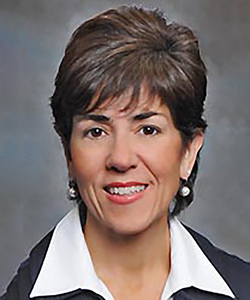
Del. Mary Lehman
Sponsored bills
Maddy summaryHB 457 requires all Maryland colleges and universities to provide free tampons and pads in every restroom by August 1, 2028. This applies to every public and private institution of higher education in the state, directly affecting students, staff, and faculty who use campus restrooms. The bill mandates that institutions supply size-appropriate products without cost, ensuring accessibility for individuals who menstruate. The requirement takes effect July 1, 2026, with full implementation due by the 2028 deadline.
Maddy summaryHB 660 revises funding formulas for Maryland's public library system. It adjusts the per-resident funding rates for two key components: (1) regional resource centers (increasing from $9.79 to $9.99 per resident starting fiscal year 2027), and (2) the State Library Resource Center (increasing from $2.07 to $2.64 per state resident by fiscal year 2032). The bill directly affects all public libraries participating in Maryland's regional resource centers and the State Library Resource Center. These changes, effective July 1, 2026, maintain the existing per-resident calculation structure while updating specific annual funding amounts for operating and capital expenses.
Maddy summaryHB 680 renames Maryland's "Children's Cabinet Fund" to the "Children's Cabinet Interagency Fund" and mandates specific annual funding increases for grants to local management boards. Starting in fiscal year 2028, the Governor must appropriate $3 million above the 2027 level, with $2 million increases each subsequent year through 2031. These funds support local boards in implementing coordinated services for children and families, including youth development, prevention, crisis intervention, and reducing out-of-home placements. The bill directly affects local management boards that coordinate child welfare services, requiring them to align with state and local plans when applying for these grants.
Maddy summaryHB 1267 requires local zoning authorities to maintain specific zoning classifications for two federal properties: the Patuxent Research Refuge and the Beltsville Agricultural Research Center. The bill mandates that any portion of these properties sold, leased, or transferred by the federal government must retain a zoning classification restricting uses to open space, reserved open space, or resource conservation - prohibiting commercial, industrial, or residential development. This applies to the Patuxent Refuge under Section 4-217 and to Beltsville Agricultural Research Center property under Section 25-211 of Maryland law. The law takes effect June 1, 2026, and permanently prohibits local zoning exceptions for these properties.
Maddy summaryHB 1120 allows members of the U.S. Foreign Service and their spouses to practice licensed professions in Maryland using a valid license from another state, without needing to obtain a new Maryland license. The bill creates new provisions (Sections 10-14A-01 to 10-14A-03) in Maryland law to establish this portability for specific occupations covered under the state's licensing codes. It directly affects Foreign Service employees and their spouses who are already licensed in another jurisdiction and relocate to Maryland for duty. The bill amends multiple sections across Maryland’s licensing codes in State Government, Business Occupations, Education, and Health to implement this change. This policy removes a barrier for these individuals to continue their professional work without repeating licensing requirements.
Maddy summaryHB 115 automatically restores voting rights for Maryland residents released from state prisons who were registered to vote before incarceration. The Department of Public Safety must send the State Board of Elections a weekly list of released individuals' names and new addresses, prompting the Board to reactivate their voter registration at their updated address. The bill requires the Board to send notification cards confirming voting eligibility and the right to update address or decline registration, while prohibiting public disclosure of how someone was restored through this process. This applies to all released individuals with prior registration who now reside in Maryland, effective January 2027.
Maddy summaryHB 108 establishes the Release Preparation Program within Maryland's Division of Correction to help formerly incarcerated individuals prepare for release. The program allows these individuals to schedule visits to state correctional facilities for support, with schedules requiring written notification to the Division of Correction and public availability. It amends the Cannabis Regulation and Enforcement Fund to specifically cover costs for this program, adding it to the fund's authorized uses. The bill requires the Division of Correction to approve protocols for the program and prohibits denying scheduled visits unless they interfere with facility operations. The program will take effect on October 1, 2026.
Maddy summaryHB 1016 invalidates noncompete and conflict-of-interest clauses in employment contracts for certain employees if their employer relocates the majority of its employees or principal business location outside Maryland. It directly affects low-wage workers (earning ≤150% of state minimum wage), healthcare workers providing direct patient care (earning ≤$350,000 annually), and veterinary professionals. For high-earning healthcare workers ($350,000+), the bill allows limited 1-year noncompete restrictions within 10 miles of their prior workplace. The law takes effect October 1, 2026, and applies only to contracts signed after that date.
Maddy summaryHB 1017 prohibits Maryland state or local governments from approving private entities to operate immigration detention facilities unless the facility’s use is explicitly permitted under applicable zoning laws. It defines such facilities as buildings housing individuals for immigration violations (including those with security features like perimeter fencing or locked areas), and clarifies that general "government/institutional" zoning does not cover them. Private operators violating this face civil penalties up to $10,000 per day, and the Attorney General can enforce the law through court actions. The law applies retroactively to existing agreements for facilities intended for immigration detention, regardless of prior permits or investments.