

Maddy summaryHB 185 modifies the fiscal years when the Governor must include a $3.7 million annual appropriation for Maryland's Therapeutic Child Care Grant Program in the state budget. The bill does not change the program's funding distribution rules, which require $1.283 million for existing providers, $1.917 million for expanded services, and $500,000 for new or additional provider enrollment. This affects the state's budget process and child care providers serving children under six with developmental delays, physical disabilities, or behavioral challenges. The change adjusts the timeline for mandatory funding without altering the program's core structure or eligibility.
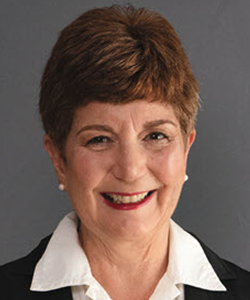
Del. Linda Foley
Sponsored bills
Maddy summaryHB 455 requires Maryland's Department of Veterans and Military Families to place American braille tactile flags in one or more state veterans' cemeteries. These flags, designed by the Kansas Braille Transcription Institute, allow blind and visually impaired visitors to experience the American flag through touch. The bill directly affects blind veterans and visually impaired individuals who visit Maryland's five state veterans' cemeteries. It amends state law to mandate the department designate specific locations for these tactile flags as a memorial feature.
Maddy summaryHB 643 expands Maryland's Janet L. Hoffman Loan Assistance Repayment Program to include veterinarians and veterinary technicians. It allows these professionals to qualify for student loan repayment if they work as state employees for at least 5 years or volunteer at qualified animal shelters for 100+ hours yearly over 3 years. Qualifying shelters must be owned by local governments, animal control contractors, or organizations that received Maryland's spay/neuter grants. The bill updates existing eligibility criteria without changing the program's core structure or funding.
Maddy summaryHB 932 requires the Governor of Maryland to place certain personal financial interests into a "certified blind trust" or sell them within a specific timeframe to avoid conflicts of interest. It also mandates that businesses seeking state grants, contracts, or awards report any financial ties to the Governor or "restricted individuals" to the Ethics Commission. The bill further requires the Governor-elect to consult with the Ethics Commission early in their term to establish the trust or divest interests, and obligates the Governor to sign a nonparticipation agreement for interests not covered by the trust. These changes directly affect the Governor's financial dealings and businesses interacting with state government.
Maddy summaryHB 446 creates a new commercial fishing license specifically for harvesting blue and flathead catfish using trotlines in the Chesapeake Bay. It directly affects licensed commercial fishers by allowing them to fish in the main stem of the Chesapeake Bay south of the Chesapeake Bay Bridge, a location previously restricted by Department regulations. The bill prohibits the Department of Natural Resources from banning this activity within that area while requiring license holders to pay a $15 annual fee for a one-year license. This establishes a permanent regulatory framework for targeted commercial fishing of these species, rather than implementing a temporary pilot program.
Maddy summaryThis bill modifies Maryland's tax code to exempt properties owned by public housing authorities (including Baltimore Housing Authority, Howard County Housing Commission, and Montgomery County Housing Authority) and certain nonprofit housing corporations from state and local taxes when used for housing eligible low-income residents. It requires these entities to make "payments in lieu of taxes" to local governments through negotiated agreements. The exemption applies to properties directly owned or held through subsidiary entities of these housing authorities. The changes update existing tax law under Maryland's Housing and Community Development code (Section 12-104).
Maddy summaryHB 513 limits rooster ownership in Maryland to no more than 5 roosters per acre or 25 total on a single property, starting January 1, 2027, unless authorized by the Department of Agriculture. It directly affects property owners keeping roosters, excluding commercial poultry farms, schools, animal shelters, and 4-H members who provide written authorization with specific details (like breed and location). Violations may result in misdemeanor fines up to $1,000, with enforcement handled by the Department of Agriculture in cooperation with local animal control. The bill aims to address concerns linked to cockfighting and Avian Flu spread, as noted in its preamble.
Maddy summaryHB 1424, the "Protect Our Federal Workers Act," expands state financial assistance to Maryland residents affected by federal government disruptions beyond just shutdowns. It renames the "Federal Government Shutdown Employee Assistance Loan Fund" to the "Federal Government Employee Assistance Loan Fund" and broadens eligibility to include current federal employees not paid during shutdowns *and* Maryland residents recently terminated due to federal office closures, relocations, or mass layoffs. The bill allows funds from the state’s Catastrophic Event Account to cover costs for these individuals, administered by the Maryland Department of Labor. This changes existing law to provide loans for both ongoing shutdowns and post-layoff financial hardship from federal facility changes.
Maddy summaryHB 502 establishes the Office of Disability Employment Advancement and Policy within Maryland's Department of Disabilities and creates the "Maryland as a Model Employer Initiative." The bill directly affects state government agencies and employees with disabilities by requiring them to improve hiring, retention, and career advancement opportunities for people with disabilities. Key provisions include collecting employment data from state agencies, providing training on disability-inclusive hiring practices, and reporting annual progress to the Governor and General Assembly starting December 1, 2026. The initiative aims to reduce barriers in state employment through outreach, assistive technology access, and evaluating agency policies. The Office will begin operations on July 1, 2026, with mandatory reporting on outcomes and recommendations for improvement.
Maddy summaryThis Maryland bill establishes a minimum annual fee of $2.30 per ton for generators of coal combustion by-products, while exempting those that beneficially reuse the material or use it for coal mine reclamation. It creates a new Statewide Coal Combustion By-Products Coordinating Committee composed of state officials, technical experts, community representatives, and local government members to monitor sites and share information. The Department of the Environment must adopt regulations by a specified date to align with federal guidelines and must reduce fees in future years if collected revenue exceeds program operating costs.