

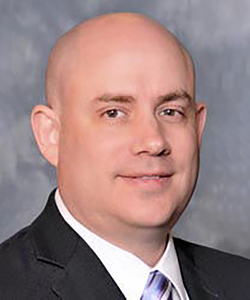
Photo of David Fraser-Hidalgo
D Maryland House · District 15 On the 2026 ballot

Rep. David Fraser-Hidalgo

Compare
Total votes
11,914
all sessions
Attendance
91%
1,058 missed
Near the chamber average
With party
99%
of cast votes
Higher than 87% of chamber peers
Bipartisan score
0%
crosses aisle rarely
Lower than 88% of chamber peers
Sponsored
639
bills & resolutions
Lower than 92% of chamber peers
Committees
2
assignments
639 bills and resolutions

Sponsored bills

Total
639
Primary
386
Co-sponsor
253
This page
639
matching current filters
Primary HB 128
Vetoed · Maryland House · Lead sponsor
Climate Change Adaptation and Mitigation - Total Assessed Cost of Greenhouse Gas Emissions - Study and Reports

Maddy summaryHB 128 requires fossil fuel extraction and refining businesses to pay into a new state fund. Revenue from these payments will finance climate adaptation projects like coastal defenses, upgraded stormwater systems, and efforts to address health impacts on vulnerable communities. The fund is permanent and will support state climate action without new general taxes. This establishes a dedicated revenue stream for climate resilience efforts from the fossil fuel sector.

Vetoed May 16, 2025 0 co-sponsors
Primary HB 1111
Signed into law · Maryland House · Lead sponsor
Public Utilities - Solar Energy Generating Systems - Systems Located on or Over Water Retention Ponds, Quarries, or Brownfields

Maddy summaryHB 1111 expands Maryland's Small Solar Energy Generating System Incentive Program to include floating solar systems on water retention ponds, quarries, and brownfields, while exempting these installations from property tax. It amends state law to explicitly add "floating systems" and "systems located on brownfields" to the eligibility criteria for both the incentive program (under Public Utilities law) and the property tax exemption (under Tax law). This directly affects property owners, developers, and local governments with sites like water retention ponds, quarries, or brownfields where solar panels could be installed. The bill makes these specific locations eligible for financial incentives and tax relief, effective July 1, 2025.

Signed into law May 13, 2025 0 co-sponsors
Primary HB 809
Signed into law · Maryland House · Lead sponsor
Out-of-Home Placement Providers - Individuals Enrolled in Higher Education and Vocational Training Programs

Maddy summaryHB 809 creates a temporary exception to standard child placement limits for foster care providers when a child enrolled in college must leave campus due to academic breaks, temporary closures, or approved leave. The exemption applies only if the child, foster care provider, and agency agree to the living arrangement. This directly affects youth in foster care attending college and their foster care providers. The law requires the state to update placement regulations by July 2025.

Signed into law May 13, 2025 0 co-sponsors
Primary HB 930
Signed into law · Maryland House · Lead sponsor
Public Health Abortion Grant Program - Establishment

Maddy summaryHB 930 establishes Maryland's Public Health Abortion Grant Program to improve access to abortion care by redirecting excess funds from health insurance coverage. It requires insurance carriers in Maryland to transfer 90% of unused funds from their abortion coverage accounts (after covering patient costs) into a new special fund. This fund will support abortion clinical services, particularly where federal funding is restricted, benefiting individuals seeking abortion care in Maryland. The program mandates annual reporting by insurers and transfers existing excess funds starting in 2025.

Signed into law May 13, 2025 0 co-sponsors
Primary HB 887
Signed into law · Maryland House · Lead sponsor
Accountants - Licensed Out-of-State Practice Privileges - Qualifications

Maddy summaryHB 887 allows certified public accountants (CPAs) licensed in other states to practice in Maryland without obtaining a separate Maryland license, provided their home state's requirements are verified as substantially equivalent by NASBA (National Association of State Boards of Accountancy) and they passed the Uniform CPA Exam. It directly affects out-of-state CPAs and their firms seeking to serve Maryland clients. Key provisions include eliminating fees, registration, and board notice for qualifying practitioners, while requiring them to comply with Maryland's disciplinary authority and laws. The bill takes effect October 1, 2025.

Signed into law May 6, 2025 0 co-sponsors
Primary HB 1098
Signed into law · Maryland House · Lead sponsor
Insurance - Automobile Insurance - Maryland Automobile Insurance Fund and Affordability Study

Maddy summaryHB 1098 requires the Maryland Automobile Insurance Fund (MAIF) to calculate and report its risk-based capital (RBC) level annually, and to maintain total adjusted capital above specific thresholds starting December 2026. It also mandates the Insurance Commissioner to review MAIF’s RBC plans if capital levels fall below requirements and ensures certain rate-making rules apply to MAIF during financial stress periods. Additionally, the bill creates a workgroup to study auto insurance affordability and submit a report to the Governor and General Assembly by a specified deadline. This directly affects MAIF’s financial operations, the Insurance Commissioner’s oversight role, and the process for evaluating auto insurance costs for Maryland drivers.

Signed into law May 6, 2025 0 co-sponsors
Primary HB 147
Passed · Maryland House · Lead sponsor
County Boards of Education - Student Technology Use Policy - Requirements

Maddy summaryHB 147 requires Maryland county school boards to create policies banning elementary and middle school students from using cell phones or personal devices (like tablets or laptops) during school hours, unless specific exceptions apply. The policy must allow device use for students with documented special education needs (IEP/504 plans), health monitoring, or when teachers direct it for educational purposes. It does not apply to counties already having such policies in place. The law takes effect July 1, 2025, directly affecting all public elementary and middle schools in Maryland not covered by existing rules.

Passed Apr 7, 2025 0 co-sponsors
Primary HB 1483
In committee · Maryland House · Lead sponsor
Public Schools - High School Sports Officials - Payment and Fees

Maddy summaryHB 1483 requires Maryland public schools to issue simultaneous bids for boys' and girls' high school sports officiating services (like referees for basketball or soccer) and prohibits pay disparities between genders for similar sports. Schools must reject any bid that would result in different pay rates for officials officiating comparable boys' and girls' sports events. The bill allows schools with existing contracts to extend them until July 2029 to align timelines for similar sports, but new contracts must follow these rules starting July 1, 2025. It directly affects school systems hiring officiating services for high school athletic competitions.

In committee Apr 5, 2025 0 co-sponsors
Primary HB 1419
Passed · Maryland House · Lead sponsor
Electric Distribution System Support Services - Energy Storage and Data Use

Maddy summaryHB 1419 modifies how Maryland utilities recover costs for electric distribution system programs. It requires the Public Service Commission to approve a special accounting method for utilities to recover costs related to distributed energy resource programs and incentives, if the Commission determines these costs align with program goals. The bill also explicitly states that existing law cannot block utilities or other entities from offering residential energy storage services separately from pilot programs. This directly affects investor-owned utilities (like gas and electric companies) and residential customers who may gain more options for home energy storage systems.

Passed Mar 18, 2025 0 co-sponsors
Primary HB 693
Passed · Maryland House · Lead sponsor
Commercial Financing - Small Business Truth in Lending Act

Maddy summaryHB 693, the "Small Business Truth in Lending Act," regulates commercial financing for small businesses by requiring lenders to provide clear disclosures about costs and terms. It directly affects small businesses seeking loans (not personal loans) and non-bank lenders offering commercial financing, excluding banks, credit unions, large loans over $2.5 million, and real estate-secured deals. Key provisions mandate standardized calculations of annual percentage rates (APR), clear disclosure of finance charges (like fees and interest), and specific repayment terms for all commercial financing types, including equipment loans, factoring, and sales-based financing. The bill defines "commercial financing" broadly to cover loans where proceeds aren’t used for personal/family purposes, ensuring borrowers understand costs before signing.

Passed Mar 17, 2025 0 co-sponsors
Showing 31 to 40 of 639 bills
Previous 1 3 4 5 64 Next