

Maddy summaryHB 1516 transfers administration of Maryland's electric universal service program from the Public Service Commission to the Office of Home Energy Programs within the Department of Human Services. It also expands the Strategic Energy Investment Fund to cover fuel assistance programs, including weatherization for low-income households. The bill directly affects low-income residents with annual incomes at or below 200% of the federal poverty level who receive energy bill assistance. Key provisions include requiring the new Office to implement the electric universal service program and continuing the weatherization component previously managed by the Department of Housing and Community Development. The changes aim to streamline administration under one agency while maintaining existing eligibility and service mechanisms.
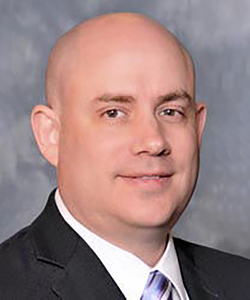
Rep. David Fraser-Hidalgo
Sponsored bills
Maddy summaryHB 1104 requires Maryland counties and municipalities to implement specific solar permitting software by August 1, 2027, for residential solar systems, energy storage, and electrical upgrades. The bill mandates that remote inspections (via video or photo) replace in-person checks for these systems, capping remote inspection costs at $100 and requiring completion within standard timelines. It also sets a $200 maximum fee for residential solar permits and prohibits manual permit reviews after software approval. This bill directly affects homeowners installing solar systems and local governments managing permitting processes by standardizing and streamlining the approval workflow.
Maddy summaryHB 1225 limits registration fees for electric vehicle (EV) charging stations to match the fees charged for gas pump meters. Specifically, it prohibits charging stations from being assessed more per "port" than the fee for a single gas pump meter. The bill also requires the Maryland Strategic Energy Investment Fund to cover costs for inspecting EV charging equipment, redirecting funds previously allocated elsewhere. This affects EV charging station operators and state inspection programs, ensuring fee consistency between EV charging and traditional fuel dispensing.
Maddy summaryHB 1199 requires Maryland's Department of the Environment to study how an economy-wide cap-and-invest program could help the state meet its 2045 net-zero emissions goal. The study, to be done with agencies like the Climate Change Commission and Energy Administration, must evaluate program design elements - including covered sectors, allowance distribution, and equity considerations - and explore revenue uses for climate initiatives. It specifically examines how to minimize burdens on businesses, protect trade-exposed industries, and allocate funds for low-income household energy assistance, clean transportation, and ecosystem resilience. The bill does not implement the program but mandates a detailed analysis based on Maryland's existing climate plan and lessons from jurisdictions like California and Quebec.
Maddy summaryHB 1 limits how investor-owned electric, gas, and combined gas/electric utility companies in Maryland can pass certain costs to customers through their rates. It prohibits rate recovery for most employee bonuses (except for pre-2025 contracts or union-covered employees) and caps supervisor compensation above 110% of the Public Service Commission Chair’s annual salary. The bill also requires utility boards to adopt written policies limiting spending on entertainment, office renovations, transportation (including private jets), and performance incentives, with policies submitted to the Public Service Commission for review. These rules apply specifically to investor-owned utility companies and aim to prevent ratepayers from funding certain executive or operational costs.
Maddy summaryHB 1007, the "Commercial Financing - Small Business Truth in Lending Act," requires lenders to provide clear, standardized disclosures about costs, annual percentage rates (APRs), and repayment terms for commercial financing used by small businesses. It directly affects small business owners (recipients) and lenders (providers) offering financing for business operations, equipment, or services - not personal use - excluding large transactions ($2.5M+), banks, and certain other entities. Key provisions mandate transparent calculations of finance charges, fixed repayment structures, and clear terms for sales-based financing (where payments adjust with revenue). The bill creates new definitions and requirements under Maryland’s Financial Institutions law to ensure small businesses understand the true cost of commercial loans.
Maddy summaryHB 350, the "Voting Rights Act of 2026," applies to local elections in Maryland counties and cities, protecting the voting rights of racial, ethnic, and language minority groups. It prohibits election methods that weaken the voting power of these groups, preventing them from electing preferred candidates or influencing election outcomes. Courts will determine violations by examining past election patterns and federal voting rights standards, rather than requiring proof of discriminatory intent. If a violation is found, courts can order remedies like changing election systems, but must respect existing statewide election practices.
Maddy summaryHB 935 requires Maryland to establish a dedicated prerelease facility for female incarcerated individuals, directly affecting women eligible for prerelease programs at the Maryland Correctional Institution for Women. The bill mandates a separate facility meeting specific criteria: at least 3 acres, not within 1 mile of other prisons, and designed to house 1.25 times the 2024 prerelease-eligible population. It requires the Department of Public Safety and Correctional Services to provide comprehensive rehabilitative services (including gender-responsive programming) and report progress to legislative committees by a specified deadline. The facility must operate by June 1, 2023, with the Department of General Services directing procurement for its construction.
Maddy summaryHB 488 establishes the geographic boundaries for Maryland's eight congressional districts for the 2026 elections. It specifies exact county and election district portions, using census tract data to define district lines where precincts are split, based on boundaries as they existed on January 13, 2026. This bill directly affects voters in Maryland's congressional districts by determining which communities are grouped together for electing U.S. Representatives. It replaces previous election law sections (8-702 through 8-709) and clarifies that certain districting rules apply only to state legislative districts, not congressional ones.
Maddy summaryHB 1222 (Maryland Values Act) requires Maryland correctional facilities to detain and transfer individuals who are not lawfully present in the U.S. and have been convicted of a violent crime to federal immigration authorities within 48 hours when requested. It prohibits law enforcement officers from detaining people or prolonging arrests based on immigration status during routine stops or investigations, and bans transferring individuals to federal immigration authorities except for the defined "covered individuals" (those with violent crime convictions and unlawful presence). The bill also terminates existing immigration enforcement agreements between Maryland entities and federal authorities by a specified deadline. This directly affects state/local correctional facilities, law enforcement officers, and individuals with certain immigration statuses and violent crime convictions.