

Maddy summaryHB 1117 requires Maryland's Medicaid program (Maryland Medical Assistance Program) and certain insurers to cover approved "elopement response devices" for specific individuals. These devices - such as door sensors, wearable location trackers, or alert systems - prevent people with cognitive, developmental, or neurological conditions from wandering unsafely (e.g., leaving a supervised area without the ability to return safely). Coverage is mandated when ordered by a qualified healthcare provider and documented in a qualifying plan (like an individualized education plan or dementia care plan) for eligible recipients: those under 21 with early screening eligibility, on home-based waiver programs, or diagnosed with Alzheimer’s/dementia. The bill defines these devices as medical equipment or assistive technology under state programs, ensuring coverage without regard to when the program was established.
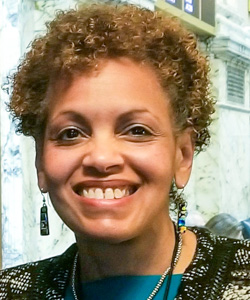
Del. Terri Hill
Sponsored bills
Maddy summaryHB 915 establishes a workgroup focused on youth transitioning out of foster care in Maryland. The workgroup includes state agency representatives and 15 youth aged 18-25 who have aged out of foster care, along with advocates from relevant organizations. It must identify current resources for housing, education, health, and other needs; assess service effectiveness; and find successful programs by June 1, 2027. The workgroup's report will inform future policy, but the bill itself creates no new laws or funding.
Maddy summaryThis bill requires Maryland counties with volunteer fire companies to provide no-cost preventive cancer screenings to volunteer firefighters, as defined by the bill. Volunteer fire companies must maintain and annually submit a list of their volunteer firefighters to the county, which must then keep this list on file. Counties can meet this requirement by either offering a free annual health exam including cancer screenings or applying for a specific grant to fund advanced screening technologies like multi-cancer blood tests. The law applies to all counties with volunteer fire companies and takes effect July 1, 2026.
Maddy summaryHB 892 allows descendant community organizations (DCOs) to legally challenge cemetery owners who propose selling, transferring, or changing the use of cemetery land. Currently, only cemetery owners or government entities could initiate such actions; this bill expands standing to DCOs - groups with cultural ties to interred individuals or ancestral connections. The law amends Maryland statutes (Business Regulation §5-101 and Real Property §14-121) to require courts to consider DCO concerns when reviewing these proposals. This change directly affects cemetery owners seeking to repurpose land and DCOs seeking to preserve burial sites as permanent sacred spaces.
Maddy summaryHB 1426 creates a new permit for clinical research pharmacies in Maryland, which are facilities specifically designed to conduct clinical trials. It allows healthcare providers to own these pharmacies under strict conditions, including requiring a licensed pharmacist to be on-site during all operating hours and prohibiting owners from receiving payment for patient referrals. The bill also exempts clinical trials conducted by corporations or entities from being classified as "practice of medicine," meaning trial staff no longer need individual medical licenses for their trial-related work. This change aims to streamline clinical research by removing a regulatory barrier that previously required individual licensing for trial staff.
Maddy summaryHB 1341 prohibits public school security personnel - including school resource officers, security employees, and certain law enforcement officers - from engaging in federal immigration enforcement or sharing student/employee records for immigration purposes. The bill requires security staff to immediately contact school officials if presented with a valid judicial warrant, subpoena, or legal order for immigration-related information. It amends Maryland's Education Code to clarify that school security cannot be used for immigration investigations under federal §287(G) and must comply with state privacy laws. This directly affects school security staff and protects students, employees, and their families from immigration enforcement activities within public schools.
Maddy summaryHB 598 creates a temporary license for internationally trained physicians to practice medicine in Maryland under specific conditions. It allows the State Board of Physicians to issue a 3-year license (non-renewable) to doctors who hold a WHO-recognized medical degree outside the U.S., completed 2 years of equivalent postgraduate training, practiced medicine for 5 of the last 7 years abroad, passed U.S. medical exams (USMLE Steps 1-3), and meet other criteria like English proficiency and Maryland residency. The license requires physicians to pursue full licensure through board-established pathways after the temporary period ends. This directly affects internationally trained doctors seeking to work in Maryland’s healthcare system, providing a structured but limited pathway to practice.
Maddy summaryHB 523 (Real Property - Residential Foreclosures - Commencement Restrictions) delays foreclosure actions on residential properties by requiring a 90-day waiting period after a default or notice of intent to foreclose, whichever is later. It directly affects homeowners facing foreclosure and mortgage lenders by adding this waiting period, with limited exceptions for fraud, no payments, property destruction, bankruptcy, or vacant properties. Key provisions include mandatory affidavits verifying default details and notice accuracy, a $450 filing fee, and requirements for loss mitigation documentation. The bill modifies Maryland's foreclosure law to provide additional time for homeowners to seek alternatives before a foreclosure case can proceed.
Maddy summaryHB 417 (Public Health - Medetomidine and Xylazine Consumer Protection Act) regulates the sale of veterinary drugs medetomidine and xylazine. It prohibits retailers from selling these products without proof the buyer intends to use them for veterinary, scientific, or institutional purposes, and bans sales to anyone under 21. Retailers must maintain records of sales, including age verification and proof of intended use. Violations carry civil fines up to $6,500 per offense, with penalties deposited into Maryland's Substance Abuse Fund. The bill directly affects pharmacies, veterinary suppliers, and online retailers selling these specific products.
Maddy summaryHB 633 requires Maryland health insurers, nonprofit health plans, and health maintenance organizations to cover salpingectomy (surgical removal of fallopian tubes) as a preventive measure for ovarian cancer. It prohibits these insurers from charging copayments, coinsurance, or deductibles for this specific procedure, ensuring no out-of-pocket costs for covered individuals. The exception applies only to high-deductible health plans under federal law, allowing the deductible to apply to the procedure in those cases. This law directly affects women eligible for preventive care and the health insurance providers operating in Maryland.