

Maddy summaryHB 468 establishes a 5-day initial limit for emergency mental health evaluation petitions in Maryland, allowing courts to extend them in 5-day increments (up to a 30-day total) for "good cause." It requires courts to include expiration dates on petitions and clarifies when peace officers may use reasonable force to execute them. The bill directly affects individuals seeking emergency evaluations, courts issuing petitions, and law enforcement officers carrying out the process. Key changes standardize timeframes, mandate expiration dates, and specify extension procedures for mental health emergencies.
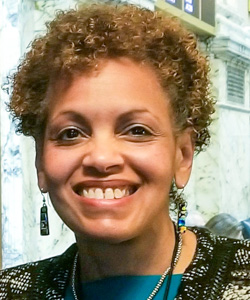
Del. Terri Hill
Sponsored bills
Maddy summaryHB 1129 proposes amending Maryland’s constitution to replace gendered pronouns (like "his" and "him") with gender-neutral language in sections describing constitutional officers. It specifically targets Articles II (Executive Department), V (Attorney General), VI (Treasury), and IX (Militia), updating phrases such as "his election" to "the Governor’s election" and "himself" to "themselves." The bill does not alter the roles, powers, or eligibility requirements for these offices - only the language used to describe them. This is a purely linguistic change aimed at modernizing constitutional text to be inclusive of all gender identities.
Maddy summaryHB 1163 establishes a 14-member task force to study fencing requirements for bodies of water and playgrounds, primarily focusing on preventing injuries and drownings involving individuals with autism. The task force includes state officials (like Housing Secretary, State Superintendent), autism advocates, recreation representatives, and industry/homeowner association members, chaired by the State Coordinator for Autism Strategy. It will review best practices, assess injury data, and recommend potential fencing interventions by July 1, 2026, but does not mandate any fencing or funding. The bill expires automatically on June 30, 2027, after the task force submits its report.
Maddy summaryHB 1306 requires Maryland’s Department of Health to establish three specialized clinics for sickle cell disease treatment in Montgomery County, Harford County, and an Eastern Shore county by 2027. These clinics must operate under a hub-and-spoke model, providing comprehensive care including pain management, mental health services, genetic counseling, and telehealth access to specialists, while addressing social barriers like transportation and housing. The bill also creates a scholarship program for medical residents specializing in hematology with a sickle cell focus, requiring them to practice in Maryland after training. Funding of $6 million for fiscal year 2027 must cover clinic operations, staffing, social support services, and prioritizes hiring specialists and addressing health disparities. The Department must annually report on clinic outcomes, patient access, and efforts to reduce health disparities.
Maddy summaryHB 1272 establishes a Youth Sports Safety Advisory Commission to study and recommend evidence-based safety practices for youth athletes, particularly those under 15 years old. The commission includes medical professionals (like pediatricians and orthopedists), sports organization representatives (such as youth soccer and athletic training groups), and state education officials. It will study injury prevention strategies, seek input from national youth sports organizations (e.g., US Youth Soccer), and submit findings and recommendations to state agencies by December 31, 2026. The commission will expire automatically on September 30, 2030, without requiring further legislative action.
Maddy summaryHB 1254 establishes a state program to provide funding to Maryland public and nonpublic schools participating in the federal child nutrition program's community eligibility provision. The program covers the difference between federal paid and free meal reimbursement rates, helping schools avoid financial shortfalls when serving more students at no cost. The State Department of Education will distribute funds based on poverty concentration and geographic diversity in school districts. The state will appropriate $10 million annually starting in fiscal year 2027 to support this program.
Maddy summaryHB 1242 requires Maryland's State Department of Education and Department of Health to form a workgroup studying vision support for K-12 students. The workgroup will analyze how many students fail vision screenings, whether they receive follow-up care (like glasses), and barriers like insurance access. It will also evaluate current programs across school districts, identify successful models from other states, and recommend improvements for tracking vision needs and connecting students to services. The bill does not create new programs but mandates a study to inform future policy, directly affecting all primary and secondary students in Maryland.
Maddy summaryHB 1287 prohibits manufacturing, selling, purchasing, receiving, or transferring "convertible pistols" in Maryland. A convertible pistol is defined as any semiautomatic pistol that can be converted into a machine gun solely by attaching a switch or auto-sear. The bill amends Maryland's Criminal Law to specifically target these firearms, directly affecting anyone handling such weapons or their conversion components. It does not ban all semiautomatic pistols, only those that meet this specific conversion definition. The law aims to prevent the use of devices that enable rapid-fire capabilities through simple attachment.
Maddy summaryHB 1477 requires consumer reporting agencies (like credit bureaus) that use algorithmic systems to generate credit reports to meet specific transparency and accuracy standards. It mandates agencies to explain algorithmic decisions in plain language, maintain a public registry of all algorithms used, and achieve strict thresholds: less than 0.5% error rate in algorithmic evaluations compared to human review, under 0.1% discriminatory bias based on protected characteristics, and 99.9% data accuracy. Agencies must also conduct quarterly independent bias audits, implement data governance frameworks with minimum data requirements (1,000-10,000 data points per category), and ensure human review of automated decisions within 24 hours. This bill directly affects entities that use algorithms to assess consumer credit for third-party reporting in Maryland, aiming to reduce bias and increase accountability in automated credit scoring.
Maddy summaryThis House Joint Resolution (HJ 4) is a non-binding ceremonial measure affirming Maryland's support for Diversity, Equity, and Inclusion (DEI) as foundational to the American Dream. It does not create new laws or policies but formally encourages state, local, and federal entities to uphold DEI principles. The resolution directs certified copies to federal leaders including the President, Vice President, and congressional leadership, citing DEI's historical role in civil rights advancements. As a procedural resolution, it has no direct policy impact on constituents or funding mechanisms.