

Maddy summaryHB 1617 establishes "Health Innovation Zones" in Maryland counties to address health disparities. It defines zones as areas with documented health gaps (like high maternal complications, chronic diseases, or low access to care) in communities of color, low-income areas, or immigrant populations. Counties must create incentives for grocery stores, pharmacies, and healthcare providers to locate in these zones, and Prince George’s County must designate specific zones (including the Blue Line Corridor and areas near DC) while seeking additional zones meeting the same criteria. The bill requires annual $5 million state funding starting in 2028 for the Maryland Economic Development Corporation to support these businesses and exempts them from local zoning laws within designated zones.
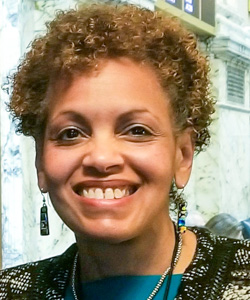
Del. Terri Hill
Sponsored bills
Maddy summaryHB 1056 designates October 1 as "Purple Lights Night" in Maryland, requiring the Governor to annually proclaim this day. The bill honors individuals in the state who are victims or survivors of domestic violence and expresses support for eliminating domestic violence. It adds this commemorative day to Maryland law through a procedural change in the Annotated Code (Section 7-417), without creating new programs or funding. The bill is purely ceremonial, focusing on symbolic recognition rather than policy implementation. It takes effect July 1, 2026.
Maddy summaryHB 860, the Arnaud and Magruder Memorial Act, sets a 5-day initial limit for emergency evaluation petitions after court approval, with extensions of up to 5 days each (totaling no more than 30 days) based on the individual's current behavior. The bill requires courts to include the petition's expiration date and clarifies that peace officers must transport individuals to emergency facilities when holding a valid petition (either court-endorsed within 5 days or signed by authorized professionals), allowing electronic petitions. This law directly affects courts reviewing petitions, peace officers executing them, emergency facilities receiving individuals, and people subject to emergency evaluations. It standardizes timelines and procedures to ensure timely care while preventing prolonged detention without court review.
Maddy summaryHB 1272 requires Maryland child welfare agencies to consider a child’s feelings and preferences when selecting kinship caregivers for out-of-home placements. It expands the definition of "kinship caregiver" to include unrelated individuals identified by the child or their parent, alongside blood relatives or those with strong family bonds. Agencies must approve such caregivers if they meet specific criteria, including understanding the child’s circumstances, having prior protective involvement, and demonstrating current ability to safeguard the child. The law takes effect October 1, 2026.
Maddy summaryHB 22 requires Maryland correctional facilities to return valid photo ID cards or driver's licenses to incarcerated individuals at release if they entered custody with them. It also mandates state corrections officials to help inmates obtain birth certificates and Social Security cards before release, with written consent required. Facilities must work with inmates six months before release (for those serving 1+ year sentences) to ensure they have valid ID or driver's licenses available upon release. The bill takes effect October 1, 2026, and explicitly states it cannot delay release.
Maddy summaryHB 1143 bans the use of the "lung float test" (a hydrostatic lung test) during perinatal autopsies in Maryland. It directly affects the Chief Medical Examiner, deputy examiners, assistant examiners, and authorized pathologists when determining if a death was a stillbirth or occurred after a live birth. The bill prohibits this specific test method and allows parents, guardians, or legal representatives to file a civil lawsuit if the test is used unlawfully. Violations also become grounds for disciplinary action against medical examiners.
Maddy summaryHB 1150 expands pharmacists' scope of practice in Maryland to prescribe, administer, and dispense medications for specific minor conditions and HIV prevention/treatment under statewide protocols. It directly affects pharmacists (by allowing new clinical duties) and patients (by increasing access to care for conditions like cold sores, strep throat, flu, lice, urinary infections, and HIV testing). Key provisions include permitting pharmacists to prescribe for minor, self-limiting conditions without a new diagnosis and to perform/interpret HIV lab tests while prescribing PrEP/PEP medications. The bill repeals the previous nPEP standing order program and requires the Maryland Department of Health to establish these protocols.
Maddy summaryHB 1593 requires Maryland's Deputy Secretary for Developmental Disabilities to provide public notice before changing the Self-Directed Services Manual, which governs waiver program services for individuals with developmental disabilities. The bill mandates a 90-day public comment period for proposed changes and prohibits adopting any revisions until this period ends. It directly affects individuals and families using self-directed services - where participants control their own care choices, staffing, and budget management - and ensures their input is considered before policy changes take effect. This procedural bill amends Maryland’s health code to formalize transparency and public engagement in updating the manual (effective October 1, 2026).
Maddy summaryHB 893 authorizes Maryland government units to acquire property containing abandoned cemeteries through condemnation for transfer to descendants of those buried there, descendant community organizations, or qualifying nonprofits. It requires governments to make reasonable efforts to contact descendants after acquisition and allows affected groups to petition courts to request property transfers. The bill also mandates that any entity receiving the property must maintain and preserve the cemetery, while governments must preserve the site until transfer occurs or facilitate reinterment if transfer isn't possible within a reasonable time. This applies to cemeteries meeting specific criteria, such as having no active operator, unclaimed ownership, or no identifiable responsible party.
Maddy summaryHB 382 (Maryland Broadband Opportunity and Fairness Act) requires broadband providers serving 10,000+ Maryland customers to establish low-cost internet programs by December 1, 2026. These programs must offer minimum speeds of 100/20 Mbps (for households of two or fewer) or 200/20 Mbps (for larger households), at least 1.2 terabytes of data, and low latency for eligible low-income consumers. Eligibility includes households meeting federal poverty guidelines (350% of federal poverty level), qualifying for SNAP/food assistance, Medicaid, or low-income energy programs. Providers may raise prices by no more than 2% annually with 30 days’ notice, and cannot require automatic payment plans for program enrollment.