

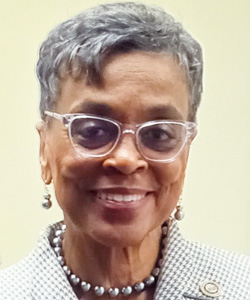
Photo of Cheryl Pasteur
D Maryland House · District 11A On the 2026 ballot

Rep. Cheryl Pasteur

Compare
Total votes
4,293
all sessions
Attendance
97%
127 missed
Near the chamber average
With party
99%
of cast votes
Near the chamber average
Bipartisan score
0%
crosses aisle rarely
Near the chamber average
Sponsored
284
bills & resolutions
Higher than 77% of chamber peers
Committees
1
assignment
284 bills and resolutions

Sponsored bills

Total
284
Primary
284
Co-sponsor
0
This page
284
matching current filters
Primary HB 1468
In committee · Maryland House · Lead sponsor
Hospitals - Patients in Active Labor - Safe Discharge Labor Plans

Maddy summaryHB 1468 requires hospitals in Maryland to create a written "safe discharge labor plan" before discharging or transferring any patient in active labor (defined as a pregnant person showing labor signs per medical standards). The plan must include clinical justification for the discharge, travel safety assessment, a plain-language explanation of risks and warning signs, and proof the patient understands the plan. Hospitals must maintain these records for 21 years, provide annual staff training on maternal care and patient communication, and prominently post patient rights in labor departments. The bill also mandates annual reports to the health department tracking discharge practices and any adverse outcomes following discharge.

In committee Mar 11, 2026 0 co-sponsors
Primary HB 832
In committee · Maryland House · Lead sponsor
Public Safety - State Law Enforcement Agencies - Hiring Restriction (ICE Breaker Act)

Maddy summaryHB 832, the "ICE Breaker Act," prohibits Maryland state law enforcement agencies from hiring individuals who were hired as sworn officers by U.S. Immigration and Customs Enforcement (ICE) on or after January 20, 2025. It applies specifically to agencies defined in the bill, including the Maryland State Police, Maryland Transportation Authority Police, and others listed in Section 3-535 of the Maryland Annotated Code. The law only affects new hires after its effective date (October 1, 2026), with no retroactive application to current employees hired before that date. The bill creates a clear hiring restriction for these state agencies regarding individuals with recent ICE employment.

In committee Mar 11, 2026 0 co-sponsors
Primary HB 1313
In committee · Maryland House · Lead sponsor
Higher Education - Tuition Exemption - Incarcerated Individuals

Maddy summaryHB 1313 would exempt incarcerated individuals in Maryland from paying tuition at public colleges and universities, directly affecting those enrolled in higher education programs within correctional facilities. The bill requires incarcerated individuals to apply for non-loan financial aid (like grants), which must first cover their tuition costs; the exemption then applies to any remaining tuition after aid is applied. It does not cover student loans and applies regardless of other scholarships or grants received. The exemption takes effect July 1, 2026, for all public higher education institutions in Maryland.

In committee Mar 11, 2026 0 co-sponsors
Primary HJ 3
In committee · Maryland House · Lead sponsor
Elementary and Secondary Education - Curriculum - Importance of Diversity

Maddy summaryThis House Joint Resolution (HJ 3) is a policy statement, not a binding law, acknowledging Maryland's commitment to inclusive education. It resolves that elementary and secondary school curricula should include the history of communities that have experienced discrimination (based on disability, ethnicity, gender, race, religion, indigenous affiliation, or sexual orientation) to ensure all students feel represented. The resolution directs education officials to adopt this inclusive approach but does not mandate specific curriculum changes or allocate funding. It primarily affects state education leaders, school boards, and curriculum developers by setting a policy direction for curriculum content.

In committee Mar 11, 2026 0 co-sponsors
Primary HB 818
In committee · Maryland House · Lead sponsor
Higher Education - Foster Care Recipients and Homeless Youth - Tuition Exemption and Associated Benefits

Maddy summaryHB 818 requires Maryland public colleges to cover tuition, room, board, required books, course materials, supplies, and equipment for foster care recipients and homeless youth who qualify. It defines "foster care recipient" as individuals in out-of-home placements (with specific age or guardianship criteria) and "homeless youth" as those verified under federal McKinney-Vento guidelines. To qualify, students must enroll before age 25 for a vocational certificate, associate’s, or bachelor’s degree, file for federal/state financial aid, and cannot use scholarships/grants toward covered costs. The exemption lasts until the student earns their degree or 10 years after starting their program, whichever comes first.

In committee Feb 20, 2026 0 co-sponsors
Primary HB 1235
In committee · Maryland House · Lead sponsor
State Procurement - Competitive Sealed Bids and Proposals - In-State Evaluation Preference

Maddy summaryHB 1235 requires Maryland state agencies to use standardized evaluation criteria when awarding competitive procurement contracts, replacing the previous focus on lowest price. It mandates that all bid invitations include these criteria and that responsive bids must contain a State and local economic impact statement detailing how the contract would benefit Maryland's economy. This bill directly affects state agencies issuing procurement contracts and businesses bidding on those contracts by changing how bids are evaluated to prioritize the "most favorable" option based on predefined factors. The law amends Maryland's procurement statutes (Sections 13-103 and 13-104 of the Annotated Code) to implement these changes.

In committee Feb 19, 2026 0 co-sponsors
Primary HB 1261
In committee · Maryland House · Lead sponsor
Consumer Protection - Artificial Intelligence Toys (Artificial Intelligence Toy Safety Act)

Maddy summaryHB 1261, the Artificial Intelligence Toy Safety Act, requires manufacturers of AI toys marketed to children in Maryland to include specific safety features and data privacy protections. It mandates parental consent mechanisms, age-appropriate content filters to block harmful or inappropriate material (like violence or emotional manipulation), automatic "safe mode" that disables the toy during risky interactions, and prohibitions on using child data for marketing. The law directly affects toy manufacturers selling AI toys in Maryland, requiring them to conduct safety assessments and update software for vulnerabilities. Violations are treated as unfair trade practices under Maryland's Consumer Protection Act, with enforcement handled by a new Review Panel under the Attorney General's office.

In committee Feb 18, 2026 0 co-sponsors
Primary HB 1299
In committee · Maryland House · Lead sponsor
Real Property - Residential Sales - Communications During Appraisal Process

Maddy summaryHB 1299 requires appraisers to notify buyers, sellers, or their designated point of contact if an appraisal value may be below the contract price or refinance estimate. Interested parties (like lenders or real estate agents) can then submit verified sales data or pending sale documentation within 48 hours for the appraiser to consider. The final appraisal report must include an addendum detailing the notification, submitted data, and whether the additional information changed the valuation. This applies to residential property transactions in Maryland and aims to standardize communication during the appraisal process.

In committee Feb 17, 2026 0 co-sponsors
Primary HB 1371
In committee · Maryland House · Lead sponsor
Maryland-Africa and the Caribbean Investment and Development Program - Establishment

Maddy summaryHB 1371 establishes the Maryland-Africa and the Caribbean Investment and Development Program within the Department of Commerce to study and promote trade and investment between Maryland's African diaspora communities and Africa/Caribbean nations. The program creates an Advisory Board (with members from diaspora businesses, community groups, academic institutions, labor, and finance) to study trade opportunities and recommend actions to the Department. It also creates the Maryland African Diaspora Investment and Development Fund, a permanent fund providing grants, low-interest loans, and business support services to diaspora-owned businesses for expansion, startup capital, and job creation - particularly focusing on Northeast Baltimore communities. The bill directly affects businesses owned by Maryland residents of African or Caribbean descent, defined as first-generation immigrants and their descendants.

In committee Feb 17, 2026 0 co-sponsors
Primary HB 444
Signed into law · Maryland House · Lead sponsor
Public Safety - Immigration Enforcement Agreements - Prohibition

Maddy summaryHB 444 prohibits Maryland state and local governments, including county sheriffs and agencies, from entering into new agreements with federal authorities to enforce civil immigration law. It requires existing agreements to be terminated by July 1, 2026, or immediately upon the law’s effective date (June 1, 2026). The bill specifically targets contracts, memorandums, or agreements that allow local entities to assist in federal immigration enforcement under federal laws like 8 U.S.C. § 1103 or § 1357. This directly affects local law enforcement agencies and government bodies that previously collaborated with federal immigration authorities. The law aims to prevent state/local resources from being used for immigration enforcement under federal programs.

Signed into law Feb 17, 2026 0 co-sponsors
Showing 61 to 70 of 284 bills
Previous 1 6 7 8 29 Next