Issue · Labor & Employment

Labor & Employment

Every labor & employment bill, vote, and legislator stance in Maryland, automatically classified by Maddy, our AI policy reader.

Total bills
169
2026 Regular Session
Top supporter
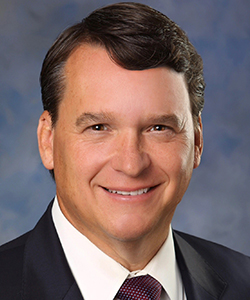
Nick Charles
100% support rate
Top opponent
William Folden
0% support rate
Ranked legislators
10
5 support · 5 oppose
Key legislators

Who's moving labor & employment in Maryland

Legislators moving labor & employment in Maryland
Legislator Party Stance Support rate Votes
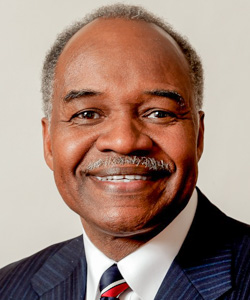
Nick Charles
Nick Charles Senate · District 25
D
Strong +
100% 83
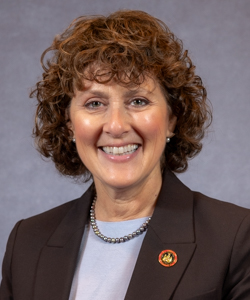
Shelly Hettleman
Shelly Hettleman Senate · District 11
D
Strong +
100% 100
Dalya Attar
Dalya Attar Senate · District 41
D
Strong +
100% 70
Ben Brooks
Ben Brooks Senate · District 10
D
Strong +
100% 99
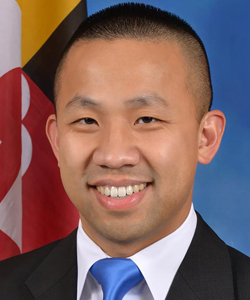
Clarence Lam
Clarence Lam Senate · District 12
D
Strong +
100% 97
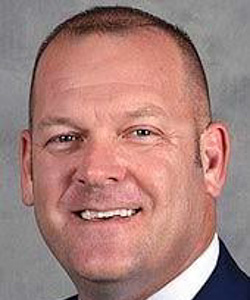
William Folden
William Folden Senate · District 4
R
Strong −
0% 81
Jason Gallion
Jason Gallion Senate · District 35
R
Strong −
0% 100
Steve Hershey
Steve Hershey Senate · District 36
R
Strong −
0% 97
Johnny Mautz
Johnny Mautz Senate · District 37
R
Strong −
0% 100
J.B. Jennings
J.B. Jennings Senate · District 7
R
Strong −
0% 100
Showing 151–160 of 169 bills

All labor & employment bills

failed · Maryland · House of Delegates Apr 13, 2026

HB 299: Fraud Prevention, Prevailing Wage, and Living Wage - Prohibitions, Penalties, and Enforcement

HB 299 prohibits employers from knowingly creating or using false records or statements that cause underpayment of unemployment insurance contributions or overpayment of benefits exceeding $15,000 annually. It requires civil penalties from fraud violations to be deposited into the Unemployment Insurance Fund and mandates the Labor Commissioner and Attorney General to enforce wage laws, including prevailing wage and living wage requirements. The bill also authorizes license revocation for workplace fraud violations and strengthens coordination between state agencies investigating fraud. This primarily affects employers, contractors, and licensed businesses subject to wage and unemployment insurance laws in Maryland.
in committee · Maryland · House of Delegates Jan 28, 2026

HB 473: Education - Collective Bargaining - Certificated Employees - Class Size

HB 473 repeals the current ban preventing public school employers in Maryland from negotiating class size limits with teacher unions. It removes the prohibition in Section 6-406(c)(3) that previously barred discussions about "the maximum number of students assigned to a class" during collective bargaining. This change directly affects certificated school employees (like teachers) and their unions, as well as public school employers (county school systems). The bill enables these parties to negotiate class size as part of their collective bargaining agreements, alongside other terms like salaries and working conditions.
signed · Maryland · House of Delegates Apr 28, 2026

HB 604: Arbitration Reform for State Employees Act of 2026

HB 604, the Arbitration Reform for State Employees Act of 2026, changes how state employees negotiate contracts at institutions like the University System of Maryland and the Maryland Environmental Service. It requires a neutral arbitrator to help resolve bargaining impasses if negotiations stall by September 1, with the arbitrator chosen from a national panel by September 15; the arbitrator’s recommendations would be advisory, not binding. The bill also mandates that each annual budget must include full funding for all terms in existing labor agreements, such as written contracts between the state and employee representatives. This directly affects state employees covered by collective bargaining and their representatives in negotiations.
signed · Maryland · House of Delegates Apr 14, 2026

HB 234: Public Safety - Police Employees and Deputy State Fire Marshals - Repeal of Pay Rate Restriction on Promotion

HB 234 repeals a provision that sometimes required police employees or deputy State fire marshals to accept a lower pay step upon promotion if other employees in the same rank had equal or more service time but a higher pay step. The bill directly affects current and future police employees and deputy State fire marshals in Maryland. It removes the restriction that forced promoted officers to move to a lower pay step in their new rank, instead allowing them to retain the pay step they held in their previous rank. This change ensures promotions align with the employee's prior pay step without automatic reduction, streamlining pay progression. The law takes effect July 1, 2026.
died · Maryland · Senate Feb 16, 2026

SB 97: Reentry and Reintegration Support Program - Establishment

SB 97 establishes a voluntary program to help individuals released from Maryland state prisons access essential benefits more smoothly. It requires the Departments of Human Services, Public Safety, and Health to create a coordinated system where correctional facilities assist "returning citizens" (those expected to be released within 90 days) in applying for SNAP, Temporary Cash Assistance, and Maryland Medical Assistance *before* release. Key provisions include a standardized prerelease application process, help obtaining required documents (like birth certificates and Social Security cards), and secure data sharing to ensure benefits are active upon release. The program must be implemented by October 1, 2026, with departments required to finalize a data-sharing agreement by April 2027. This directly affects people transitioning from incarceration to community life in Maryland.
in committee · Maryland · Senate Jan 19, 2026

SB 63: State Procurement - Construction and Services - Contract Modification

SB 63 requires state contracts for construction or security services exceeding $2 million in value and lasting three or more years to include a clause allowing cost adjustments when new laws increase required pay or benefits for workers. This directly affects contractors working on large-scale state projects, such as building infrastructure or providing security services. The bill mandates that any contract modification for these cost increases must be approved by Maryland’s Chief Procurement Officer. The law aims to ensure fair adjustments to contracts without requiring renegotiation for every statutory change.
passed · Maryland · Senate Mar 26, 2026

SB 84: State Personnel - Collective Bargaining - Graduate Assistants

SB 84 would grant graduate assistants at Maryland's public universities (including the University System of Maryland, Morgan State University, and St. Mary’s College of Maryland) the right to form a separate collective bargaining unit. The bill amends state law to explicitly include "all eligible graduate assistants" as a distinct bargaining group, meaning they would negotiate contracts separately from other university employees like faculty or staff. This change takes effect on July 1, 2026, and directly affects graduate students working as teaching, research, or administrative assistants in these institutions. The policy creates a formal structure for graduate assistants to collectively address employment terms like pay, benefits, and working conditions.
signed · Maryland · House of Delegates May 26, 2026

HB 141: State Personnel - Collective Bargaining - Graduate Assistants

HB 141 grants collective bargaining rights to graduate assistants at Maryland's public universities (including the University System of Maryland, Morgan State University, and St. Mary’s College of Maryland). It directly affects graduate students working as teaching, research, or administrative assistants in these institutions by creating a separate bargaining unit for them. The bill amends state law to explicitly include graduate assistants in eligible bargaining units, allowing them to negotiate wages, work conditions, and benefits as a distinct group. This change takes effect July 1, 2026, and applies to all graduate assistants not previously excluded under the law.
in committee · Maryland · Senate Jan 28, 2026

SB 377: Earned Income Tax Credit - Individuals Without Qualifying Children - Eligibility

SB 377 expands Maryland's Earned Income Tax Credit (EITC) for low-income residents without qualifying children by raising the income level at which the credit begins to phase out. It directly affects eligible Maryland workers earning below the new, higher income thresholds who previously lost credit benefits too quickly. The bill establishes annual inflation adjustments starting in 2026 to keep the credit's value current, calculated using the federal cost-of-living adjustment formula. This change ensures the credit remains accessible for more low-income workers without children as living costs rise.
Sub-Topics Income Tax Tax Credits
signed · Maryland · Senate May 26, 2026

SB 6: State Personnel - Collective Bargaining - Nontenure Track Faculty

SB 6 would extend collective bargaining rights to nontenure track faculty at Maryland's public universities, including the University System of Maryland, Morgan State University, and St. Mary’s College of Maryland. The bill creates a separate bargaining unit for these faculty members - defined as full-time, part-time, or adjunct employees with academic responsibilities like teaching or research - removing them from the previous exclusion under "faculty" in collective bargaining rules. It amends state law to require each institution to establish this distinct unit alongside other employee groups, ensuring nontenure track faculty can negotiate wages, hours, and working conditions. The law would take effect on July 1, 2026.
Showing 151 to 160 of 169 bills