Issue · Healthcare

Healthcare

Every healthcare bill, vote, and legislator stance in Maryland, automatically classified by Maddy, our AI policy reader.

Total bills
366
2026 Regular Session
Top supporter
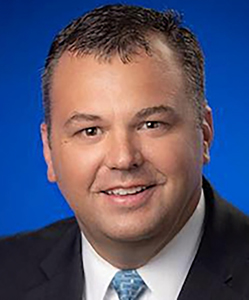
C.T. Wilson
100% support rate
Top opponent
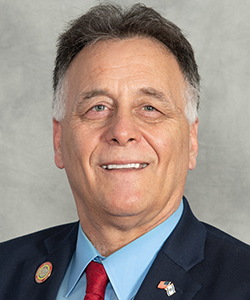
Jason Gallion
0% support rate
Ranked legislators
10
5 support · 5 oppose
Key legislators

Who's moving healthcare in Maryland

Legislators moving healthcare in Maryland
Legislator Party Stance Support rate Decisive votes
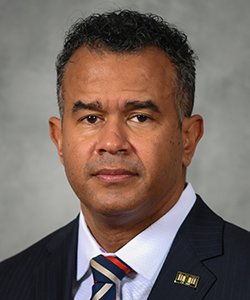
C.T. Wilson
C.T. Wilson House · District 28
D
Strong +
100% 34
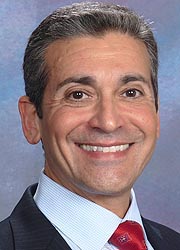
Ben Kramer
Ben Kramer Senate · District 19
D
Strong +
100% 23
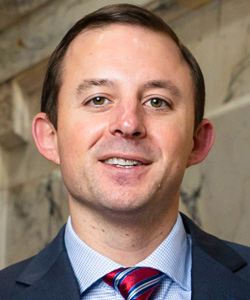
Bill Ferguson
Bill Ferguson Senate · District 46
D
Strong +
100% 23
Carl Jackson
Carl Jackson Senate · District 8
D
Strong +
100% 23
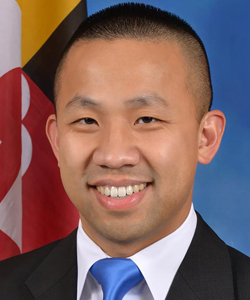
Clarence Lam
Clarence Lam Senate · District 12
D
Strong +
100% 23
Jason Gallion
Jason Gallion Senate · District 35
R
Strong −
0% 23
Jack Bailey
Jack Bailey Senate · District 29
R
Strong −
0% 22
J.B. Jennings
J.B. Jennings Senate · District 7
R
Strong −
4% 23
Johnny Salling
Johnny Salling Senate · District 6
R
Strong −
4% 23
Mary Beth Carozza
Mary Beth Carozza Senate · District 38
R
Strong −
5% 22
Showing 211–220 of 366 bills

All healthcare bills

in committee · Maryland · House of Delegates Mar 11, 2026

HB 1481: Tissue Banks and Hospitals - Autologous and Directed Blood Donations

HB 1481 prevents hospitals and tissue banks from denying physician-ordered autologous (patient's own blood) or directed (designated donor) blood donations solely due to internal policies, provided all safety and regulatory requirements are met. It requires healthcare facilities to allow these donations for planned medical procedures if the treating physician deems them medically appropriate. Facilities may only refuse such requests when medical, logistical, or regulatory constraints make compliance impossible. The bill also mandates that hospitals provide clear information about blood donation options to patients, consistent with informed consent standards.
died · Maryland · House of Delegates Mar 13, 2026

HB 1487: Public Health – Baltimore City Mobile Infant and Maternal Health Pilot Program

HB 1487 establishes the "MomMobile" pilot program within Maryland’s Department of Health to deliver mobile postpartum care in Baltimore City. It directly affects residents in underserved Baltimore neighborhoods by providing on-site checkups, mental health screenings, and culturally competent care from midwives and doulas via mobile health units. The bill requires the Secretary to collaborate with Baltimore City Health Department to determine operating neighborhoods, funding partnerships, staffing, and evaluation metrics. Annual reports on program implementation must be submitted to the Governor and legislative committees starting in 2027. The program aims to reduce transportation barriers, improve visit attendance, and identify metrics for maternal health outcomes.
signed · Maryland · Senate Apr 28, 2026

SB 555: Health - Dementia Services and Brain Health Program and Provider Resource Toolkit

SB 555 establishes the Dementia Services and Brain Health Program within the Maryland Department of Health to lead state public health efforts for brain health and dementia care. The bill shifts responsibilities from a "Director" position to this new Program, requiring it to staff the Virginia I. Jones Alzheimer’s Council, oversee implementation of the State Plan on dementia, and develop a clinical toolkit for healthcare providers. The toolkit will provide evidence-based guidance to help providers deliver person-centered dementia care across medical settings. This bill directly affects Maryland residents living with dementia or at risk, healthcare providers who will use the toolkit, and the Council’s operations.
Sub-Topics Public Health
in committee · Maryland · House of Delegates Feb 13, 2026

HB 1477: Public Health - Ibogaine Clinical Research Grant Program - Establishment (Veterans Mental Health Innovations Act)

HB 1477 establishes Maryland's Ibogaine Clinical Research Grant Program to fund clinical trials on ibogaine - a naturally occurring compound from the iboga plant - for treating opioid use disorder and other neurological conditions. The program, administered by the Maryland Department of Health in consultation with the Department of Veterans and Military Families, awards up to three annual grants to eligible research institutions in Maryland that meet specific criteria (including expertise in neurological disorders and substance use treatment) and require matching funds equal to the grant amount. Funding comes from $500,000 annually (fiscal years 2028-2030) in the Opioid Restitution Fund, with recipients required to conduct FDA-overseen trials and submit quarterly progress and financial reports. The bill aligns with the "Veterans Mental Health Innovations Act" title but does not restrict trials to veterans, focusing instead on broader neurological and opioid use disorder research.
signed · Maryland · Senate Apr 28, 2026

SB 466: Income Tax - Credit for Physician Preceptors in Areas With Health Care Workforce Shortages - Alterations

SB 466 modifies Maryland's income tax credit for physicians mentoring medical students in underserved areas. It removes a requirement that students must be enrolled in Maryland medical schools and reduces the minimum hours per clinical rotation from 100 to 90. The bill directly affects licensed physicians serving as preceptors in areas designated as having health care workforce shortages by the state. This change aims to expand eligibility for the $1,000-per-student rotation tax credit (capped at $10,000 annually per physician), potentially increasing mentor availability in shortage regions. The credit remains limited to $100,000 total annually for all physicians.
Sub-Topics Income Tax Tax Credits
in committee · Maryland · Senate Feb 12, 2026

SB 798: Public Health - Maryland Medical Assistance Program - Tobacco Cessation

SB 798 requires Maryland’s Medical Assistance Program (Medicaid) to cover individual and group counseling for tobacco cessation, starting October 1, 2026, subject to state budget and federal law. It directly affects Medicaid enrollees seeking to quit tobacco use by eliminating prior authorization requirements for cessation counseling and related products. The bill amends program rules to mandate this coverage under Section 15-103(a)(2)(xxix) and prohibits managed care organizations from blocking access to these services via prior approval. This policy change aims to remove administrative barriers to evidence-based tobacco cessation support for low-income Maryland residents.
Sub-Topics Medicaid Public Health
in committee · Maryland · Senate Feb 12, 2026

SB 738: Maryland Medical Assistance Program and Health Insurance - Required Coverage - Mobile Crisis and Crisis Stabilization

SB 738 requires Maryland's Medicaid program (Medical Assistance Program) and certain health insurance plans to cover mobile crisis and crisis stabilization services starting January 1, 2027. These services provide immediate in-person mental health crisis assessment, de-escalation, and stabilization for individuals experiencing acute mental health emergencies. The law applies to Medicaid recipients and individuals covered under specified health insurance policies, including nonprofit health plans, HMOs, and managed care organizations. It mandates coverage without additional patient cost-sharing for these services, effective for all new or renewed health plans on or after the start date.
in committee · Maryland · House of Delegates Feb 13, 2026

HB 1469: Health Insurance - Workgroup to Study the Definition of Specialty Drug

HB 1469 requires Maryland’s Insurance Administration to create a workgroup to study the current definition of "specialty drug" in health insurance. The workgroup, including pharmacy benefits managers, pharmacists, insurers, hospitals, and healthcare providers, will examine how the definition impacts patients and stakeholders, compare it to federal and state standards, and recommend a revised definition. It must submit findings and recommendations to the Governor and legislature by January 1, 2027, after which the bill expires on June 30, 2027. This bill directly affects health insurers, pharmacies, hospitals, and patients using high-cost specialty drugs, aiming to clarify definitions that influence coverage and costs.
in committee · Maryland · Senate Feb 9, 2026

SB 602: Algorithmic Addiction Fund - Establishment

SB 602 establishes the Algorithmic Addiction Fund in Maryland to use settlement funds from cases where social media algorithms harmed children. The fund, administered by the Maryland Department of Health, is financed by civil penalties from settlements related to social media harm and earns interest. It directly supports children by funding prevention programs (like school digital literacy campaigns), treatment services for mental health impacts (such as depression and anxiety), research, and evidence-based interventions. The fund is non-lapsing, meaning unused money rolls over annually, and all spending must align with the state budget.
in committee · Maryland · House of Delegates Mar 19, 2026

HB 1472: Better Small Business Employee Benefit Act of 2026

HB 1472, the Better Small Business Employee Benefit Act of 2026, exempts professional employer organizations (PEOs) from certain health benefit plan requirements when providing coverage to small employers in Maryland. The bill requires PEOs to provide written disclosure of specific plan details to small businesses before offering health benefits. This change modifies Maryland’s insurance laws to remove the requirement for PEOs to offer plans through the state’s health benefit exchange, while ensuring transparency for small employers. The bill directly affects small businesses that use PEOs for employee health benefits and the PEOs themselves.
Showing 211 to 220 of 366 bills
Previous 1 … 21 22 23 … 37 Next