Issue · Environment

Environment (Water Quality)

Every environment bill, vote, and legislator stance in Maryland, automatically classified by Maddy, our AI policy reader.

Total bills
19
2026 Regular Session
Top supporter
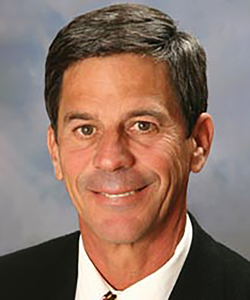
Ryan Nawrocki
100% support rate
Top opponent
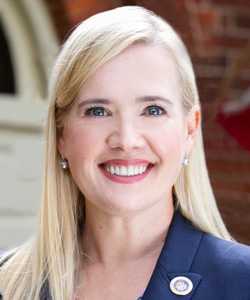
Anne Healey
33% support rate
Ranked legislators
10
5 support · 5 oppose
Key legislators

Who's moving water quality in Maryland

Legislators moving water quality in Maryland
Legislator Party Stance Support rate Votes
Ryan Nawrocki
Ryan Nawrocki House · District 7A
R
Strong +
100% 3
Barry Beauchamp
Barry Beauchamp House · District 38B
R
Support
75% 4
Bob Long
Bob Long House · District 6
R
Support
75% 4
Chris Tomlinson
Chris Tomlinson House · District 5
R
Support
75% 4
Jay Jacobs
Jay Jacobs House · District 36
R
Support
75% 4
Anne Healey
Anne Healey House · District 22
D
Oppose
33% 3
Barrie Ciliberti
Barrie Ciliberti House · District 4
R
Oppose
33% 3
Dana Jones
Dana Jones House · District 30A
D
Oppose
33% 3
Emily Shetty
Emily Shetty House · District 18
D
Oppose
33% 3
Melissa Wells
Melissa Wells House · District 40
D
Oppose
33% 3
Showing 11–19 of 19 bills

All environment bills

signed · Maryland · House of Delegates Apr 14, 2026

HB 1071: Environment - Stormwater Management for Agritourism

HB 1071 requires Maryland's Department of the Environment to create regulations and a model ordinance for local stormwater management programs to enforce rules on agricultural land. It mandates that local programs must work with soil conservation districts to implement these rules and specifies that farm-related uses (like on-farm processing) must be clearly distinguished from commercial development in stormwater regulations. The bill also adds flexibility for enforcing stormwater management on agricultural land, rather than applying standard commercial development rules. This directly affects farmers, local governments, and soil conservation districts by changing how agricultural land is regulated under stormwater management.
Sub-Topics Conservation Water Quality Tags Agriculture
passed · Maryland · Senate Mar 25, 2026

SB 225: Environment - Interjurisdictional Watersheds - Flood Management

SB 225 designates specific watersheds - including Gwynns Falls, Jones Falls, Herring Run (covering Baltimore City and Baltimore County), and the Patapsco River (spanning Baltimore, Howard, Carroll, Anne Arundel, and Frederick counties) - as "interjurisdictional flood hazard watersheds" requiring coordinated flood management planning across municipal and county boundaries. It mandates that local subdivisions develop unified flood management plans for these areas, which must be reviewed and approved by Maryland’s Department of the Environment to ensure consistency with flood control standards. The bill specifies that management techniques (like dams, levees, zoning, and stormwater systems) must be included in these plans, with disapproval limited to flood management concerns only. This policy change aims to streamline flood planning for watersheds crossing jurisdictional lines, taking effect October 1, 2026.
in committee · Maryland · House of Delegates Jan 19, 2026

HB 92: Environment - Beverage Containers Connected With Plastic Rings - Restriction on Sale

HB 92 prohibits the sale, offering for sale, or distribution of beverage containers (like 6-packs of soda or beer) connected by plastic rings unless the ring is made of biodegradable material. It directly affects retailers and beverage sellers who currently use non-biodegradable plastic rings. The bill establishes civil penalties of $500 for a first violation (increasing to $2,000 for repeat offenses) and requires the Department to adopt enforcement regulations. Penalties collected under this law will fund the Maryland Clean Water Fund, with enforcement handled by the Department rather than local governments. The bill takes effect October 1, 2026.
signed · Maryland · Senate May 26, 2026

SB 58: Property Tax Credit - Retail Service Station Conversions

SB 58 allows Baltimore City or Maryland counties to offer property tax credits to owners who convert former gas stations into retail, residential, or mixed-use properties. The credit is specifically intended to help cover costs for removing old underground gas tanks and cleaning up soil or water contamination from those tanks. Local governments can set the credit amount and duration, and the state will reimburse them 50% of the lost property tax revenue. This directly affects property owners and developers planning to redevelop former gas station sites into other commercial or housing uses.
passed · Maryland · Senate Mar 25, 2026

SB 108: Environment - Water Resources and Wetlands - Enforcement

SB 108 authorizes Maryland's Department of the Environment to impose administrative penalties for violations of water appropriation, dam safety, and wetlands development rules. It directly affects businesses, developers, and local governments that fail to comply with environmental regulations. Key provisions allow the department to levy fines up to $5,000 per violation (capped at $100,000 total), considering factors like environmental harm and willfulness, with penalties paid into the Maryland Clean Water Fund (or Private Dam Repair Fund for dam-related issues). The bill replaces some court-based enforcement with direct administrative penalties, streamlining enforcement while requiring department consultation before suing local governments.
Sub-Topics Water Quality
signed · Maryland · House of Delegates Apr 28, 2026

HB 250: Environment - Appropriation or Use of Water and Dam Safety - Enforcement

HB 250 authorizes Maryland's Department of the Environment to impose administrative penalties for violations of water appropriation, dam safety, and wetlands rules. It directly affects businesses, developers, and dam operators who breach these regulations. Key provisions include setting penalties up to $5,000 per violation (capped at $100,000 total), requiring consideration of factors like environmental harm and willfulness, and mandating that collected penalties fund the Maryland Clean Water Fund (except for dam safety cases, which go to a repair fund). The bill also streamlines enforcement by allowing the Department to issue immediate corrective orders and hold expedited hearings for urgent threats.
died · Maryland · House of Delegates Feb 16, 2026

HB 257: Environment - Flood-Related Watershed Studies and Comprehensive Flood Management Grant Program

HB 257 requires Maryland counties and municipalities (referred to as "subdivisions") to conduct flood-related watershed studies for designated priority watersheds by 2028, with updates every five years. The bill mandates these studies to map flooding risks for 10-, 25-, 100-, 500-, and 1,000-year flood events under current and future development, precipitation, and sea level rise scenarios. It establishes a grant program allowing the Department of the Environment to fund these studies, with specific limits on grant amounts. The studies must evaluate impacts on existing structures, roads, and stormwater systems, and propose flood-reduction strategies to guide future development and infrastructure planning.
in committee · Maryland · Senate Jan 16, 2026

SB 178: Chesapeake and Atlantic Coastal Bays Critical Area Protection Program - Standards and Procedures

Maryland's SB 178 updates rules for the Chesapeake and Atlantic Coastal Bays Critical Area Protection Program, affecting local governments in 12 coastal counties (including Calvert, Anne Arundel, and Worcester). The bill requires local programs to undergo comprehensive reviews every 10 years instead of 6, mandates new development to be adjacent to existing areas, and adds climate vulnerability assessments for new projects near protected waterways. It clarifies procedures for correcting mapping errors and establishes specific standards to minimize development impacts on habitat protection areas and water quality. The changes aim to strengthen environmental safeguards while providing clearer guidelines for local jurisdictions managing growth near sensitive coastal ecosystems.
signed · Maryland · House of Delegates Apr 28, 2026

HB 258: Chesapeake and Atlantic Coastal Bays Critical Area Protection Program - Standards and Procedures

HB 258 updates Maryland's rules for development near the Chesapeake and Atlantic Coastal Bays. It requires local governments to conduct 10-year reviews of their critical area programs, sets specific location rules for new development (like maintaining 300-foot buffers from tidal wetlands), and mandates climate vulnerability assessments for projects. The bill also clarifies procedures for correcting mapping errors and updating tree replanting requirements. These changes directly affect 12 coastal Maryland counties (including Calvert and Talbot) that manage local development plans under the program. The law aims to strengthen protections for bay ecosystems through clearer, updated standards for land use decisions.
Showing 11 to 19 of 19 bills