

Maddy summaryThis resolution (HRES 677) is a formal statement by the House of Representatives affirming the Federal Reserve's independence from political influence. It specifically supports Chairman Jerome Powell and the Board of Governors in making monetary policy decisions based on economic data, not political pressure. The resolution urges the President and executive branch to respect the Fed's statutory independence and avoid actions or rhetoric that could undermine its credibility. It emphasizes that maintaining this independence is critical for economic stability, price control, and global confidence in U.S. financial markets.
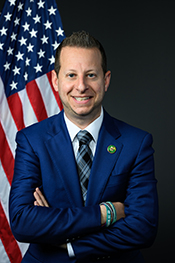
Rep. Jared Moskowitz
Sponsored bills
Maddy summaryThis bill prohibits Members of Congress, their spouses, and dependent children from owning or trading certain investments, including stocks, commodities, and derivatives (referred to as "covered investments"). It requires affected individuals to divest these investments within 90-180 days, with specific exemptions for Treasury bonds, diversified mutual funds, small business interests, and family trusts meeting strict conditions. Violations incur penalties of 10% of the investment's value plus disgorgement of profits, paid directly to the U.S. Treasury. The law applies to all covered individuals during federal service, with exceptions for investments acquired through inheritance or occupational trading (e.g., a spouse’s finance job).
Maddy summary# Summary of Proposed FEMA Reform Legislation (FEMA Act of 2025) This comprehensive legislative document proposes significant reforms to the Robert T. Stafford Disaster Relief and Emergency Assistance Act, with four main sections addressing: ## 1. Disaster Assistance Reforms - **Expanded eligibility** for assistance, including clarifying that absence of a fixed address doesn't disqualify individuals from sheltering assistance - **Improved rental assistance** with consideration of local post-disaster rent increases - **Direct assistance** for those unable to use financial assistance, with no requirement to show other assistance can cover costs (except insurance) - **Enhanced notices** for applicants, including documentation of denial decisions - **Clarification of displacement assistance** eligibility, stating insurance shouldn't be considered a duplication of benefits ## 2. Mitigation Program Enhancements - **Preapproved project mitigation plans** requiring states to develop plans with peer review processes - **Improved allocation of funds** with formulas prioritizing vulnerable communities, high-risk areas, and rural/economically distressed communities - **Resilient buildings** requirements for housing retrofits using the latest building codes - **Streamlined application processes** for hazard mitigation funds across multiple programs - **Study on mitigation benefits** to evaluate cost savings and effectiveness ## 3. Transparency and Accountability Measures - **Public dashboards** for both individual assistance (431) and public assistance (432) showing application status, approvals, denials, and funding - **Transparency requirements** for disaster declarations with detailed justifications for approvals/denials - **GAO studies** on numerous topics including: - Identity theft in disaster assistance (409) - Insurance utilization for public assistance facilities (410) - Wildfire management plans (411) - Effectiveness of alerting systems (412) - Cost savings of repair/rebuilding reforms (415) - **Prohibition on political discrimination** in assistance distribution ## 4. Workforce and Operational Improvements - **Study on workforce retention** in noncontiguous communities - **Pilot program** for preliminary damage assessments in remote communities - **Fast-moving disasters working group** to develop best practices for rapid response The legislation focuses on improving efficiency, transparency, and effectiveness of disaster relief programs while prioritizing vulnerable populations and communities with higher risk of disasters. It also emphasizes data-driven decision making through required studies and reports to continuously improve disaster management policies.
Maddy summaryThis bill is a congressional resolution expressing U.S. policy priorities regarding Xinjiang. It urges China to open Xinjiang to international access, cease repression of Uyghurs and other minorities, release specific detained individuals (including Ekper Asat, Dr. Gulshan Abbas, and Kamile Wayit), and stop transnational repression against Uyghur families abroad. The bill directs the State Department to coordinate U.S. policy on Uyghur issues, prioritize support for Uyghur communities, establish reporting mechanisms for transnational repression, and develop strategies to pressure China on detention facilities. It also requires U.S. diplomatic posts in China to have Uyghur-language capabilities and directs U.S. advocacy at the United Nations to address human rights concerns.
Maddy summaryHR 2643, the Haiti Criminal Collusion Transparency Act of 2025, requires the U.S. State Department to submit annual reports for five years detailing ties between Haitian criminal gangs and political/economic elites, including specific gang leaders, their operations, and how elites exploit these relationships. The bill mandates that the President impose automatic sanctions - including freezing assets and barring entry to the U.S. - against foreign individuals identified in these reports within 90 days of the report’s submission. These sanctions apply to Haitian officials and business leaders linked to gangs, with limited exceptions for humanitarian aid. The law expires five years after enactment, focusing on transparency and targeted U.S. actions to address collusion threatening Haitian stability and U.S. interests.
Maddy summaryThe SAFES Act creates a federal tax credit allowing individuals to deduct 90% of the cost of purchasing new gun safes, with a yearly limit of $500 ($1,000 for joint returns). It requires the Health and Human Services Secretary to publish a report within 5 years identifying gun safe types proven effective at preventing unauthorized access, which will determine eligibility for the credit after 2030. The credit applies only to new safes (not used ones) and prohibits requiring taxpayers to disclose firearm ownership details to claim the benefit. This policy directly affects individual firearm owners purchasing qualifying new safes for tax savings.
Maddy summaryHR 4992, the FEMA Critical Staffing Act, requires the Federal Emergency Management Agency (FEMA) to reinstate employees who were involuntarily separated between January 20, 2025, and the bill’s enactment date, within 30 days of passage. It directly affects FEMA staff who lost their positions during that period and ensures continued support for communities relying on FEMA programs. The bill mandates reinstating two key programs: the Building Resilient Infrastructure and Communities program (for state/local disaster preparedness) and the flood mitigation assistance program (for flood risk reduction projects), while prohibiting cuts to existing disaster resource access. These provisions aim to maintain FEMA’s workforce and program continuity amid increasing climate-driven disasters.
Maddy summaryThis bill requires the National Oceanic and Atmospheric Administration (NOAA) to restore full staffing levels within 30 days of enactment, including reinstating employees terminated between January 20, 2025, and the bill's passage. It mandates the immediate reinstatement of specific NOAA programs, including the discontinued "Billion-Dollar Weather and Climate Disasters" product and two environmental databases tracking ocean currents and marine buoys. The bill allocates $6.756 billion in funding for NOAA's operations through fiscal year 2026 to support these staffing and program restorations. It directly affects NOAA employees, state/local emergency response efforts, and the public relying on NOAA's weather forecasting and disaster data for safety planning.
Maddy summaryThis bill establishes "cottage family homes" as a new foster care placement option under federal law. It defines these homes to require trauma-informed care, prohibit seclusion/restraints (except brief physical restraint for safety), ensure children can participate in normal activities, and maintain family connections. The bill removes time limits on foster care payments for children in these homes and gives states flexibility to classify them as foster family homes if they serve children's best interests. It directly affects foster children placed in cottage homes and the agencies operating them.
Maddy summaryHR 1569, the CATCH Fentanyl Act, establishes a 5-year pilot program to test nonintrusive inspection technologies at U.S. border ports of entry. The bill requires U.S. Customs and Border Protection (CBP) to evaluate at least five technology enhancements - including AI, machine learning, and quantum sensing - to improve detection of contraband, drugs, weapons, and threats while reducing inspection wait times. Pilot projects must prioritize cost-effective solutions that integrate with existing systems, adhere to privacy protections, and report findings on performance metrics like detection rates and throughput. The program mandates detailed reports to Congress on effectiveness, implementation plans, and privacy impacts, using existing funding without new appropriations.