

Maddy summaryThis bill (LD 1982) updates Maine's legal definition of "PFAS" to match the U.S. Environmental Protection Agency's technical definition. It amends two key statutes (32 MRSA §1732 and 38 MRSA §1614) to align the state's definition with the EPA's standard for fluorinated chemicals containing specific molecular structures. This change ensures uniformity across multiple environmental regulations, including those governing toxics in packaging, PFAS-containing products, firefighting foam, waste discharges, and contamination cleanup funds. The bill does not create new restrictions but standardizes existing regulatory language to reflect federal definitions.
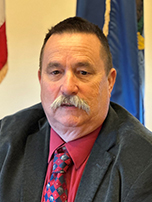
Rep. Dean Cray
Sponsored bills
Maddy summaryThis bill exempts agricultural employers and employees from Maine's Paid Family and Medical Leave Benefits Program, directly affecting those working in agriculture as defined by state and federal law. It requires the Department of Labor to refund all contributions paid by agricultural employers and self-employed individuals to the program, including any premiums deducted from employee wages that must be returned to workers. The refunds apply retroactively to October 25, 2023, when contributions began. The legislation aims to halt economic harm to the agricultural sector by eliminating these financial obligations.
Maddy summaryLD 1213 amends Maine law to allow agricultural fairs to include premiums and gratuities from any agricultural event approved by the Commissioner of Agriculture, Conservation and Forestry when calculating stipend distributions. Currently, only specific events like pulling contests for horses, oxen, tractors, and pickup trucks are counted toward these distributions. The bill adds a new provision (Section 86, sub-§5, ¶K) that explicitly permits the Commissioner to approve additional events, which then become eligible for inclusion. This change broadens the types of events that can influence how stipend money is allocated to licensed agricultural fairs.
Maddy summaryLD 1198 directs Maine's Department of Agriculture, Conservation and Forestry to review its meat and poultry inspection programs, including exemptions and its agreement with the USDA. The review will examine current rules, policies, and processes to identify improvements that could benefit farmers, processors, and consumers. The department must consult with producers, processors, the USDA, and other stakeholders before submitting a report by January 15, 2026, to the Agriculture Committee. This resolve does not change existing laws but sets the stage for potential future legislative action based on the findings.
Maddy summaryLD 1207 requires Maine's Department of Environmental Protection (DEP) to establish a program monitoring air and water temperatures around commercial solar energy projects. It specifically applies to large-scale solar developments (3+ acres with ground-mounted panels generating electricity for sale or use by others). The DEP must create rules for this monitoring, including sharing data with solar operators, other state agencies, and the public. This program aims to track potential environmental impacts of these solar installations.
Maddy summaryLD 1709 lowers Maine's age requirement for vehicles to qualify as "antique automobiles" from 35 to 25 years old, making it easier for owners of older cars and trucks to register them as antiques. It also requires antique auto owners to provide proof of registration and insurance for their primary vehicle (used for daily transportation of people or goods) and maintain that coverage throughout the antique auto's registration period. Owners cannot operate an antique auto if their primary vehicle lacks valid registration and insurance, and violations may result in a $2,500 civil fine or immediate revocation of the antique auto's registration. This bill directly affects Maine residents who own or wish to register classic cars or trucks as antique vehicles.
Maddy summaryLD 413 requires sellers of residential property near shorelands to disclose actual violations of shoreland zoning ordinances to buyers, but removes the requirement to disclose alleged violations. This change directly affects home sellers and buyers in properties governed by shoreland zoning rules. The bill amends Maine law to narrow the disclosure obligation to only confirmed violations, not pending or disputed cases. It does not alter other disclosure requirements or create new regulations.
Maddy summaryThis bill is a ceremonial resolution recognizing the Maine Forest Service for its 2024 out-of-state mobilizations. It acknowledges that the service sent personnel and equipment to 25 incidents across nine states (including Hurricane Helene in North Carolina) through mutual aid agreements, involving 43 staff members. The resolution expresses legislative appreciation for their work but does not create new laws, funding, or policy changes.
Maddy summaryLD 603 exempts maple sugarhouses - buildings primarily used to process or store maple sap or syrup - from Maine's Uniform Building and Energy Code requirements. This bill directly affects maple syrup producers and operations across Maine by removing certain building and energy code compliance burdens for these specific facilities. It amends Maine law to add maple sugarhouses explicitly to the list of agricultural buildings already exempt from the code, alongside livestock barns and crop storage. The change clarifies existing exemptions without altering the code's requirements for other buildings.
Maddy summaryLD 1403 expands Maine's exemption from mandatory hunter safety courses for individuals seeking hunting licenses. It adds to existing exemptions (active military on leave, veterans, law enforcement) by including anyone who completed firearm training as a requirement of their job. To qualify, applicants must show proof of this employment-related training at the time of license application. This change directly affects Maine residents whose jobs require firearm training, allowing them to skip the hunter safety course.